Tea in China is a 3,000-year industrial story that became a daily ritual. It is not the brittle ceremony you may have read about in a coffee-table book — that is the Japanese version, which derived from Chinese practice in the 9th century and then evolved separately. The Chinese version is more practical: you can do it in 90 seconds at a market stall, or stretch it across an afternoon in a Hangzhou teahouse. Both count.
If you are coming to China and want to actually understand tea here — not just drink it — three things matter most: knowing which of the six types you are looking at, recognizing the gongfu pouring method when you see it, and not getting scammed when you go to buy some to take home. This guide covers those three, plus the cities where the experience is most worth seeking out.

The Six Types of Chinese Tea: A Working Knowledge
All Chinese tea comes from one plant — Camellia sinensis. What separates the six categories is what happens after the leaf is picked: how much it oxidizes, how it is dried, and whether it is allowed to ferment over time. Once you know the categories, you can decode any tea menu in the country.
1. Green Tea (Lvcha ) — Unoxidized
The most consumed tea in China. Leaves are pan-fired or steamed within hours of picking to halt oxidation, locking in a fresh vegetal flavor. The flagship variety is Longjing (Dragon Well) from the West Lake area of Hangzhou — flat, pressed leaves with a nutty-grassy taste. Brewed at 75–80°C, not boiling. Boiling water destroys the flavor and turns the cup bitter.
Other notable green teas: Bi Luo Chun from Suzhou’s Dongting Mountains (tightly curled, more delicate), Huangshan Mao Feng (lighter, slightly floral). For where green tea is actually grown and how to visit, the Hangzhou Travel Guide covers the West Lake plantations in detail.
2. Black Tea (Hongcha ) — Fully Oxidized
What the West calls “black tea” the Chinese call “red tea” (hongcha), referring to the color of the brew, not the leaf. Fully oxidized for a malty, sometimes sweet finish. Keemun (from Anhui) and Lapsang Souchong (smoked over pine fires in Fujian) are the historic exports — Keemun was the original “English Breakfast” base.
Brew with near-boiling water (95°C) for 3–4 minutes Western-style, or much shorter (15–30 seconds) gongfu-style with more leaves per pot. Black tea is the easiest to drink without instruction — start here if you find green tea too grassy.
3. Oolong (Wulong ) — Partially Oxidized
The category with the widest internal range. Oxidation levels run from 10% (lightly oxidized, almost green-like, such as Tieguanyin from Anxi in Fujian) to 80% (close to black tea, like dark-roasted Da Hong Pao from Wuyi Mountains). This is the type that benefits most from gongfu brewing — the multiple short steeps draw out evolving flavors that a single mug cannot.
Honestly, oolong is where most tea enthusiasts end up living. If you only spend money on one quality tea while in China, make it a mid-grade Tieguanyin or Wuyi rock tea.
4. White Tea (Baicha ) — Minimally Processed
The least processed of the six. Leaves are picked young (often with silvery buds attached), withered in shade, and dried. No pan-firing, no rolling, no oxidation acceleration. The flavor is subtle — light, slightly sweet, sometimes with a hay or melon note. Primary growing region is Fuding in northern Fujian.
White tea has become genuinely fashionable in Beijing and Shanghai over the past five years, with aged white tea (3+ years) commanding prices similar to mid-grade pu’er. Brew at 80–85°C with longer steeps (2–3 minutes) to draw out the body.
5. Yellow Tea (Huangcha ) — Rare and Slightly Fermented
The category most tourists never see. After the initial green-tea-style firing, yellow tea undergoes a step called “smothering” (men huang) where the warm leaves are wrapped in cloth for hours or days. This mild fermentation strips some of the green-tea grassiness and produces a mellower cup. Junshan Yinzhen from Hunan is the most famous example. Production is small and prices are correspondingly high — if you see “yellow tea” on a teahouse menu, order it. You may not encounter it elsewhere.
6. Dark Tea / Pu’er (Heicha / Pu’erh / ) — Post-Fermented
This is the category that confuses Westerners most. Dark teas (heicha) undergo microbial fermentation after the initial processing, deliberately aging the leaf. Pu’er from Yunnan is the famous subset — it comes in two forms: sheng (raw, slowly aged over years or decades) and shou (ripe, accelerated fermentation developed in the 1970s).
Shou pu’er is the safer entry point: earthy, smooth, vaguely woody, with no astringency. Sheng pu’er is more divisive — it can taste sharp and bitter when young, then mellow over 10+ years into something prized and expensive. Aged pu’er is the only Chinese tea regularly sold as an investment, with vintage cakes from the 1990s now selling for thousands of yuan.

The Gongfu Ceremony: What Is Actually Happening
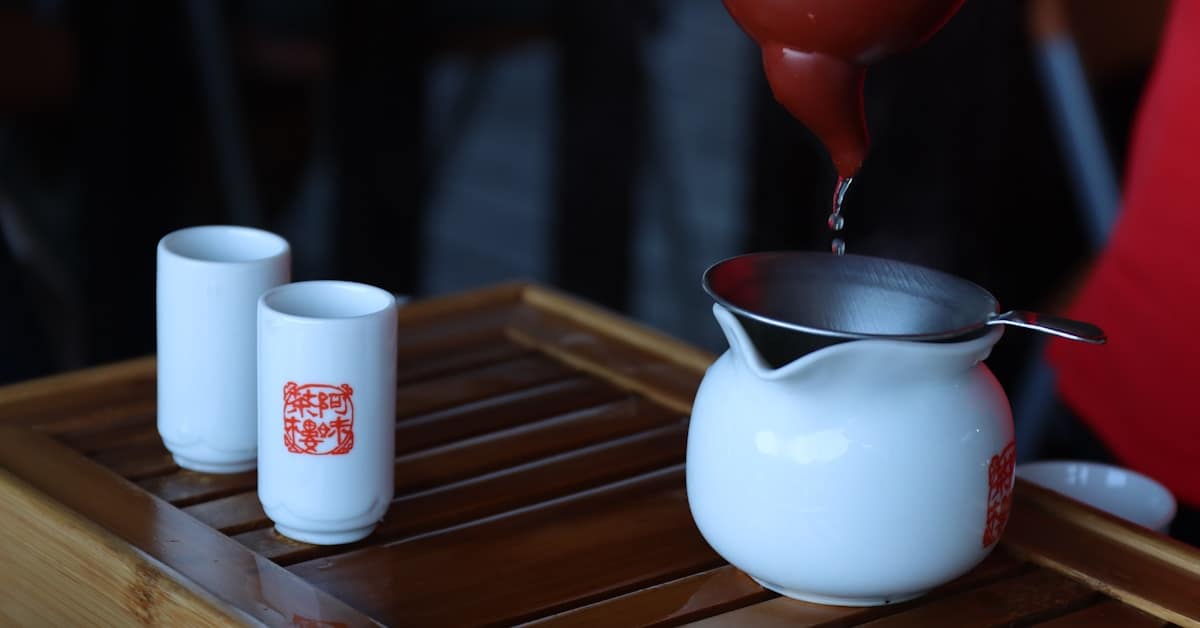
Gongfu cha means “tea with skill” (or “tea with time” — the character has both meanings). It is not a religious ritual; it is a brewing method designed to extract maximum flavor from a small amount of high-quality leaf. The setup looks elaborate but the principle is simple: high leaf-to-water ratio, very short steeps, repeated many times.
Here is what the host is actually doing, step by step:
- Warming the vessels. Boiling water is poured over the gaiwan (lidded brewing cup) or clay pot, the fairness pitcher, and each tasting cup. Discarded. This brings everything to brewing temperature and rinses dust.
- Loading the leaf. 5–7 grams of leaf into a 100–150ml gaiwan. That is roughly a tablespoon-and-a-half — far more leaf per ml than Western brewing.
- The rinse (xi cha). Hot water poured over the leaves and immediately discarded after 3–5 seconds. The purpose: to wash and “wake” the leaves, not to brew. Skip this step for green and yellow tea — they cannot afford the loss.
- First steep. 10–20 seconds, depending on tea type. Pour into the fairness pitcher (gong dao bei) first, then distribute to cups. The pitcher exists to even out flavor — the first pour from the gaiwan is weaker, the last is stronger, and the pitcher mixes them.
- Tasting. Cups are small — 30–50ml — so the tea cools to drinking temperature in seconds. Sip in three: smell, taste, aftertaste.
- Subsequent steeps. Each steep adds 5–10 seconds. A good oolong or pu’er will give 8–12 distinct cups; the flavor evolves through the session rather than running out.
In my experience, the most common Western misconception is thinking gongfu is “ceremonial” in a performative sense. It is not. A good host moves quickly and quietly, talks throughout the session, and pours the tea while continuing the conversation. The skill is invisible.
Reading a Teahouse Menu Without Embarrassing Yourself
A real teahouse menu (not the tourist version) lists teas by name, growing region, harvest year, and grade. Decoding it takes about five minutes if you know what to look for.
Name + region tells you the type. Examples: “Xihu Longjing” = West Lake Dragon Well (green tea, Hangzhou); “Anxi Tieguanyin” = Anxi Iron Goddess (oolong, Fujian); “Wuyi Da Hong Pao” = Wuyi Big Red Robe (rock oolong, Fujian); “Yunnan Pu’er” = Yunnan pu’er (dark, post-fermented).
Harvest year (chun cha or qiu cha) matters most for green tea and sheng pu’er. “Ming Qian” (before April 5) Longjing is the first and most prized spring picking of the year and commands a premium. For pu’er, the year is part of the value — older sheng is more expensive.
Grade is shown by stars, by “Te Ji” (special grade) and “Yi Ji” (first grade), or by a price gradient. A premium teahouse may have eight grades of the same Longjing on the menu.
Pricing structure: teahouses typically charge per gram of leaf, plus a flat tea-service fee covering hot water refills (often unlimited). A 50-yuan-per-gram tea served gongfu uses about 7 grams — so expect 350 yuan for the tea plus 30–80 yuan for the service. Premium teahouses in Hangzhou and Suzhou run higher. Chengdu’s traditional teahouses are dramatically cheaper — 25–60 yuan total for unlimited refills of decent green or jasmine tea, in a setting genuinely unchanged in 50 years (see the Chengdu guide for the People’s Park teahouse).
Where to Buy Quality Tea Without Getting Scammed
Tea is one of the easiest things in China to overpay for. Tourist-area shops in Beijing, Shanghai, and Xi’an routinely sell middle-grade tea at top-grade prices, banking on visitors not knowing the difference. Three locations are worth seeking out, in approximate order of seriousness:
Maliandao Tea Street, Beijing
About 4km southwest of Beijing West Railway Station. Maliandao is roughly 1km of nothing but tea — wholesale buildings (Beijing Tea City is the biggest, with 600+ vendors), specialty stores for individual regions, and a scattering of teahouses where you can sit and taste before you commit.
How to use it: walk into any wholesale-building stall, ask to taste two or three teas, and pay attention to whether the vendor takes you seriously when you ask about price per gram and harvest year. Vendors who deflect (“it is all good tea”) are not the ones to buy from. Vendors who immediately weigh out a small bag and brew it gongfu-style without you needing to ask are the ones who handle this every day.
Expect to pay 2 yuan/gram for entry-level Tieguanyin (so 200 yuan for 100g), 5–10 yuan/gram for solid mid-grade, 30+ yuan/gram for the top stuff. Tea sold by the cake (pu’er) starts around 80 yuan for 357g of basic shou and goes up indefinitely.
Meijiawu and Longjing Villages, West Lake (Hangzhou)
The Longjing growing area is divided into named villages (Meijiawu, Longjing, Manjuelong) on the hillsides behind West Lake. April is the harvest month and the only time you can buy genuinely fresh-from-the-pan tea direct from the growing family.
Honest warning: “buying Longjing in Hangzhou” has become its own tourist scam. Roadside vendors sell tea that is not from the protected West Lake zone (much of it from cheaper outlying counties), labelled and priced as authentic. To minimize the risk: go up into Meijiawu village proper, buy from a vendor with their own visible plantation behind the store, and check that the leaves are flat and uniform (not bent or broken). Top-grade pre-Qingming Longjing runs 500–2,000 yuan per 50g.
Anxi (Fujian) for Tieguanyin, or Wuyi for Rock Oolong
The most committed tea travelers go to source. Anxi (3 hours by train from Xiamen) is the Tieguanyin capital — the entire town economy revolves around tea. Wuyi Shan (overnight train from Shanghai or fast train from Fuzhou) is the rock-oolong capital, with the additional attraction of being a UNESCO scenic area.
Both require effort and at least one overnight. The payoff is buying tea at producer prices (40–60% off Maliandao prices for the same grade) and visiting actual plantations during harvest.

Visiting a Tea Farm: When It Is Worth It
Tea-farm visits range from staged demonstrations for tour buses (skip) to genuine seasonal harvest where you can pick, watch the pan-firing, and taste from that morning’s batch (worth a half day if you are in the right place at the right time).
The two best regions for a worthwhile visit are Hangzhou (West Lake) for green tea in late March through April, and Anxi (Fujian) for oolong in late April through May. Both can be done as day trips from a major city (Hangzhou from Shanghai by 50-minute train, Anxi from Xiamen). Outside harvest season, farm visits become demonstrations rather than working operations — still informative, but you are not seeing the actual job.
The Mengding Shan tea region in Sichuan (one of the oldest cultivated tea areas in the world, with continuous production since the Han dynasty) is the dark horse — fewer tourists, dramatic mountain setting, and the local Mengding Ganlu green tea is genuinely good. It pairs well with a Sichuan loop. The street-food pairings work too: a clean green tea cuts through the chili-heavy Chinese street food better than beer does.
Three Best Cities to Experience Tea Culture
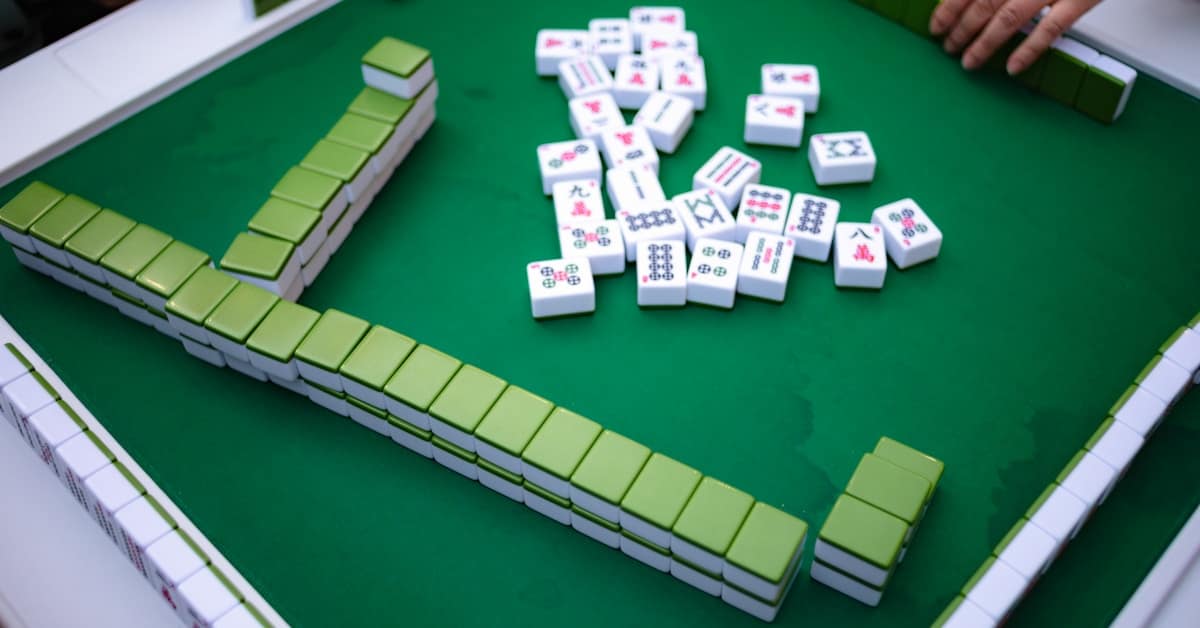
Chengdu for the social side. Sichuan tea culture is loud, communal, and unpretentious — old men playing mahjong with a teapot beside them, ear-cleaning service offered tableside, refills coming until you leave. Heming Teahouse in People’s Park is the famous one but the half-dozen smaller teahouses scattered through Wenshu Monastery district are equally good and quieter.
Hangzhou for the technical side. This is where Chinese green tea has its high-end shopfront. Visit during April harvest if at all possible. The Tea Museum (free, English signage, near Longjing village) gives you a working overview in two hours.
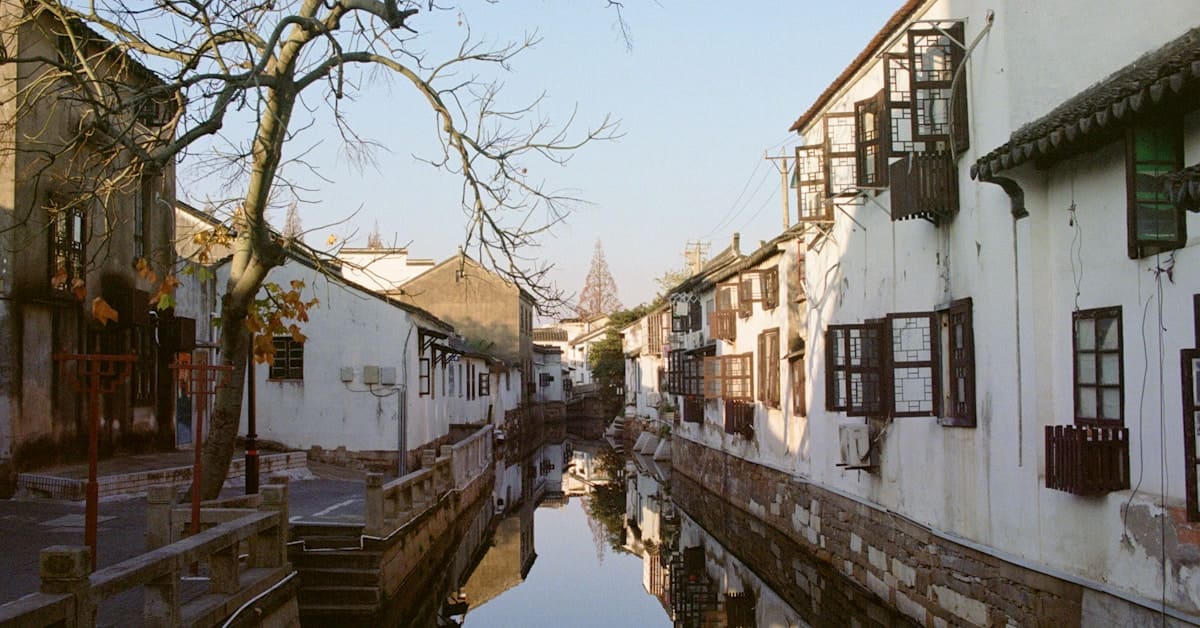
Suzhou or Wuyi Shan for the contemplative side. Suzhou’s old-city teahouses serve tea inside courtyard gardens — quieter and more refined than Chengdu, less crowded than Hangzhou. Wuyi Shan combines world-class oolong with a UNESCO scenic area you would visit anyway. The best time to visit China table covers when each region is in season.
Common Mistakes vs What Actually Works
| What most first-time tea buyers do wrong | What works better |
|---|---|
| Buy tea at hotel gift shops or main tourist streets | Go to Maliandao in Beijing, Meijiawu in Hangzhou, or a serious teahouse |
| Pay by the box without checking grams or price-per-gram | Always confirm yuan/gram and harvest year before tasting |
| Pour boiling water on green tea because that is how you make Western tea | 80°C for green and yellow, 95°C for black and dark, just-off-boiling for oolong |
| Expect gongfu to be a silent ritual | It is a brewing technique, not a ceremony — talk normally |
| Buy “Longjing” from a roadside stand in central Hangzhou | Travel out to Meijiawu village in April and buy from a plantation family |
One Last Practical Note
If you only buy one tea to take home, buy a 100g bag of mid-grade Tieguanyin (around 500–800 yuan for something genuinely good) and a small clay yixing pot (300–600 yuan) seasoned to it. The pot improves with use, holds the temperature evenly, and turns a kitchen-counter habit into something you will still be doing in five years. A single elaborate gaiwan set bought in a tourist shop and used twice is not the souvenir you want.
Photos courtesy of Unsplash.