Xi’an is famous for the 2,200-year-old Terracotta Warriors, but the army most travelers should be lining up for is the food. Spend over a thousand years as the eastern terminus of the Silk Road, absorb every culinary influence between the Mediterranean and the Pacific, layer it with a Hui Muslim community that’s been here since the Tang dynasty, and you end up with the most distinctive food scene of any major Chinese city. Skewers, hand-ripped flatbread, soup dumplings, cold noodles in five sauces — and then the bars start opening at 9pm.
Below is the practical evening plan: where to eat in the Muslim Quarter (and which lane the locals actually use), ten dishes with the vendor names where they matter, the difference between Defu Lane and the South Gate bar scene, what’s open after midnight, and how to navigate the halal and non-halal clusters without offending anyone.
The Muslim Quarter: Main Drag vs. The Lanes Locals Use
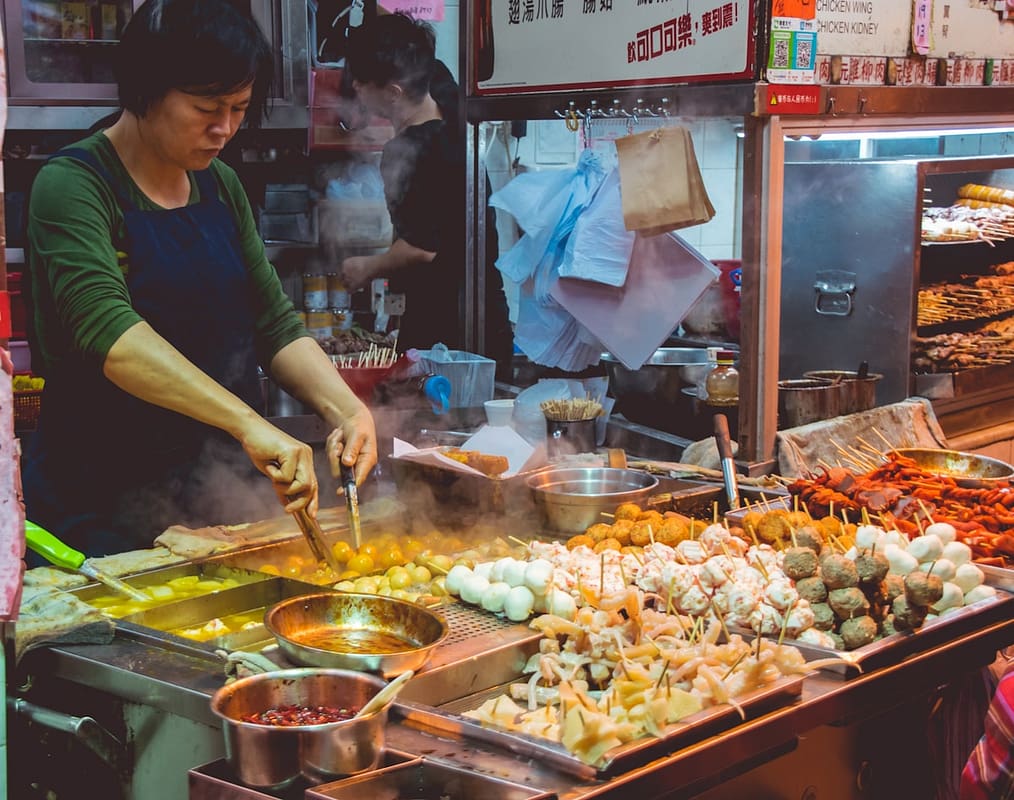
Skip the main tourist drag entirely. The strip locals call Bei Yuan Men — the wide stone-paved street running north from the Drum Tower with the matching wooden signs and the photo-ready archways — has been a tourist set since 2017. Prices are double, the vendors are paid to look photogenic, and the food is fine but not the food this neighbourhood is known for.
Walk one block west into the side lanes. The streets where the local Hui community actually eats are Xiyang Shi, Dapi Yuan, Beiguangji Jie and the warren of alleys between them. Same dishes, half the price, the chef is the owner, and the lamb skewers are over real charcoal rather than gas. Honestly, the difference is the entire reason to come.
Time your visit between 6 and 9pm for the peak energy. After 10pm the side lanes wind down quickly — locals go home, the next round of bars opens elsewhere in the city.
10 Xi’an Dishes Worth Eating (With Vendor Names)
1. Yangrou Paomo — Crumbled Flatbread in Mutton Soup
Xi’an’s signature dish, and partly a ritual. You’re handed a bowl with two hard, palm-sized unleavened flatbreads. You tear them yourself into pea-sized pieces — the smaller, the better — over five or ten minutes of slow work. The bowl goes back to the kitchen, the chef adds rich mutton broth, vermicelli noodles, and sliced lamb, and returns it steaming. The result is somewhere between soup, porridge and stew, and it’s the perfect winter lunch. Where: Lao Sun Jia on Dongguan Nan Jie — open since 1898, still the textbook version. ¥35–55 a bowl. Lao Mi Jia in the Muslim Quarter side lanes is the local-favourite alternative.
2. Roujiamo — The Xi’an Pork or Lamb “Burger”
Slow-braised pork belly in the main city, cumin-spiced lamb in the Muslim Quarter (the area is halal — no pork). Chopped fine, stuffed into a flatbread that’s been on the clay oven for thirty seconds before the chop. The lamb version with extra green peppers is the one to order. Where: Qin Yu Rou Jia Mo for the city’s most consistent pork version, ¥10–15. The Muslim Quarter lamb versions cost ¥12–18 and are sold from a dozen interchangeable vendors — pick the one with the longest queue.
3. Biang Biang Mian — The Belt-Wide Noodles
Named for the slapping sound the dough makes against the table when stretched, these are flat noodles wider than your thumb, served with chilli flakes, garlic, scallions, and sizzling oil poured over the top at the table. The Chinese character for “biang” has 58 strokes and doesn’t exist in standard fonts — vendors usually paint it on their signboards. Where: Wei Jia Liang Pi for a reliable casual version (¥18–25), or any neighbourhood noodle shop with a hand-pulling station visible from the street.
4. Cumin Lamb Skewers (Yangrou Chuan)
Charcoal-grilled lamb dusted with cumin, chilli, and salt — sold by the bunch in every Muslim Quarter alley. Look for vendors fanning the coals by hand rather than the gas-rotisserie chains. Where: any side-lane stall in the Muslim Quarter, ¥3–5 per skewer. The cluster at the south end of Xiyang Shi has been there since the 1990s and the smoke is half the experience.
5. Liangpi — Cold Skin Noodles
Slippery, translucent wheat-starch noodles in a tangy sauce of vinegar, chilli oil, sesame paste, garlic, julienned cucumber, and bean sprouts. The Xi’an summer staple. Where: Wei Jia Liang Pi for the chain version (¥10–15) or any small Muslim Quarter shop with a tray of pre-cut noodles in the window. Refreshing, vegan-friendly, properly hot from the chilli oil.
6. Soup Dumplings (Guan Tang Bao)
Xi’an’s soup dumplings rival Shanghai’s. Thin skin, a spoonful of savoury broth and minced pork inside. Bite a small hole, slurp, eat. Where: Jia San Guan Tang Bao at the north end of the Muslim Quarter — the legendary spot, queue 20–40 minutes for a seat at peak times. ¥30–45 per steamer of eight. The crab-roe version is the upgrade if it’s in season (autumn).
7. Persimmon Cakes (Shi Zi Bing)
Golden pan-fried cakes made from dried local persimmons, stuffed with red bean paste or crushed walnuts. The perfect street dessert — sweet, dense, slightly chewy at the edges. Where: pretty much any Muslim Quarter side-lane stall, ¥3–5 each. Eat hot off the griddle; the cold version is a sad echo.
8. Hulutou — Pork Intestine and Bread Soup
The stronger cousin of paomo: same bread-in-soup ritual, but the broth is built around slow-cooked pork intestines and the result is rich, smoky, and not at all what most foreigners expect of pork organ meat. Beloved local classic since the Tang dynasty. Where: Chun Fa Sheng on Nanyuan Men, the canonical spot, ¥28–40. Not in the Muslim Quarter — Hui cuisine is halal, so anything with pork is outside the neighbourhood.
9. Eight-Treasure Sweet Rice (Ba Bao Fan)
Sticky glutinous rice steamed with eight toppings — red dates, lotus seeds, walnuts, raisins, candied fruit — turned out of the bowl into a colourful dome. Sweet, dense, the right finisher to a savoury-heavy meal. Where: many Muslim Quarter sweet vendors, ¥15–20 a portion.
10. Suantang Shui Jiao — Sour-Spicy Dumplings
Boiled lamb-filled jiaozi served in a hot-and-sour broth that lights up every part of your palate. The Muslim Quarter halal version uses lamb; the city versions use pork. Where: De Fa Chang on the south side of the Bell Tower for a refined sit-down version, or any noodle shop in the side lanes for the ¥15–20 casual bowl.
Halal vs Non-Halal: Where the Two Cuisines Cluster
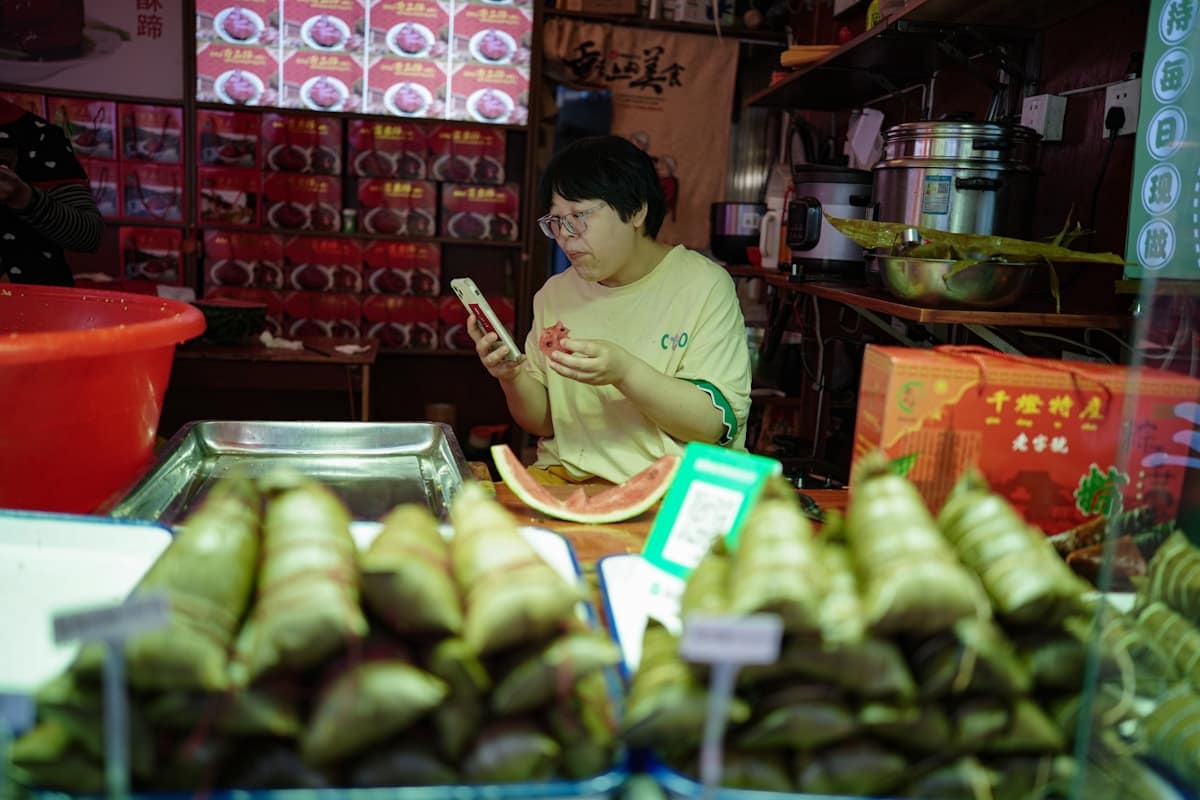
This catches some travelers off-guard. The Muslim Quarter (Huimin Jie) is entirely halal — no pork, no alcohol on the food stalls, no shellfish in the cooking. The cuisine is built on lamb, beef, wheat, and cumin, reflecting a thousand years of Hui Muslim presence in the city. It’s some of the best food in Xi’an, and you should spend at least one evening eating only there.
Outside the Muslim Quarter, Xi’an’s older non-halal food scene clusters around Nanyuan Men (south of the Bell Tower) and Dongguan Nan Jie (east of the city wall). This is where you’ll find the pork-belly paomo at Lao Sun Jia, the hulutou at Chun Fa Sheng, and the city’s deep tradition of pork dumplings and slow-braised pork dishes. Both clusters are 15 minutes’ walk from each other; doing both over two evenings is the standard plan.
Xi’an Nightlife: Defu Lane vs. South Gate
The Muslim Quarter starts to wind down by 10pm — vendors pack up, the lanes empty out, and the energy moves elsewhere in the city. Xi’an actually has two distinct evening bar scenes and they attract different crowds.
Defu Lane (Defu Xiang) — Quiet, Atmospheric, Local
A picturesque lane of converted Qing-dynasty courtyard buildings turned into cocktail bars, craft beer shops, and tea houses. Quieter than the South Gate scene, more intimate, harder to get to (it’s tucked behind the Muslim Quarter, near Big Wild Goose Pagoda). The crowd skews local and 25–40. Park Qin Cocktail Bar is the standout — a deep, low-lit room with a serious whisky list and a mixologist who actually trained somewhere. Drinks ¥60–110.
The lane itself is best between 9pm and midnight. After that the bars are still open but the atmosphere thins out.
South Gate Bar Street (Yongningmen Jiu Ba Jie) — Loud, Touristy, Photogenic
The strip just outside the South Gate of the City Wall is Xi’an’s loudest after-dark zone — illuminated wall ramparts as the backdrop, bars built into the old defensive bunkers, live cover bands, neon and crowds. 1+1 Bar and The Park are the long-running anchors. Drinks ¥40–80, mostly cocktails and Tsingtao on tap.
Honestly, the South Gate scene is touristy in the same way Defu Lane is local — neither is wrong, they’re different evenings. If it’s your first night in Xi’an and you want the iconic-photo-with-illuminated-wall version, South Gate. If you want a serious drink with people who know the bar, Defu Lane.
Yongningmen Wall Night View — Worth the Climb
For the photo without the bar crowd: walk on top of the City Wall itself. The night-lit walk between Yongningmen (South Gate) and Hanguangmen takes about 25 minutes and the view down into the city is the most underrated thing in Xi’an. ¥54 admission, last entry 9:30pm. The wall is open until 10pm in summer.
Tang Paradise Light Show — The Big Set Piece
The Tang Paradise theme park near the Big Wild Goose Pagoda runs a water-and-light show on a massive lake every evening at 7:40pm and 9pm. ¥120 admission, the show is included. It’s touristy, but the scale — hundreds of lights synced to music across a 165-acre lake — is genuinely impressive. Better as a one-off than a regular stop.
Late-Night Eating (After Midnight)
The Muslim Quarter is closed by 11pm. South Gate bar street keeps serving until 2am. After that, Xi’an’s late-night eaters head to two specific zones:
- Yong Xing Fang — a restored old neighbourhood food court near the East Gate that’s open until 2am most nights. Mid-range prices, the food is solid second-tier compared to the Muslim Quarter, the energy after midnight is unbeatable. Try the splash noodles (po shui mian) at the central courtyard.
- The 24-hour noodle shops along Heping Road — these are the late-night refuelling spots for Xi’an’s bar staff and night-shift workers. Cumin lamb noodles, hot-and-sour potato slivers, fried rice. ¥15–30 a bowl. Look for the bright fluorescent lights and the steam coming out of the window.
- Convenience-store hot food — FamilyMart and Lawson stock decent tea eggs, steamed buns, and instant noodles 24/7. Backup plan when everything else is closed.
Planning Your Xi’an Food Crawl: The Sensible Plan
- Day 1, late afternoon (4–6pm): Drum Tower and Bell Tower visit. Light snack only — save the appetite.
- Day 1, evening (6–9:30pm): Muslim Quarter side lanes for skewers, soup dumplings, persimmon cakes, biang biang noodles. Graze across four or five vendors. Budget ¥80–150 per person.
- Day 1, night (10pm onward): Defu Lane for the after-dinner drink, or South Gate if you want the wall view with cocktails.
- Day 2, lunch: Yangrou paomo at Lao Sun Jia (¥45) or hulutou at Chun Fa Sheng (¥35) for the non-halal classic.
- Day 2, late afternoon: South Gate cycling on top of the wall (¥45 bike rental, the full 14-km loop takes 90 minutes).
- Day 2, evening: Yong Xing Fang for second-pass street food in a calmer setting, then Tang Paradise for the 9pm light show.
What I Got Wrong on My First Xi’an Trip
| Mistake | Better next time |
|---|---|
| Spent the first night on the main Muslim Quarter drag (Bei Yuan Men) — overpaid, the food was forgettable, the energy was overwhelmingly tourist | Walk one block west into Xiyang Shi or Dapi Yuan — same dishes, half the price, the chef knows what they’re doing |
| Ate a full bowl of paomo first and ran out of stomach by the fourth stall | Start with light items (skewers, persimmon cakes), build to the heavy soup dishes at the end |
| Tried to do Muslim Quarter food and South Gate bars in the same three-hour window — exhausted, didn’t enjoy either | Two evenings, one for each. The food deserves slow grazing, the bars deserve a sit-down |
| Looked for “bao zi” in the Muslim Quarter and didn’t realise it’s halal-only — confused the vendor by asking for the pork version | Know the Muslim Quarter is lamb and beef; for pork dumplings go to Nanyuan Men or Dongguan Nan Jie |
| Got an Uber-equivalent ride back to the hotel at 11pm and the driver couldn’t find Defu Lane in the dark | Screenshot the destination in Chinese characters and show the driver the screen — pinyin doesn’t always work in the GPS |
One Practical Note Before You Go Out Tonight
The Muslim Quarter side lanes don’t take many foreign cards directly — almost everything goes through Alipay or WeChat Pay. The Alipay and WeChat Pay setup guide is essential reading before you head out, and ¥100 in 10s and 20s in your back pocket covers the rare cash-only vendor.
For the full Xi’an plan beyond the food — Terracotta Warriors logistics, City Wall cycling, the 3-day itinerary — see the Xi’an travel guide. For the wider Chinese street-food canon across other cities, the Chinese street food guide covers 20 must-try dishes by region, and the top ten Chinese dishes guide handles the sit-down classics you’d order outside Xi’an.
Photos courtesy of Unsplash