If Beijing is China’s political heart and Shanghai its economic pulse, Xi’an is its soul. As the ancient capital of 13 dynasties and the eastern terminus of the Silk Road, this city offers one of the richest historical experiences anywhere in the world. And yes—it’s home to the Terracotta Warriors, one of the greatest archaeological discoveries of the 20th century.
Why Xi’an Should Be on Your China Itinerary
Xi’an (, pronounced “Shee-ahn”) sits in central China’s Shaanxi Province. It’s a manageable 4–6 hour high-speed train ride from Beijing, making it an easy addition to any China trip. The city blends ancient history with modern energy—you can walk along a 600-year-old city wall in the morning and feast on lamb skewers in a buzzing night market by evening.
Here’s what makes Xi’an unique: nowhere else in China can you experience such a concentrated dose of history in a single visit. From Qin Dynasty terracotta armies to Tang Dynasty pagodas to Ming Dynasty fortifications, Xi’an is a living museum that spans over 2,000 years.
The Terracotta Warriors: What to Expect
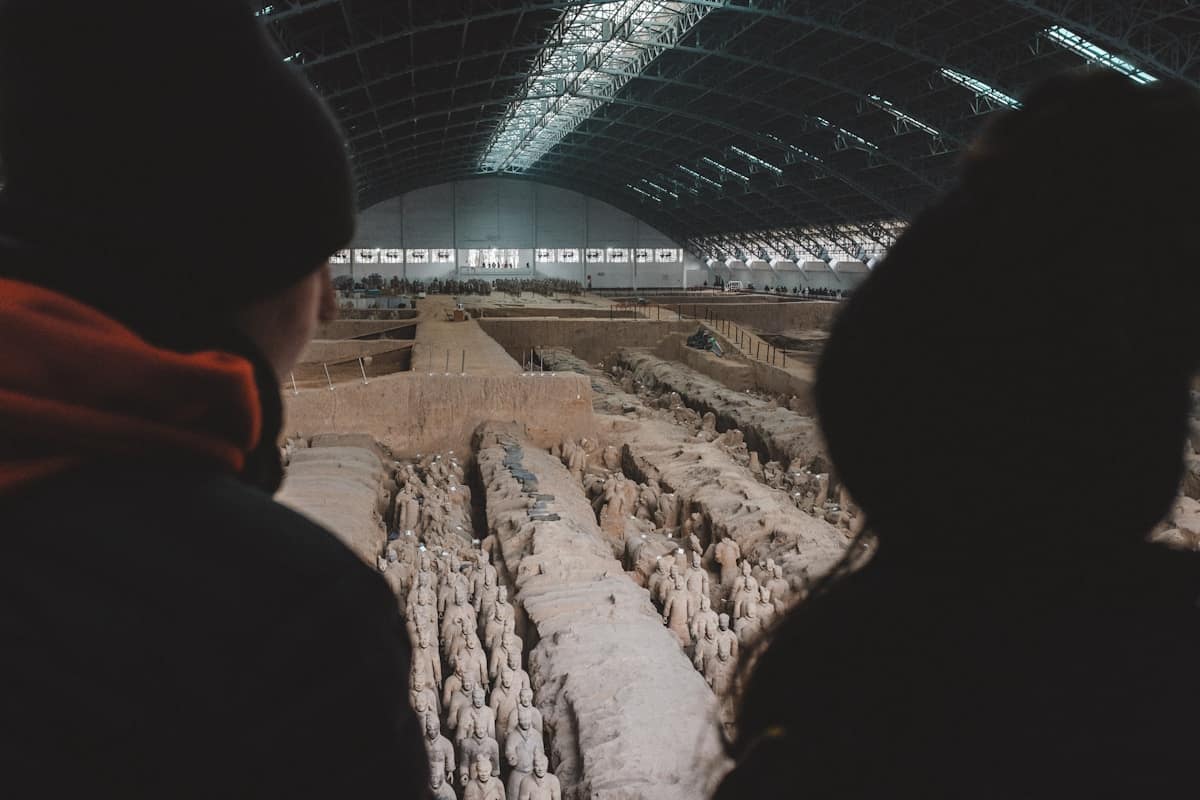
Let’s address the main event first. The Terracotta Army is located about 40 km east of downtown Xi’an. Discovered in 1974 by local farmers digging a well, this UNESCO World Heritage site contains an estimated 8,000 life-sized soldiers, 130 chariots, and 670 horses—all buried to guard China’s first emperor, Qin Shi Huang, in the afterlife.
Practical Tips for Visiting
- Opening hours: 8:30 AM – 5:00 PM (March–November), 8:30 AM – 4:30 PM (December–February)
- Ticket price: ¥120 (March–November), ¥90 (December–February)
- Getting there: Take Tourist Bus No. 5 (306) from Xi’an Railway Station—about 1 hour, ¥7. Alternatively, a taxi costs roughly ¥150 each way.
- Best time to visit: Arrive right when it opens at 8:30 AM. The crowds build quickly, and by 10:30 AM Pit 1 can feel like a subway station at rush hour.
- Visit order: Start with Pit 2 (smaller, more detail), then Pit 3 (command center), and finally Pit 1 (the iconic massive hall). This way you save the most impressive for last.
Xi’an City Wall: Bike Above History

The Xi’an City Wall is the most complete ancient city wall in China. At 14 km in circumference, it’s wide enough to drive a car on top—though cycling is the way to go. Rent a bike at the south gate (Yongning Gate) for about ¥45 and give yourself 90 minutes to complete the full loop. The views are fantastic: old courtyard homes inside the wall, modern skyscrapers outside.
Pro tip: Go around 4:30 PM. You’ll catch the golden hour light, finish your ride as the wall’s red lanterns flicker on, and be perfectly positioned for dinner afterward.
Muslim Quarter: A Feast for the Senses

The Muslim Quarter is Xi’an’s most atmospheric neighborhood—a labyrinth of narrow lanes packed with food stalls, spice shops, and centuries-old mosques. This area reflects Xi’an’s Silk Road heritage: Persian and Central Asian traders settled here over a thousand years ago, and their descendants still run many of the businesses.
What to Eat in the Muslim Quarter
- Yangrou Paomo – Crumbled flatbread soaked in rich lamb soup. Xi’an’s signature dish. Expect to pay ¥30–50.
- Roujiamo – Often called “Chinese hamburger.” Shredded braised meat stuffed into a crispy flatbread. ¥10–15.
- Lamb Skewers – Grilled over charcoal with cumin and chili. ¥3–5 per skewer.
- Cold Noodles – Chewy wheat noodles in a tangy sesame-vinegar sauce. Perfect on a hot day. ¥8–12.
Beyond the Big Three: Hidden Gems in Xi’an
Big Wild Goose Pagoda & Grand Tang Dynasty Ever-Bright City
The Big Wild Goose Pagoda is a 7-story Buddhist pagoda built in 652 AD. The surrounding square comes alive at night with a massive musical fountain show. Just south of the pagoda, the Grand Tang Dynasty Ever-Bright City is a pedestrian street designed to recreate Tang Dynasty aesthetics—think glowing lanterns, street performers in period costumes, and holographic light shows. It’s touristy, but genuinely fun after dark.
Shaanxi History Museum
One of China’s best museums and completely free (advance reservation required via WeChat). The collection spans from prehistoric times through the Tang Dynasty, with jade artifacts, bronze vessels, and Tang Dynasty gold that will leave you speechless. Budget 2–3 hours.
Small Wild Goose Pagoda & Xi’an Museum
Less crowded than its big sibling, the Small Wild Goose Pagoda area includes a peaceful temple complex and the excellent Xi’an Museum. The pagoda survived a 1556 earthquake that killed 830,000 people—it cracked but didn’t fall, which locals took as a miracle. Free entry to the grounds, ¥50 for the museum.
Where to Stay in Xi’an
- Bell Tower area – Most central, walking distance to Muslim Quarter and city wall. Mid-range hotels ¥300–600/night.
- Qujiang New District – Near Big Wild Goose Pagoda, more modern and quieter. Good for families.
- Inside the city wall – Boutique hotels in converted courtyard homes for a more authentic experience.
Getting Around Xi’an
Xi’an has an efficient metro system with 9 lines covering most attractions. Fares are ¥2–8. For the Terracotta Warriors, use the tourist bus or a taxi—the metro doesn’t reach the site directly. Didi (China’s Uber) works reliably and is cheap: most rides within the city cost ¥15–30.
3-Day Xi’an Itinerary
| Day | Morning | Afternoon | Evening |
|---|---|---|---|
| 1 | Terracotta Warriors (arrive 8:30 AM) | Shaanxi History Museum | Muslim Quarter food crawl |
| 2 | City Wall bike ride | Small Wild Goose Pagoda & Xi’an Museum | Bell & Drum Towers, Grand Tang Ever-Bright City |
| 3 | Big Wild Goose Pagoda | Explore backstreets of Muslim Quarter | Depart or continue to Chengdu |
Essential Travel Tips for Xi’an
- Best time to visit: April–May and September–October offer pleasant weather and manageable crowds. Summer (June–August) is hot and humid; winter (December–February) is cold but you’ll have the Terracotta Warriors almost to yourself.
- Language barrier: English is less common in Xi’an than in Beijing or Shanghai. Download Pleco or Google Translate with offline Chinese pack before you go.
- Payment: WeChat Pay and Alipay dominate. If you haven’t set these up yet, check out our guide on payment methods for foreign travelers in China.
- Cash: Carry some cash as backup—small food stalls in the Muslim Quarter sometimes only accept cash or WeChat.
- Comfortable shoes: You’ll walk a lot. The Terracotta Warriors site alone covers 16,300 square meters.
The Verdict
Xi’an is one of those rare destinations that genuinely lives up to the hype. The Terracotta Warriors are every bit as jaw-dropping as the photos suggest, but the city’s real magic is in the layers: cycling atop a 600-year-old wall while traffic hums below, getting lost in the Muslim Quarter’s alleyways, watching a Tang Dynasty light show with locals on a warm evening. Three days is the minimum—four or five is better. Just go.
Have you visited Xi’an? Share your experience in the comments below!
}