There’s a reason the Guilin and Yangshuo landscape appears on China’s 20 yuan banknote. The otherworldly limestone karst peaks rising dramatically from the Li River have inspired Chinese poets and painters for over a thousand years—and today, they’re one of the country’s most photogenic destinations for international travelers.
Why Guilin Deserves a Spot on Your China Trip
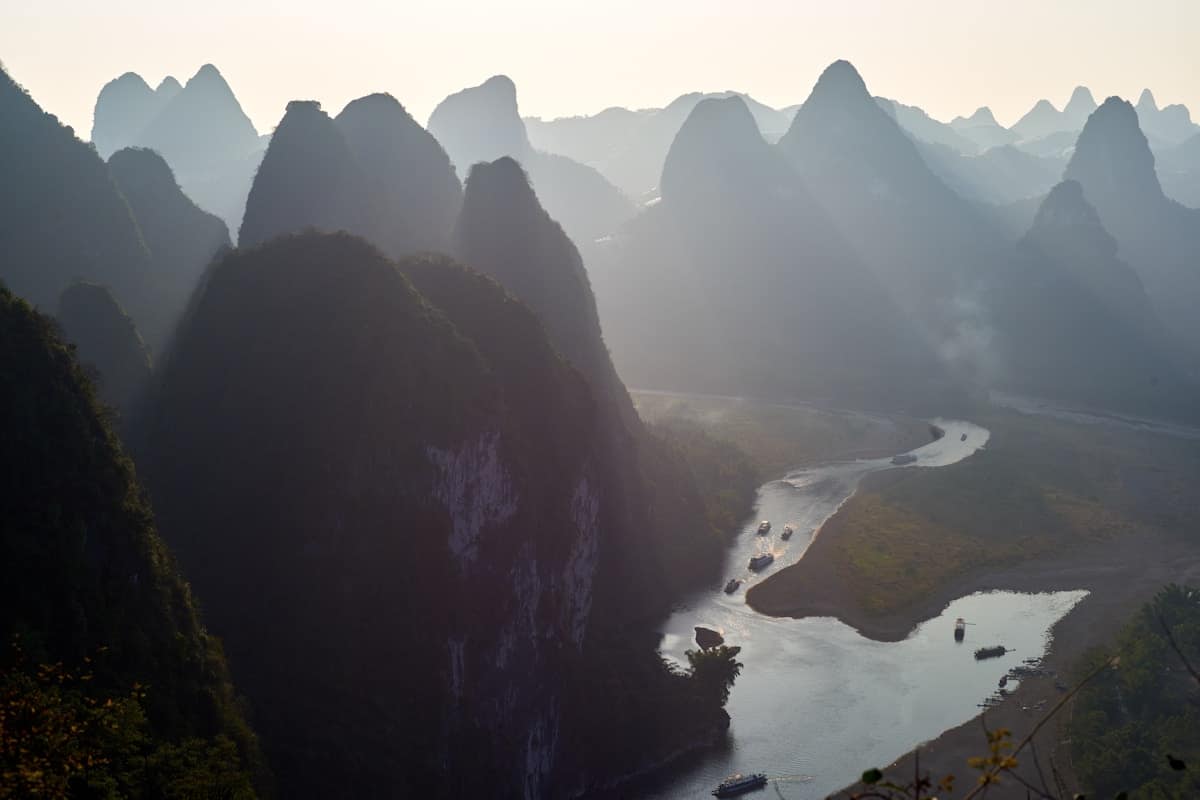
Guilin (, literally “Forest of Sweet Osmanthus”) sits in northeastern Guangxi Province, about a 3-hour high-speed train ride from Guangzhou. While Beijing dazzles with imperial grandeur and Shanghai with futuristic skylines, Guilin offers something entirely different: a landscape so surreal it barely looks real. The iconography of mist-shrouded limestone peaks, bamboo groves, and gently flowing rivers is quintessential China—the postcard version that actually delivers.
Most visitors split their time between Guilin city (the transport hub and gateway) and Yangshuo (the real star of the show, about 65 km downstream). With 3–4 days, you can cover the essentials at a relaxed pace.
The Li River Cruise: China’s Most Scenic Boat Ride
The Li River cruise from Guilin to Yangshuo is the undisputed highlight. Over 83 kilometers and roughly 4 hours, you’ll float past bamboo groves, water buffalo grazing on riverbanks, fishermen on bamboo rafts, and those iconic karst peaks that seem to stack layer upon layer into infinity. Bring your camera—and make sure the battery is fully charged.
Practical Cruise Tips
- Boats depart: 9:00–10:00 AM from Zhujiang Pier, about 40 minutes from downtown Guilin
- Ticket price: ¥215–360 depending on boat class (standard vs. luxury). Lunch is included on most boats, but it’s basic Chinese fare—pack snacks if you’re picky.
- Best season: April–October. Summer can be hot (35°C+) but the river is at its fullest. Winter is quieter and often misty, which creates hauntingly beautiful photos but can mean reduced visibility.
- Seating: Pay extra for the upper deck or a window seat. The views are 360 degrees—you want unrestricted access to both sides.
- Alternative: For a shorter, cheaper experience, take the bamboo raft from Yangdi to Xingping (¥225 per raft, seats 4). This covers the most scenic stretch and takes about 90 minutes.
Yangshuo: The Real Magic
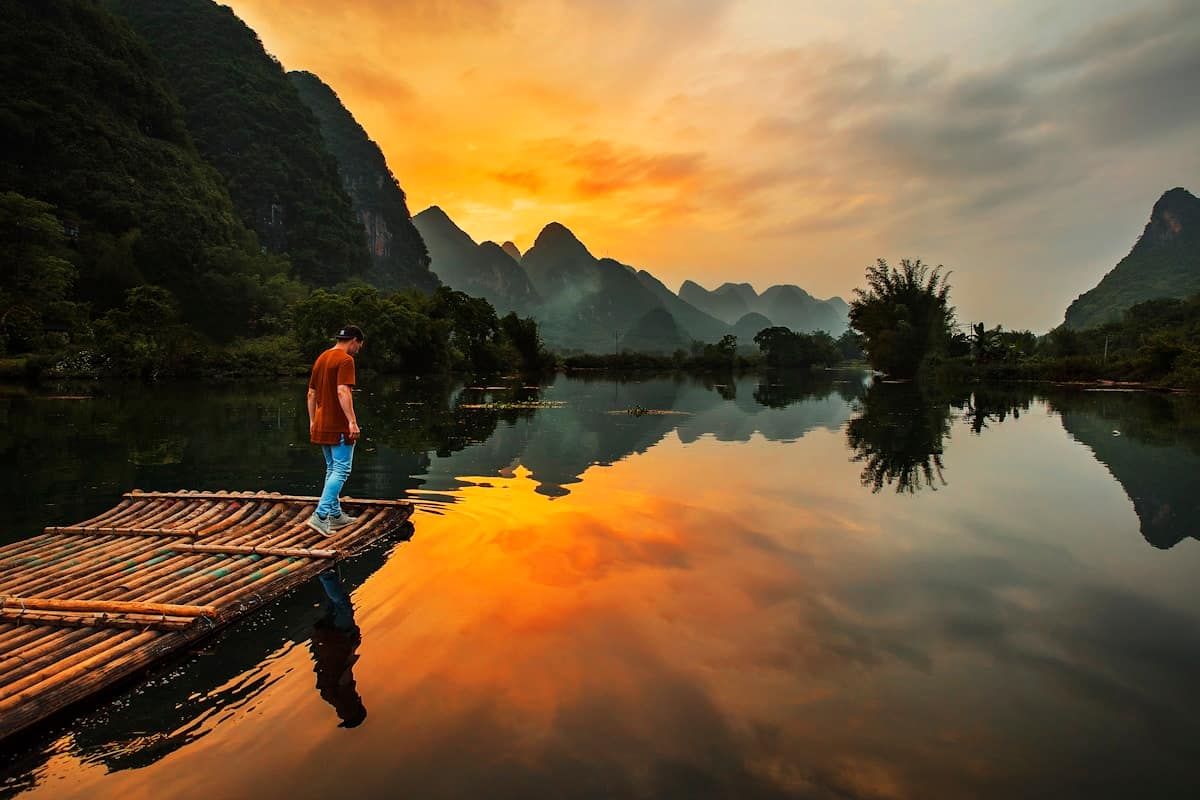
Yangshuo is where you should spend the bulk of your time. The town itself is charmingly touristy—think cobblestone pedestrian streets, lively bars, and endless guesthouses—but step 10 minutes outside town on a bicycle and you’re in another world entirely.
Yangshuo Countryside Cycling
This is, hands down, the best thing to do in the Guilin area. Rent a bicycle (¥20–30/day) or electric scooter (¥50–60/day) and follow the Yulong River path—a mostly flat, paved route that winds through rice paddies, under the shadows of karst peaks, and past small villages where farmers still work the fields with water buffalo. The full loop from Yangshuo to the Yulong Bridge and back takes about 3–4 hours on a regular bike, 2 hours on an e-scooter.
Pro tip: Start around 7:30 AM. You’ll beat both the heat and the crowds, and the morning light on the karst peaks is spectacular.
Bamboo Rafting on the Yulong River
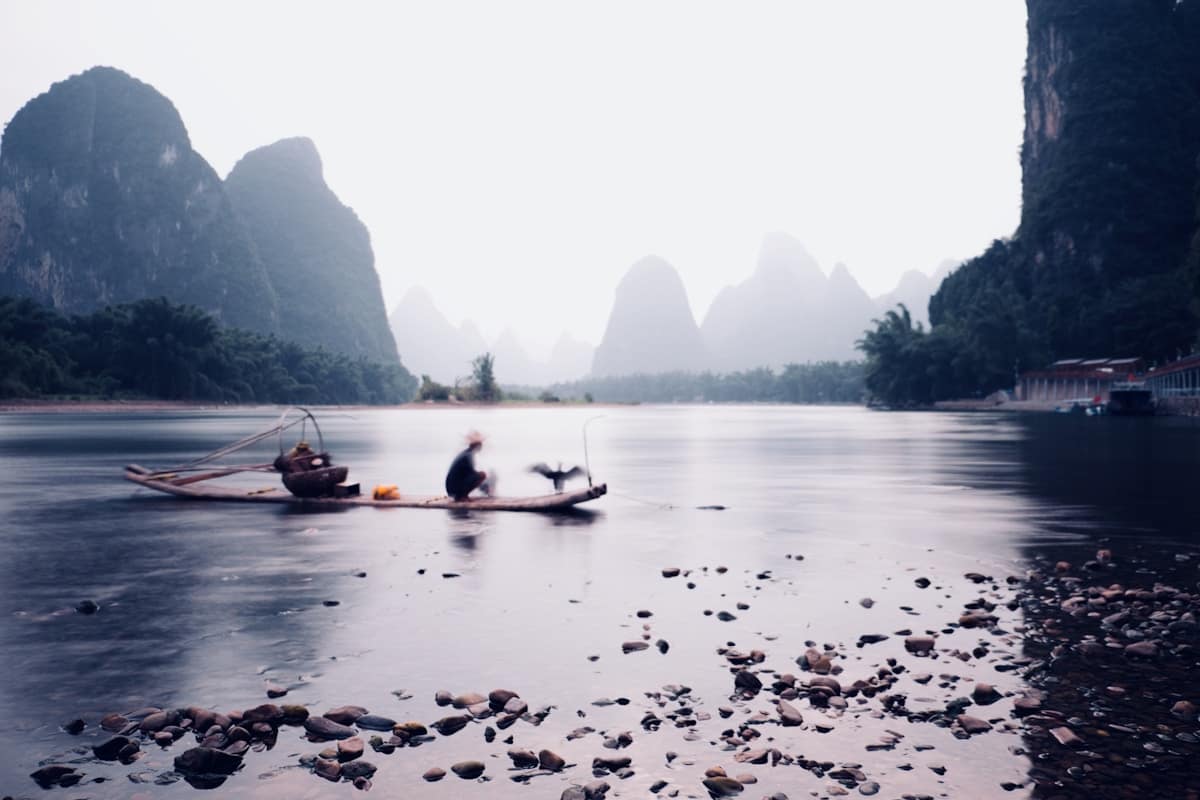
A calmer, more intimate alternative to the Li River cruise. These traditional bamboo rafts (actually PVC pipes painted to look like bamboo—but still charming) glide down the Yulong River with a punter steering from the back. The Jinglong Bridge to Gongnong Bridge section (¥160 per raft, 2 people) is the most scenic. Expect to get a little splashed—it’s part of the fun.
Longji Rice Terraces: The Dragon’s Backbone
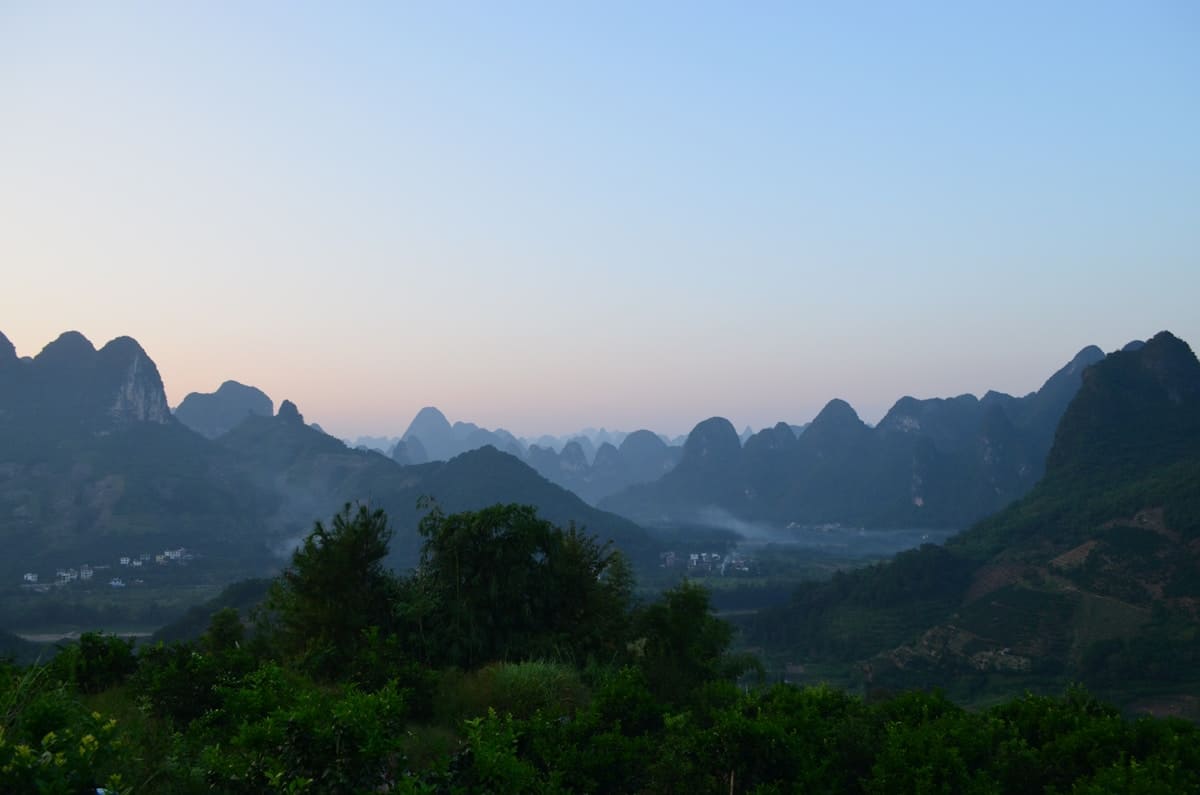
About 2 hours north of Guilin, the Longji Rice Terraces are one of China’s most stunning agricultural landscapes. Built over 650 years by the Zhuang and Yao ethnic minorities, these terraces wrap around the mountains like a giant green staircase. Visit during late May–June (water-filled terraces reflecting the sky) or September–October (golden harvest season) for the most dramatic views.
- Entrance fee: ¥80
- Getting there: Tourist bus from Guilin Bus Station (2.5 hours, ¥50) or private driver (¥400–500 round trip)
- Stay overnight: Ping’an Village has guesthouses perched directly on the terraces. Waking up to clouds rolling through the valley below your window is unforgettable. Rooms from ¥150/night.
- Hiking: The walk from Ping’an to Dazhai village takes about 4–5 hours through terraced scenery. Moderate difficulty—bring water and sturdy shoes.
What to Eat in Guilin
- Guilin Rice Noodles – The city’s signature dish. Thin, springy rice noodles in a pork bone broth with braised pork, pickled beans, peanuts, and chili. Locals eat this for breakfast. ¥8–15 at any street-side shop. The ritual: eat the noodles first, then add hot broth to the remaining sauce and sip it like soup.
- Beer Fish – A Yangshuo specialty. Fresh river fish cooked in a beer-based sauce with tomatoes, peppers, and local spices. ¥60–100 per dish.
- Lipu Taro Loops – Fatty pork belly layered with creamy taro root, steamed until meltingly tender. ¥40–60.
3-Day Guilin-Yangshuo Itinerary
| Day | Morning | Afternoon | Evening |
|---|---|---|---|
| 1 | Arrive Guilin. Reed Flute Cave or Elephant Trunk Hill | Li River bamboo raft (Yangdi→Xingping section) | Check into Yangshuo hotel. West Street night market |
| 2 | Yulong River countryside cycling (start early!) | Yulong River bamboo rafting. Moon Hill hike | Impression Liu Sanjie light show (¥198) |
| 3 | Longji Rice Terraces day trip, or explore Xingping old town | Return to Guilin. Sample rice noodles | Depart or continue to next destination |
Where to Stay
- Yangshuo countryside: Boutique hotels nestled among karst peaks. The Yulong River area (about 4 km from West Street) offers the best scenery. Mid-range: ¥300–500/night.
- Yangshuo town (West Street): Budget-friendly and convenient for nightlife, but can be noisy. Hostels from ¥60/bed, hotels from ¥200/night.
- Guilin city: Stay near the city center or the train stations if you’re just using Guilin as a transit point. Mid-range: ¥200–400/night.
Getting There and Around
- By high-speed train: Guilin has three train stations—Guilin North, Guilin West, and Guilin Station (central). Direct trains from Guangzhou (2.5h), Shenzhen (3.5h), and Chengdu (6.5h).
- By air: Guilin Liangjiang International Airport (KWL) has flights from most major Chinese cities and some international connections.
- Guilin to Yangshuo: Tourist bus (1.5h, ¥25), taxi/Didi (1h, ¥100–150), or the Li River cruise (4h, all-in-one transport + sightseeing).
- Getting around Yangshuo: Bicycle or e-scooter is king. Taxis are available but unnecessary for most activities.
Essential Travel Tips
- Weather: Subtropical and humid. April–June can be rainy but the misty landscapes are magical. July–August is hot (30–35°C) and busy with domestic tourists. September–November offers the best balance of weather and scenery.
- Mosquitoes: Bring repellent. The riverside location means mosquitoes are a reality, especially in summer.
- Cash: While WeChat Pay/Alipay are widely accepted in Guilin city, smaller villages and rural guesthouses may prefer cash. Carry ¥300–500 as backup.
- Photography: Sunrise at Xianggong Mountain is the single best photo spot. It’s a popular viewpoint but the 20-minute stair climb and the ¥60 entry fee keep most casual tourists away. Arrive by 5:30 AM.
The Verdict
Guilin and Yangshuo deliver one of the most visually stunning experiences in all of China. The landscape genuinely lives up to every photograph you’ve seen—and the best part is that you don’t need to be on a crowded tour bus to experience it. Rent a bike, get lost on a countryside path, stop at a tiny noodle shop in a village with no English menu, and watch the sun set behind a wall of limestone peaks. That’s the Guilin worth traveling for.
Planning a longer trip? Check out our guide to nearby Yunnan Province for more southern China adventures.
}