Three days in Beijing is enough to see the headline sights properly if — and only if — you treat the time like a logistics problem. The mistake most people make is treating each site as a destination in its own right and then losing two hours per day to cross-city travel. The route below works because it groups things geographically and uses Beijing’s subway as the spine.
This is a strict hour-by-hour plan, not a “things to consider” list. For the wider context of what is worth seeing in the city, see the Beijing Travel Guide. For deciding between Great Wall sections, see the Great Wall of China guide. For fitting this 3-day block into a longer China trip, the China Itinerary Guide covers 7, 10, and 14-day routes.
Before You Land: Four Things to Book Three Days Out
Beijing is not a city you can wing. The Forbidden City alone has a daily ticket cap and routinely sells out 3 to 5 days in advance for weekends. Get these four bookings done before you leave home:
- Forbidden City entry ticket: Book at en.dpm.org.cn or via the Trip.com Beijing attractions page 3 to 7 days before your visit. Same-day tickets are not sold at the gate. Cost: 60 yuan low season (Nov-Mar), 80 yuan peak. Choose the morning slot if available.
- Mutianyu Great Wall private transfer: Book a one-way or return car on Klook or Trip.com (roughly 350-550 yuan for the round trip with 4 hours on the wall). Tour buses are cheaper at 250 yuan but follow group timing.
- One Peking duck dinner: Siji Minfu (the Forbidden City branch near Dengshikou) is the standard recommendation; reserve via WeChat mini-program or call ahead. Da Dong is the upscale option, around 400-600 yuan per person.
- Hotel near a Subway Line 1 or Line 2 station: Wangfujing, Dongdan, or Xidan locations cut your daily transit time significantly. Hotels 20 minutes from a subway will cost you 3 to 4 hours over a 3-day visit.

Day 1: Tiananmen Square, Forbidden City, and a Sunset on Jingshan Hill
Day 1 is the imperial center. Everything sits along the central north-south axis of the old city, so you can do it on foot with one short subway ride at the end.
7:30am — Breakfast and a metro ride to Tiananmen East
Eat at the hotel or grab a jianbing (egg pancake) from a street vendor near your subway station. Take Subway Line 1 to Tiananmen East station (3 yuan). You will exit directly into the square. Arriving by 8am means you avoid the security-check queue, which builds to 30-45 minutes by 10am on weekends.
8:00am-9:30am — Tiananmen Square and the Monument
Walk the square south to north. There are three monuments to look at: the Monument to the People’s Heroes in the center, Mao’s Mausoleum on the south side (closed Mondays, free but expect a 90-minute queue if you want to go in — most travelers skip), and the Tiananmen Rostrum gate at the north. Do not skip the rostrum — climbing it is a separate ticket (15 yuan) and gives you the view back across the square that is in every Beijing photo. Allow 60-90 minutes here.
9:30am-1:00pm — Forbidden City
Enter through the Meridian Gate (Wumen) on the north side of Tiananmen Square. You cannot enter from the north — the only entry is the south. With a pre-booked ticket, the entry queue is 10-15 minutes. The standard route is straight up the central axis (Outer Court, then Inner Court) and out the north gate (Shenwumen) onto Jingshanqian Street. Plan 3-3.5 hours minimum. Audio guide rental is 40 yuan; the Palace Museum WeChat mini-program also offers a free audio guide that works on your phone.
Honestly, the side palaces are where the Forbidden City gets interesting. The Hall of Clocks (10 yuan extra) and the Treasure Gallery (10 yuan extra) on the eastern side are the two add-ons worth paying for — both are usually quiet because most tour groups stick to the central axis.
1:00pm-2:00pm — Lunch near Jingshan
Exit the Forbidden City through Shenwumen. The cluster of restaurants on Jingshanqian Street has decent options around 60-100 yuan per person. Avoid the ones with multilingual menus and rickshaw drivers out front; they overcharge. Walk one block east for the local Beijing noodle places.
2:00pm-3:30pm — Jingshan Park
Jingshan Park entrance is directly across from the Forbidden City north gate. Tickets are 10 yuan. The central pavilion at the top of the artificial hill gives you the single best view of the Forbidden City from above — the gold roofs stretching south to Tiananmen, with the CBD skyline to the east. The climb takes 15 minutes from the south gate.
3:30pm-6:00pm — Hutong walk through Houhai and the Drum Tower area
Walk north and west from Jingshan toward the Drum Tower (Gulou). Detour through Nanluoguxiang if you have not seen it (commercialized but worth 30 minutes), or skip it for Wudaoying Hutong (one stop further north on Subway Line 2). The walk takes 45-60 minutes at a normal pace. Stop at the Drum Tower (20 yuan to climb, last entry 4:30pm) for sunset views over the rooftops.
6:30pm — Peking duck dinner
Pre-booked Siji Minfu or Da Dong. Both branches near Wangfujing are about 15 minutes by DiDi (40-50 yuan) from Houhai. Allow 90 minutes for dinner; the duck is carved tableside and you eat in three rounds (with pancakes, with greens, in broth as soup). End the day by 9pm — you have a 6am start tomorrow.

Day 2: Mutianyu Great Wall (Full Day)
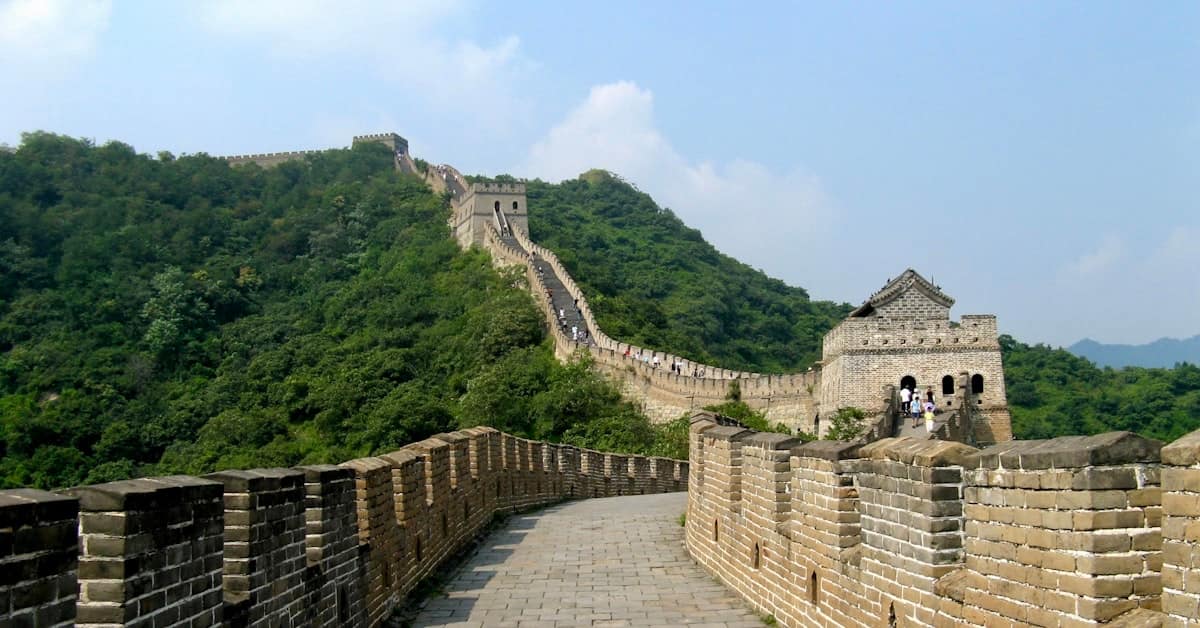
The Great Wall day is a full day. Mutianyu is 73km northeast of central Beijing — about 90 minutes each way by car, longer by bus. The day below assumes a pre-booked private transfer, which is the option I would pick for a 3-day trip.
6:30am — Wake up, quick hotel breakfast
Eat what your hotel offers; there is nothing decent on the highway out. Bring a water bottle and a snack. The wall has small shops at the entrance but no real food on the walking section.
7:30am-9:00am — Drive to Mutianyu
Your booked car picks you up. Traffic out of the city is manageable before 8:30am; after that, the G6 expressway northeast slows down. If you have not pre-booked, take a DiDi to Dongzhimen Bus Hub and catch Bus 916 Express to Huairou (15 yuan), then a local shuttle from Huairou to the Mutianyu entrance (30 yuan) — total time 2.5-3 hours each way.
9:00am-9:30am — Arrival, ticket, and shuttle
Buy your entry ticket at the official window (45 yuan), plus the eco-shuttle bus to the chairlift base (15 yuan). Then choose: chairlift up (120 yuan round trip) or the 30-minute walking path. The chairlift is the better choice if you want to maximize wall time. There is also a cable car (140 yuan round trip) on the western section.
9:30am-1:30pm — Walking the wall
You arrive on the wall at Tower 6 (chairlift) or Tower 14 (cable car). The walkable restored section runs roughly from Tower 1 to Tower 23. The most photographed stretch — steep stairs, mountain views — is between Towers 14 and 20. Walk to whichever end feels right; honestly, most people get to Tower 20 or so and turn back. The total restored section is about 2.5km of wall, which sounds short but involves a lot of climbing.
Bring water. The wall is in full sun most of the day; in summer, temperatures on the stone surface can hit 38C. There is no shade.
1:30pm-2:00pm — Toboggan or chairlift down
The toboggan slide (120 yuan round-trip combined, or 100 yuan one-way down only) is a long alpine slide from Tower 6 back to the parking area. Faster than the chairlift and the standard quirky Great Wall experience. The chairlift is fine if you prefer it.
2:00pm-2:45pm — Lunch in Mutianyu village
The cluster of restaurants near the shuttle parking has reasonable Chinese food, around 60-100 yuan per person. The Schoolhouse at Mutianyu (an Anglo-owned restaurant with a small inn) does a fine sit-down lunch around 150-200 yuan if you want something more relaxed. Skip the food immediately at the ticket gates — overpriced and mediocre.
3:00pm-5:00pm — Drive back to Beijing
You will hit some inbound traffic on the highway after 4pm. Plan to be back in central Beijing by 5:30pm at the latest.
6:30pm — Dinner and an early night
Day 2 is exhausting. Pick something near your hotel — a hotpot place or a noodle shop within walking distance — rather than a destination dinner. You have walked 8-10km on uneven stairs in full sun. Bed by 10pm.

Day 3: Summer Palace and Hutongs — The Slower Day
After two heavy days, Day 3 is the recovery. The Summer Palace opens at 6:30am and the grounds are large enough that it never feels crowded once you get past the entrance cluster. The afternoon is an unhurried hutong walk through a part of the city you have not covered yet.
7:30am-8:30am — Metro to Summer Palace
Take Subway Line 4 directly to Beigongmen (North Gate) station, about 40 minutes from the city center. The park opens at 6:30am and the entrance area is quiet until 9:30am when tour groups arrive.
8:30am-11:30am — Summer Palace
Enter through the North Gate (Beigongmen). The standard route is south through the Suzhou Street replica shopping canal, up the back path to the Tower of Buddhist Incense at the top of Longevity Hill, then down the front steps to the Long Corridor along Kunming Lake, and finally the Marble Boat at the far end. The full circuit is about 4km of walking.
Combo ticket (60 yuan in peak season, 50 yuan low season) covers the main entrance, Tower of Buddhist Incense, Suzhou Street, and the garden areas. The separate entrance-only ticket (30 yuan) is not worth it — you need the add-ons to see the best parts.
Plan 3 hours. You could spend a full day here; with a 3-day itinerary, 3 hours is enough to hit the highlights and the best views.
11:30am-12:30pm — Lunch near the Summer Palace
The restaurants on Yiheyuan Road near the East Gate are tourist-oriented but acceptable. Better option: take Line 4 two stops south to Haidian Huangzhuang and eat at the restaurants around the Zhongguancun tech district — local staff lunch prices around 40-60 yuan per person.
1:00pm-4:00pm — Dongsi Hutong walk and tea
Take Subway Line 6 to Dongsi (about 25 minutes from Haidian). The Dongsi hutong grid — numbered 1 through 14 Tiao (alleys) — is the most authentic surviving hutong cluster near the center. Walk south through Tiao 6 and Tiao 8, which are still residential. Stop at a teahouse when you find one — most charge 25-35 yuan for a cup of jasmine tea and the seat is yours as long as you want it. You will see laundry on bamboo poles, someone repairing a bicycle, and the normal density of small restaurants serving one or two dishes well.
4:00pm-6:00pm — Temple of Heaven (optional add-on)
If you still have energy, the Temple of Heaven is a 20-minute DiDi ride (about 25 yuan) from Dongsi. The entrance fee is 34 yuan for the park or 15 yuan for park-only access without the main hall buildings. In my experience, the park itself — with its singers, chess players, and tai chi groups — is more interesting than the buildings. The main hall is a single beautiful structure but you can see it from outside the fence if the ticket office is closed.
6:30pm — Final dinner: hotpot or dumplings
Beijing hotpot (mutton, not Sichuan spicy) is the standard Day 3 meal. Jubaoyuan in Niujie (the Muslim quarter) is the local favorite; a big pot for two runs 200-250 yuan. For dumplings, the branch of Mr. Shi on Jiugulou Street serves 12-15 varieties in a hutong setting. End the day by 9pm. Early flight tomorrow, or a fifth day if you are staying longer.

Budget Breakdown for the 3 Days
| Item | Estimated cost (yuan) |
|---|---|
| Forbidden City ticket (peak) | 80 |
| Jingshan Park | 10 |
| Drum Tower | 20 |
| Mutianyu entry + chairlift round trip | 165 |
| Mutianyu private car (round trip, 2 people) | 550 |
| Summer Palace combo ticket | 60 |
| Subway (3 days) | ~60 |
| Peking duck dinner (1 person) | 200-300 |
| Other meals (5 meals) | ~300-400 |
| DiDi rides (4-5 trips) | ~150 |
Total for one person: roughly 1,600-2,000 yuan (about USD 220-280 or AUD 340-420). That is before your hotel. A reasonable mid-range hotel near Wangfujing runs 500-800 yuan per night; budget options in Dongcheng run 200-350 yuan.
What I Got Wrong the First Time I Tried This
| Mistake | What I do instead now |
|---|---|
| Tried to see the Summer Palace and the Great Wall on the same day. | Separate them. The Summer Palace needs 3 hours minimum; the Great Wall takes a full day with travel. |
| Booked the Forbidden City for the afternoon. | Always morning. The light is better, the crowds are lower, and you finish before the afternoon heat or the 4pm closing pressure. |
| Took a public bus to Mutianyu. | The bus saves 300 yuan but costs 2 hours each way. For a 3-day trip, the time is worth more than the money. |
| Planned a Day 4 and squeezed the Wall into a half-day. | If you only have 3 days, the three-day plan above is tight but complete. Do not cut the Wall short — it is the reason most people come. |
Practical Notes
- Subway: Beijing Metro runs 5:30am to 11:00pm. Most stations are accessible. The Yikatong transport card is 20 yuan deposit plus whatever you load; buy at any station. You can also pay via Alipay or WeChat Pay at the turnstile gate.
- DiDi: Works in English. Most rides within central Beijing run 25-50 yuan. Add 10-15 minutes of wait time during evening rush (5-7pm).
- Weather: Best months are September-November and April-May. Winter (Dec-Feb) is cold but dry; summer (June-August) is hot, humid, and prone to afternoon thunderstorms. See the Best Time to Visit China for month-by-month breakdowns.
- Phone and internet: Buy a China Mobile SIM at the airport for 80-150 yuan. You will need a VPN for Google, Instagram, and WhatsApp — install it before you fly.
One last thing: do not try to add a fourth major site to any of these three days. Every single day above is already full. The people who enjoy a 3-day Beijing trip are the ones who see the main sights at a reasonable pace and leave with energy to eat dinner. The ones who hate it tried to fit in the Temple of Heaven, the Lama Temple, and a hutong food tour all on the same afternoon. Less is more here — the city is big enough that transit between distant sites eats your time faster than you expect.
Photos courtesy of Unsplash.
Part of our Beijing 7-day series. Three days covers the essentials, but most travelers benefit from staying longer. The full 7-day Beijing itinerary, which expands the timeline this article fits into.