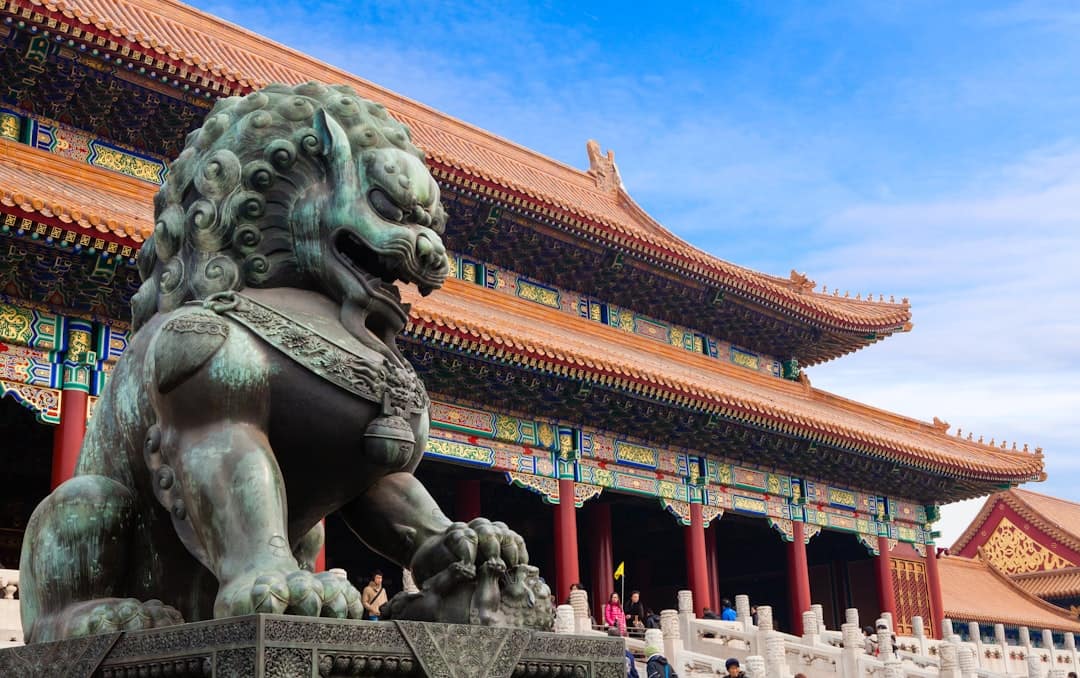
Most seven-day Beijing itineraries you’ll find online try to fit twelve attractions into seven days, treat the Great Wall as a half-day side trip, and assume you’ll cheerfully eat at a restaurant ten minutes’ walk from your hotel because that’s where the guidebook said to go. The result is a week of taxis, queues, and exhaustion — followed by the strange sensation that you saw a lot of Beijing without really being in it.
This is the version I’d give a friend with seven full days, no jet-lag buffer, and a budget that allows for a couple of nice meals. It assumes you stay near a subway line, prioritize one or two things a day instead of five, and treat the Great Wall as the half-day-out-of-town anchor it deserves. It works in March–May and September–October. Skip July and August unless you’re committed to a 35°C, very crowded version of this trip.
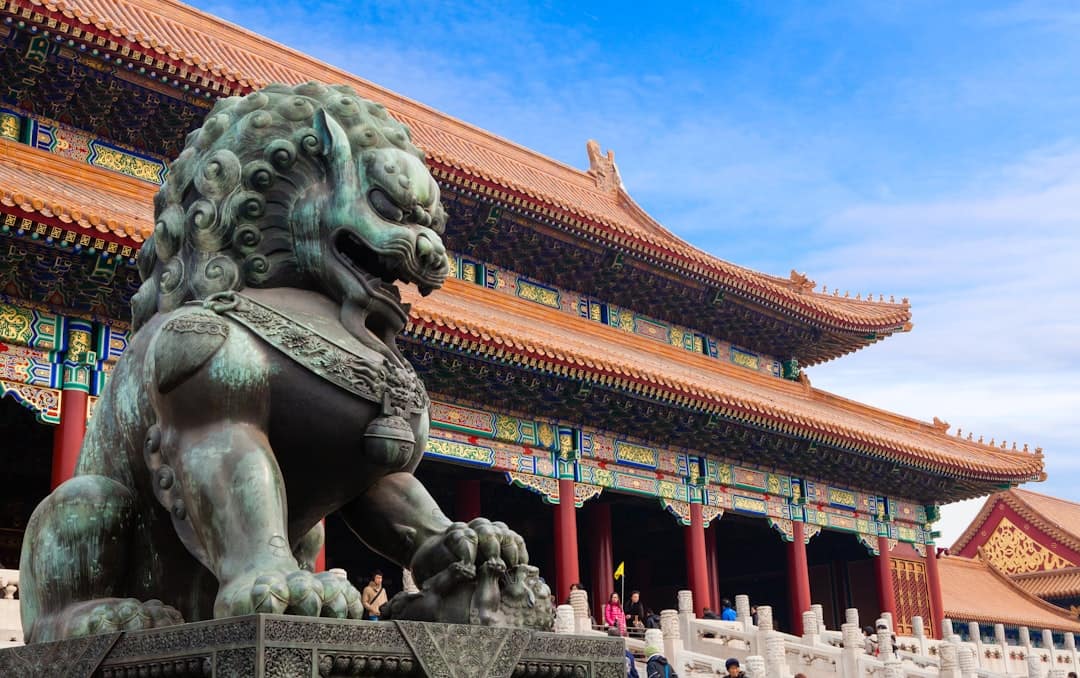
Where to Stay (Pick Your Subway Line First)
Stay near Line 6, Line 1, or Line 2. These three lines connect every major attraction in central Beijing, and a hotel within a 5-minute walk of any of their stations turns “getting around” from a logistics problem into a non-issue. The neighborhoods I’d actually pick:
- Wangfujing / Dongdan (Line 1): Walking distance to the Forbidden City and Tiananmen Square. Slightly tourist-trap-shaped, but unbeatable for the first two days when you don’t want to deal with transit yet.
- Gulou / Drum Tower area (Line 8 + Line 6): Hutong neighborhoods, walkable to Houhai lakes and Nanluoguxiang. This is where I’d stay for a more “lived-in” version of the trip.
- Sanlitun / Tuanjiehu (Line 10): Best for evening eating and drinking, weakest for morning sightseeing — you’ll be on the subway 30 minutes to anywhere central.
Avoid hotels in the airport area or near the second-ring road expressways. They look central on the map; they’re not. In my experience, the difference between a good Beijing trip and a frustrating one is about 200 meters of walking distance to a subway station.
Day 1: Tiananmen, Forbidden City, Jingshan
Start with the obvious. Tiananmen Square opens at sunrise; the Forbidden City opens at 8:30am. Reserve your Forbidden City ticket online at least 3 days in advance at gugunews.cn — same-day tickets sell out by 9am most days, and the gate doesn’t accept walk-ins on weekends (as of early 2026). Foreign passports work; foreign credit cards work on the booking site.
Enter the Forbidden City from the south (Meridian Gate / Wumen) and exit at the north (Shenwumen). The complex is laid out as a single straight axis south to north, so walking it that way means you don’t double back. Plan on 2.5–3 hours. The crowds thin noticeably after the first three courtyards — most tour groups stop at the Hall of Supreme Harmony, photograph it, and turn around. Keep walking.
Honestly, the best view of the Forbidden City is from outside it. After exiting at Shenwumen, walk straight across the road and climb Jingshan Park (entrance fee 2 yuan, takes 20 minutes). The pavilion at the top is on the central axis of the entire imperial city — one of the few places in central Beijing where you can see what the rooftops are actually doing.
Eat dinner near Houhai or in a Gulou hutong. Skip Wangfujing Snack Street — it’s the most photographed and least good food in central Beijing.
Day 2: Temple of Heaven, Pearl Market, Hutong Walk
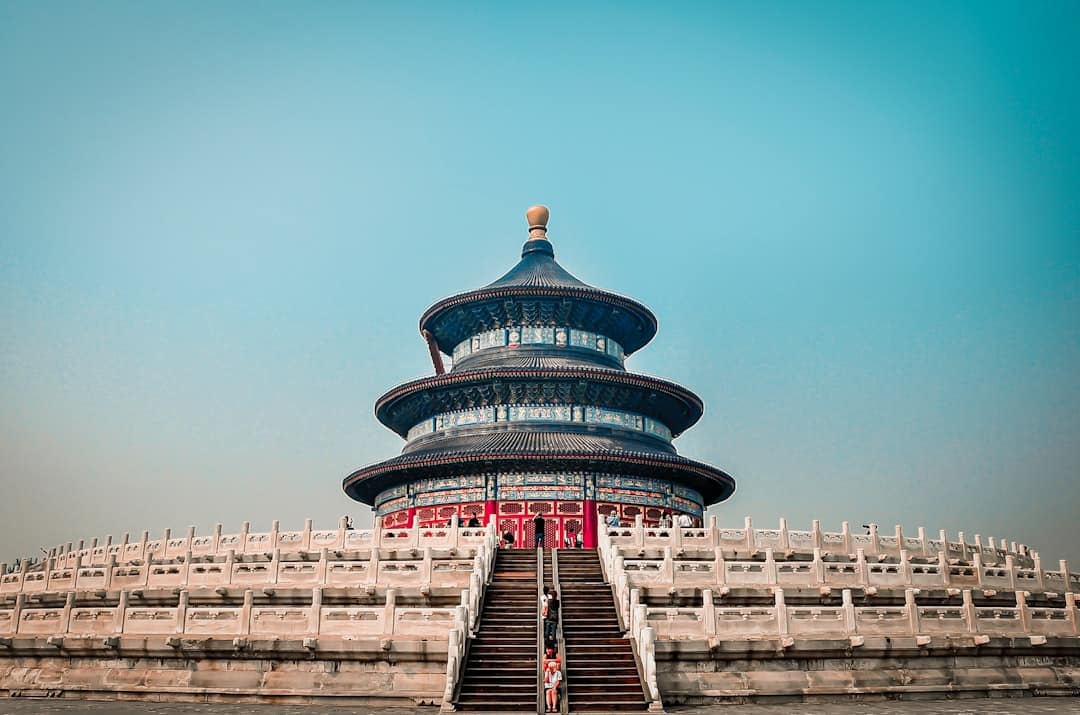
Temple of Heaven opens at 6am and the surrounding park fills with retirees doing tai chi, dancing, playing jianzi, and arguing about chess. The temple itself is the third-most-visited building in Beijing, but the park around it is what makes the early visit worthwhile. Get there before 7:30am, walk the perimeter, then enter the inner complex when it opens at 8.
Combined ticket costs 28 yuan in low season (Nov–Mar), 34 in peak season. Buy at the gate; lines are fast. The temple itself takes 90 minutes max.
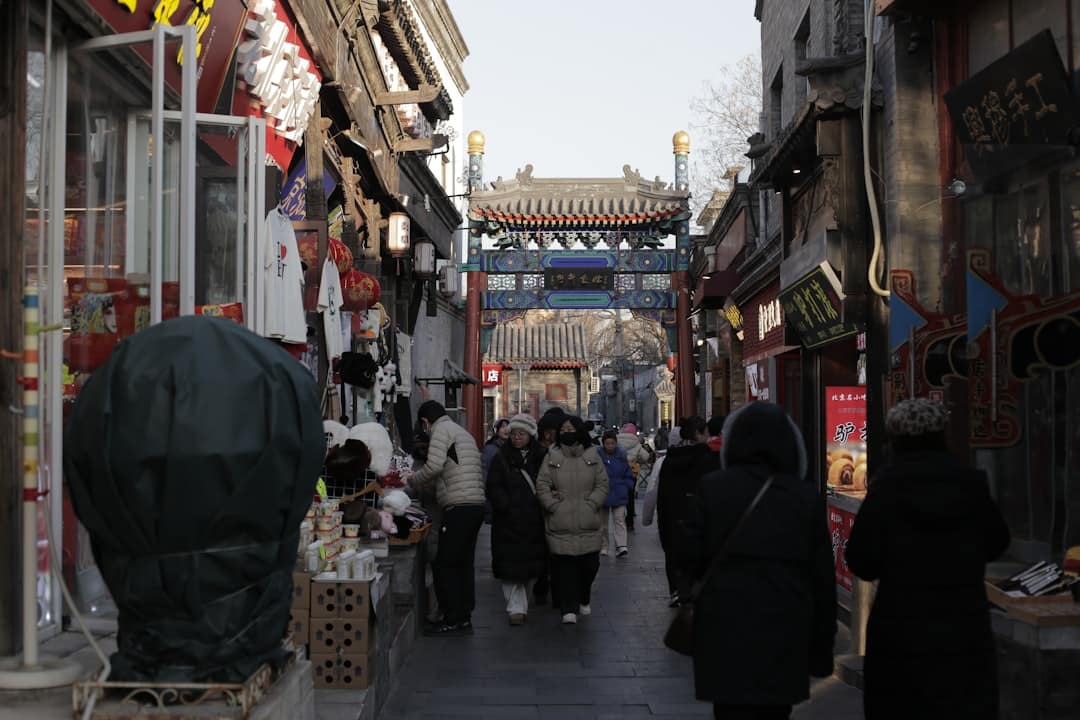
For the afternoon: take Line 5 north to Beixinqiao and walk into the hutongs around Nanluoguxiang. The street itself has been thoroughly commercialized, but the side alleys (look for hutongs called Mao’er, Banchang, or Fangzhuanchang) are still residential and atmospheric. You don’t need a guide here — just walk. The hutongs are a maze, but a small one. You’ll always come out somewhere on a main road.
Day 3: The Great Wall (Mutianyu, Not Badaling)
This is the most important day of the week. Get it right and Beijing was worth the trip; get it wrong and you’ll spend four hours in traffic to take a photo at a wall you couldn’t see for the crowds.
Go to Mutianyu, not Badaling. Badaling is closer (and feels closer in the brochures), but it’s also where every domestic tour bus ends up, the wall section is the most heavily restored, and the hawkers are aggressive. Mutianyu is a 90-minute drive northeast of Beijing; the section is just as well-preserved and there’s a cable car up and a toboggan ride down — which sounds gimmicky but saves a steep 25-minute hike that, in summer heat, is genuinely punishing.
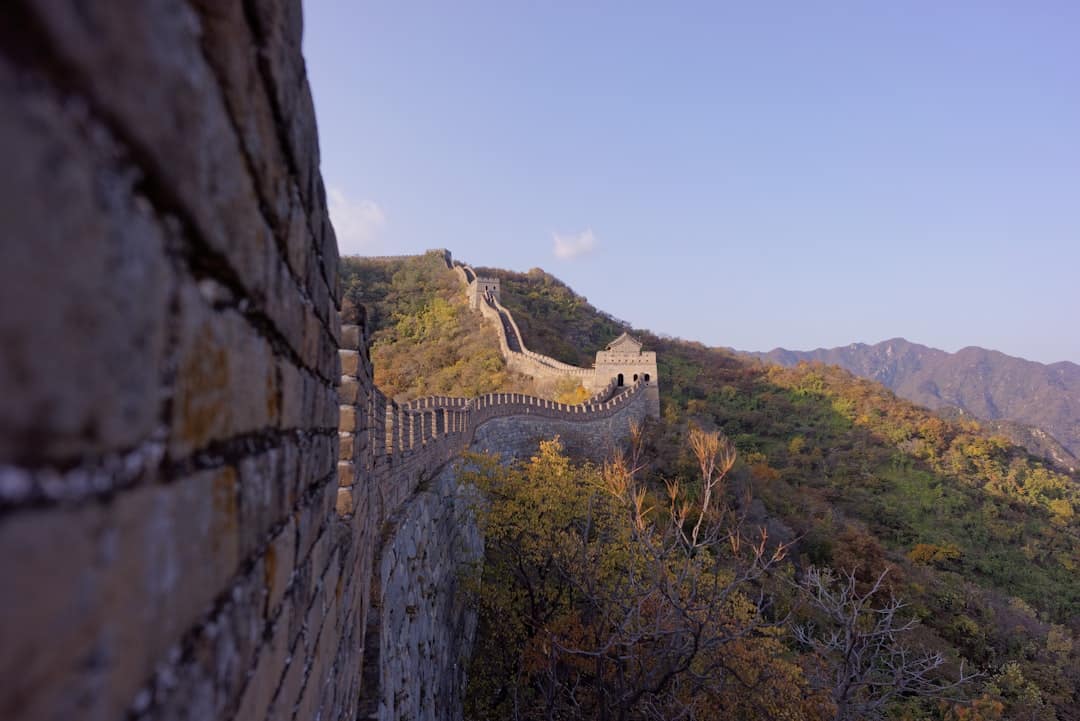
The cleanest way to get there as a foreigner: book a private driver through your hotel or via DiDi for the day (around 600–800 yuan as of 2026). Public buses go to Mutianyu, but the connections eat 90 minutes each way and you’ll regret it. Group day tours from the major hotels exist, but they tend to bundle in a “jade factory” stop you didn’t ask for.
If avoiding crowds is the actual priority and you’re willing to add an hour each way, go to Jinshanling instead of Mutianyu. It’s further (2.5 hours), partially unrestored, and requires more walking. That’s exactly why it’s quiet — and the photos are dramatically better. For more on which section to choose for which kind of day, see our guide to picking a Great Wall section.
Day 4: Summer Palace and Old Summer Palace
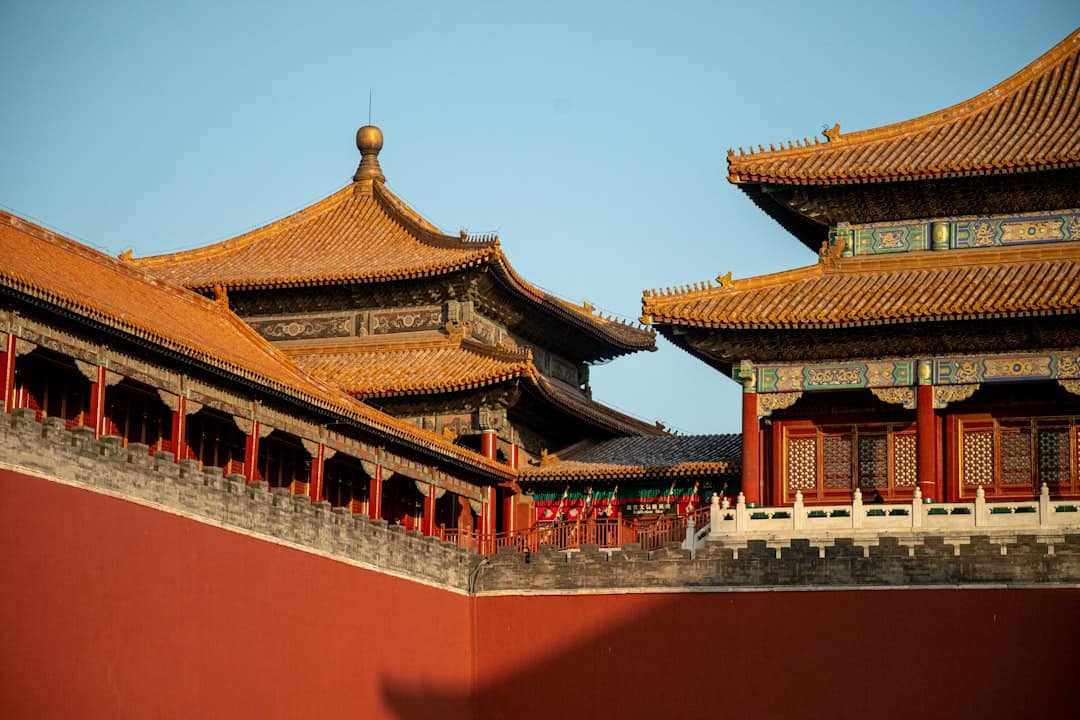
The Summer Palace (Yiheyuan) is the largest royal garden in China and the most relaxing day in central Beijing — partly because of the lake, mostly because the place is large enough that crowds don’t compress.
Enter from the North Gate (Beigongmen subway, Line 4), not the East. The North side has Suzhou Street and Longevity Hill — the photogenic stretches. The East side has the imperial residential buildings, which are interesting but bunch up. Walk south through the complex, take the boat across Kunming Lake (15 yuan, 20 minutes), and exit at the East Gate. That’s a one-way route, no doubling back.
If you have energy left and an interest in 19th-century history, the Old Summer Palace (Yuanmingyuan) is two subway stops away. It was burned by Anglo-French forces in 1860 and never rebuilt — the ruins are stranger and more moving than the actual restored palace. Most tourists skip it. That’s part of why it’s worth doing.
Day 5: Lama Temple, Confucius Temple, and 798 Art District
This is the day where Beijing stops feeling like a parade of imperial monuments. The Lama Temple (Yonghegong) is the most active Tibetan Buddhist temple in Beijing — incense smoke is so thick on weekends you’ll smell your clothes for the rest of the day. Combined with the Confucius Temple next door (a 5-minute walk), it’s a 2-hour morning. Tickets 25 yuan.
For the afternoon, take Line 14 east to 798 Art District. It’s housed in a former East German–designed factory complex from the 1950s — the architecture alone is worth the trip. Galleries vary wildly in quality; the better ones are UCCA, Pace Beijing, and the smaller spaces in the back near Caochangdi. Free entry to most, 60–120 yuan for the bigger curated shows. Skip the gift shops along the main loop. Walk the perimeter instead.
Eat dinner in Sanlitun. This is the day to spend more on a meal than you have all week — Beijing’s restaurant scene since 2020 has gotten quietly excellent, and Sanlitun is where most of the better new openings have landed.
Day 6: A Day Trip — Or a Day Off
By day six most travelers are running out of energy. You have two genuinely different options:
Option A: Take a high-speed train to Tianjin. 33 minutes from Beijing South Station, 55 yuan one-way. Tianjin’s old concession-era architecture is the closest thing in northern China to walking through a slightly off-kilter version of European Shanghai. Ride the Tianjin Eye, eat goubuli baozi (overrated but worth doing once), and be back in Beijing by 8pm. For booking and details on the high-speed network, see our China high-speed train guide.
Option B: Treat day 6 as a buffer day. Sleep in. Go back to whatever neighborhood you liked best earlier in the week. Sit in a hutong courtyard cafe for two hours. The people who enjoy China most are almost always the ones who over-planned logistics and under-planned activities — Beijing rewards this if you let it.
Day 7: Last Day Logistics — Save This One for Loose Ends
Don’t book anything major on day 7. International flights from PEK (Capital) and PKX (Daxing) typically depart in the late afternoon or evening; you want a half-day buffer for hotel check-out, the airport express, security, and the inevitable last-minute thing you forgot.
Useful ways to spend a half-day:
- The Beijing Capital Museum (Shoudu Bowuguan): Free, modern, vastly underrated, and walkable from Muxidi station on Line 1. Two hours is the right amount of time.
- Panjiayuan Antique Market (weekend mornings only): If your day 7 is a Saturday or Sunday, this is the most interesting market in central Beijing. Get there before 9am.
- One last good meal: Roast duck at a place that wasn’t on your hotel’s recommendation list. Quanjude is famous; Siji Minfu is better and cheaper. Book ahead — same-day walk-in won’t work at peak hours.
For the airport: the Capital Airport Express runs from Dongzhimen and takes 25 minutes for 25 yuan. For Daxing (the newer airport), use the Daxing Airport Express from Caoqiao on Line 19/Line 10 — 35 minutes, 35 yuan. Both are dramatically faster than a taxi at rush hour.
What Most People Get Wrong (and How to Avoid It)
| What people typically do | What actually works |
| Try to fit Tiananmen, Forbidden City, Temple of Heaven, and a hutong walk into one day | Split it across two days. Tiananmen + Forbidden City is already 5 hours including walking and queues — adding Temple of Heaven on the same day is how you end up exhausted by 4pm. |
| Book Badaling because it’s “the famous one” | Mutianyu costs the same time and money to reach, but the experience is meaningfully better. Badaling is the section that looks best in stock photos and worst in person. |
| Stay in a luxury hotel near the airport | Stay near a subway station, even if the hotel is older. Beijing’s transit makes everything else easy; nothing makes a 45-minute taxi ride to the Forbidden City feel short. |
| Eat where the guidebooks send you | Use Dianping (it has English now since 2024) and look for places with 4.5+ stars and 1,000+ reviews. The signal is much higher than any English-language list. |
| Treat day 7 as a “last full day” of sightseeing | Treat day 7 as logistics + airport. The hour you save in panic-packing is worth more than any monument. |
Cost Estimate for Seven Days (2026 Prices)
- Hotel (mid-range, 7 nights): 3,500–6,000 yuan total
- Subway and city transit: 100–150 yuan total
- Great Wall private driver: 700 yuan
- Attraction tickets (Forbidden City + Temple of Heaven + Summer Palace + Lama Temple + Mutianyu): ~350 yuan
- Meals (mix of street food + restaurants): 200–500 yuan/day, so 1,400–3,500 over 7 days
- Total, mid-range: roughly 6,000–11,000 yuan per person, excluding international flights
For the visa logistics that come before any of this, see the 2026 China visa guide. If you’re combining Beijing with other cities, the 7, 10, and 14-day China itinerary guide covers the routes that connect Beijing well with Xi’an, Shanghai, and Chengdu.
One last thing: Beijing rewards mornings. Almost every attraction is half as crowded at 8am as it is at 11am. If you’re going to ignore everything else in this guide, ignore it in favor of starting earlier.
Beijing Itinerary 7 Days: Frequently Asked Questions
Q: Is 7 days enough for Beijing?
Seven days is enough to cover Beijing’s main sites at a reasonable pace — Forbidden City, Great Wall, Summer Palace, Temple of Heaven, hutongs, plus a half-day for 798 Art District or shopping. Five days feels rushed; 10 days is too many unless you add a second city.
Q: How much does a 7-day Beijing trip cost in 2026?
Mid-range, roughly 6,000–11,000 yuan per person (about 850–1,550 USD), excluding international flights. This covers a 3-star hotel near a subway line, attraction tickets, meals, city transit, and one private Great Wall driver day.
Q: Should I visit the Great Wall at Mutianyu or Badaling?
Mutianyu — less crowded than Badaling, has a cable car and toboggan, similar restored sections. Badaling is closer but suffers from bus-tour crowds. Jinshanling rewards those who want even fewer people.
Q: Where should I stay in Beijing for a 7-day trip?
Near a Line 1, Line 2, or Line 6 subway station — Wangfujing, Qianmen, Dongsi, or Yonghegong. These put you within 20 minutes of every major attraction. Avoid Olympic Park area unless you specifically want quiet.
Q: When is the best time to visit Beijing?
Late September to mid-October — clear skies, 15–22°C, and after Golden Week crowds subside. Late April to early June is the second best. Avoid July–August (hot and humid) and Chinese New Year.
Related Beijing Guides (Part of the Beijing 7-Day Series)
This 7-day itinerary works alongside our other Beijing-specific guides. Each one expands on a single piece of the trip:
- The Palace Museum (Forbidden City): How to Actually Use a 4-Hour or Full-Day Visit — covers Day 1 in much more detail, including which gates to use and which halls to skip.
- Great Wall of China Guide: Which Section to Visit — full breakdown of Mutianyu vs. Jinshanling vs. Badaling for Day 3.
- Beijing Travel Guide: What to See, Skip, and Eat (2026) — broader Beijing context if you have less than 7 days or want to know what we cut.
- 3-Day Beijing Itinerary: Hour-by-Hour Plan — a shorter alternative if you only have a long weekend.
- Beijing Old vs New: Where the City’s Two Eras Collide — neighborhood context for choosing where to stay.
- China in August 2026: Heat, Crowds, and the Routes That Still Work — read this before planning a Beijing trip in July or August.
Photos courtesy of Unsplash.
4 thoughts on “Beijing Itinerary 7 Days: A Practical Route That Actually Works (2026)”