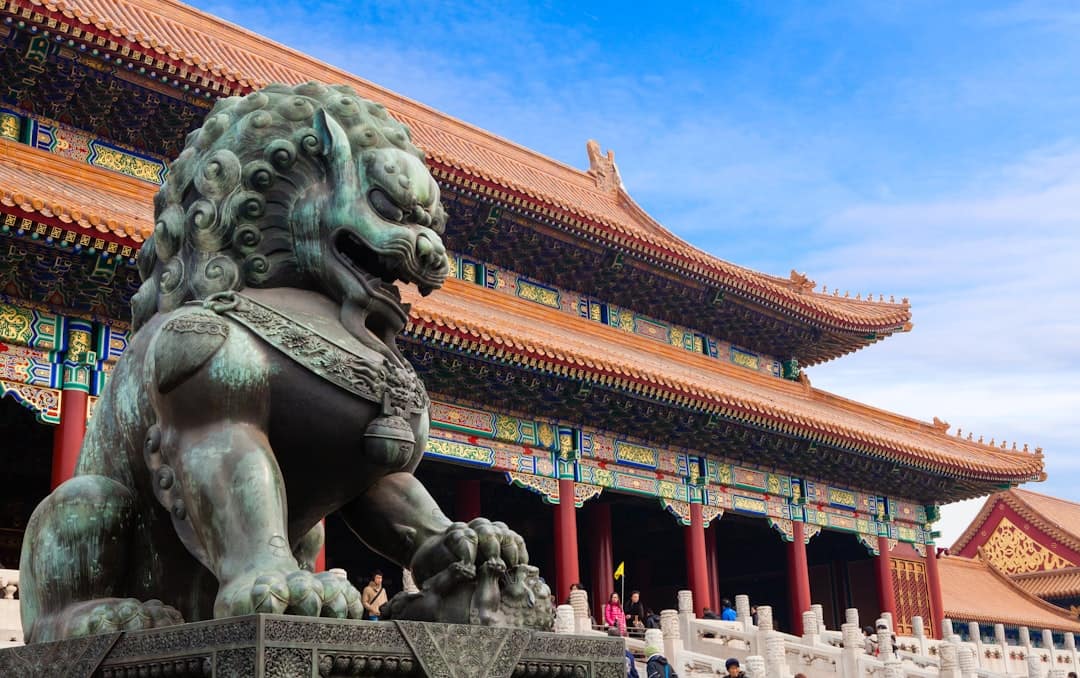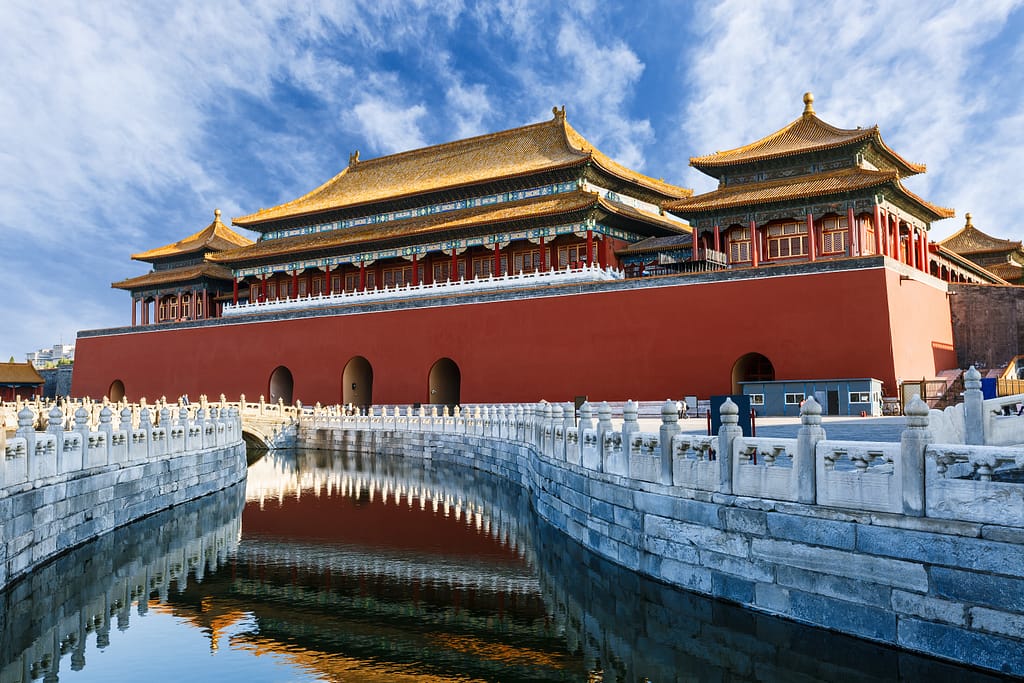
The Forbidden City — officially the Palace Museum since 1925 — is the largest preserved wooden palace complex on earth, and most visitors waste their first hour inside it. They follow the crowd straight up the central axis, photograph the same three halls everyone photographs, and walk out three hours later with sore feet and no memory of anything specific. The problem isn’t the place. The problem is the route. Here’s how to actually use the Palace Museum, whether you have four hours or a full day.
Half-Day or Full Day? The Honest Answer
Four hours is enough if you’re disciplined. A full day is only worth it if you genuinely care about Qing-dynasty material culture and want to do the paid Treasure Gallery and Clock Gallery without rushing. In my experience, most first-time visitors are better off doing a focused four-hour visit and using the rest of the day for Jingshan Park (the rooftop view that makes the whole layout make sense) or Beihai. Trying to “see everything” inside the Palace Museum is a category error — there are 9,000+ rooms and roughly 1.86 million catalogued objects. Nobody sees it all.
Pick your version before you go in. Don’t decide on the fly.
The four-hour route (recommended for first visit)
- Meridian Gate (Wumen) entry → Hall of Supreme Harmony — 30 minutes through the three great halls on the central axis. Walk it, look up at the roofs, don’t queue for the doorway photo.
- Cut east to the Hall of Mental Cultivation and the Treasure Gallery — 90 minutes. This is the dense part of the visit.
- Western Palaces (Six Western Palaces) — 60 minutes. Quieter, more domestic-scale architecture, the wing where the empresses and consorts actually lived.
- Imperial Garden and exit at Shenwumen (north gate) — 30 minutes. Slow walk through the rockeries; exit faces Jingshan Park across the road.

The full-day version
Same opening, but after the central axis you do the Treasure Gallery (Ningshou Palace complex, eastern section), break for lunch outside at one of the small restaurants near Donghuamen, re-enter for the Clock Gallery (Hall for Ancestral Worship, 10 yuan extra on top of the Treasure Gallery’s 10 yuan), then the Western Palaces, then the Imperial Garden. Budget seven hours including a sit-down lunch outside the walls.
The Booking Reality: 7 Days Ahead, Not 1
You must book online in advance. There is no walk-up ticket window anymore. Tickets release exactly 7 days in advance at 8:00pm Beijing time on the official booking site (gugong.ktmtech.cn or via the official “” WeChat mini-program). Peak season (April–October, weekends, Chinese public holidays) sells out within the first hour. Off-peak weekdays can still be booked 1–2 days ahead, but don’t rely on it.
The ticket is 60 yuan in winter (Nov–Mar), 80 yuan in summer (Apr–Oct). Treasure Gallery is 10 yuan extra. Clock Gallery is 10 yuan extra. Both are worth it on a full-day visit; on a four-hour visit pick the Treasure Gallery and skip the clocks.
Bring your passport. The number on the booking must match the passport you show at the gate. They scan it. No exceptions, no spouse-of-the-ticketed-person workarounds.
What if it’s sold out?
Refresh the booking page at midnight Beijing time — released cancellations re-enter the pool. Some hotels and licensed guides hold small ticket allocations; expect to pay 200–400 yuan total including a short guided walk-in, which honestly isn’t a terrible deal if you’ve already flown to Beijing and the official quota is gone.
Best Entry Time and Why It Matters
Book the earliest slot you can get — opening is 8:30am Apr–Oct, 8:30am Nov–Mar (closes 5:00pm summer, 4:30pm winter, last entry one hour earlier). The first hour is the only window where you can stand in the Hall of Supreme Harmony courtyard without a wall of phones in front of you. By 10:30am the central axis is shoulder-to-shoulder with domestic tour groups holding color-coded flags.
The Palace Museum closes every Monday except Chinese public holidays. Don’t fly in on a Sunday for a Monday-only Beijing day; you’ll get to the gate and find the gate shut.
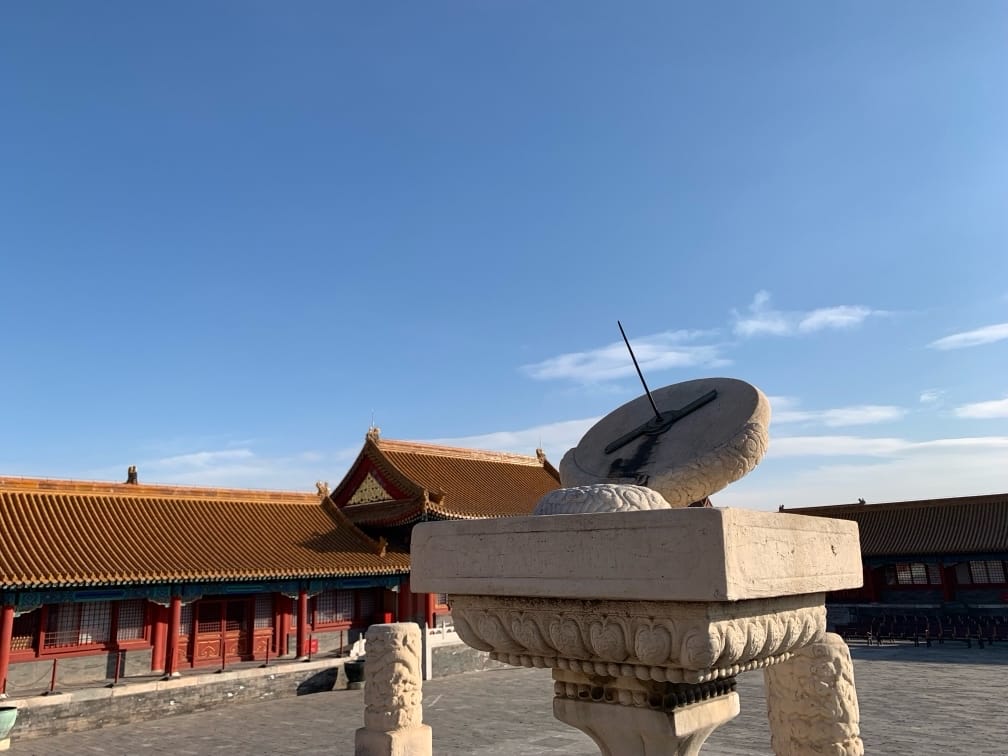
Visiting in Different Seasons: What Changes
The Forbidden City reads differently across the year, and not just in the obvious “summer is hot” way. Each season changes what’s worth photographing, where the crowds concentrate, and which parts of the complex are physically more pleasant to spend time in.
- Spring (mid-March to mid-May): the best window of the year. Cherry blossoms open in the Imperial Garden in mid-March, magnolias around early April. Temperatures sit 12–22°C. Crowds are present but not at peak. Avoid the May 1–5 holiday week.
- Summer (June–August): the marble courtyards reflect heat aggressively from 11am onward. The central axis becomes punishing in direct sun. Counter-strategy: enter at 8:30am, do the central axis fast, then move to the shaded eastern palaces by 10:30am. Stay indoors in the Treasure Gallery during the worst heat. Plan an exit by 1pm.
- Autumn (mid-September to late October): roughly tied with spring for best weather. The yellow ginkgo trees inside several Western Palace courtyards peak in early November — a small but distinctive seasonal sight that most photo guides skip. October 1–7 (Golden Week) is unbearable; book any other autumn week.
- Winter (December–February): cold (-5 to 4°C), dry, often clear. After a rare snowfall, the complex transforms — the contrast between yellow-glazed tiles and white snow is the most photographed image of the museum on Chinese social media. The trade-off: the day length is short, the last entry is 3:40pm, and outdoor courtyards become genuinely uncomfortable to linger in.
If you’re optimizing for crowd avoidance specifically, the quietest period of the year is the second and third weeks of December — domestic tourists are thin on the ground, international tourism is between Christmas-bookings and Chinese New Year, and the cold is bearable for the 3–4 hours you’d spend inside. The trade-off is that the Imperial Garden is bare and the late-afternoon golden hour is at 3pm.
Opening Hours, Closed Days, and the Calendar Traps to Watch For
The Palace Museum’s opening schedule is simpler than it looks online — and the most common mistakes happen because people copy-paste outdated 2018 numbers from Wikipedia. Here’s what actually applies in 2026.
- Summer schedule (April 1 — October 31): 8:30am–5:00pm. Last entry 4:10pm. Last gallery exit 4:30pm.
- Winter schedule (November 1 — March 31): 8:30am–4:30pm. Last entry 3:40pm. Last gallery exit 4:00pm.
- Closed every Monday except when a Monday falls on a Chinese public holiday — then the closure shifts to the next working day.
- Closed for one day around Chinese New Year (typically Day 1 of the lunar new year — usually late January or early February). Confirm on the official mini-program before booking flights.
- Open every other day of the year, including most Western holidays.
The Treasure Gallery and Clock Gallery follow the main hours but close 30 minutes earlier in winter. If you’ve bought the 10-yuan add-on tickets, time your visit to enter those galleries before 3:30pm in winter, 4:00pm in summer. Staff will start clearing visitors out of the side galleries before the main complex closes.
The morning vs afternoon slot question
The booking system splits each day into two slots: a morning entry (8:30am–11:00am window) and an afternoon entry (11:00am–3:40pm window in winter, 11:00am–4:10pm in summer). Once you’re inside, you can stay until close regardless of which slot you booked. Always pick the morning slot if it’s available. The afternoon slot puts you arriving when the central axis is at peak density and finishing your visit when energy is gone.
The exception: counterintuitively, the very last afternoon entry slot (around 1:00pm in winter, 2:00pm in summer) often produces the quietest visit, because most morning tour groups have already left and the late-afternoon arrivals are mostly local Beijingers doing a casual walk. If you’re a second-time visitor who knows where you’re going, this slot is gold.
Calendar traps to avoid
- Don’t fly into Beijing on a Sunday for a Monday-only window. The Palace Museum will be closed and Mondays are also when several other major Beijing sites do partial closures.
- Avoid October 1–7 (Golden Week) and the first week of May. The 80,000 daily visitor cap is hit by 9:30am, queue density at the central axis becomes dangerous, and the booking system sells out 7 days ahead in seconds.
- Avoid the day immediately after Chinese New Year reopens. Pent-up domestic demand makes that single day the most crowded of the year, even more than Golden Week.
Hall of Supreme Harmony: What You’re Actually Looking At
The Hall of Supreme Harmony (Taihedian) is the largest surviving wooden structure in China and the throne room where Ming and Qing emperors held the most important ceremonies — coronations, New Year court, military victories. The throne you can see (you can’t enter; you peer in from the platform outside) is the original Qing imperial throne, recovered and restored in the 1950s after being moved during the warlord era.
Etiquette inside the courtyard: don’t sit on the stone bases of the ceremonial bronzes — they’re guarded and you will be asked to stand up. Don’t touch the gilt-bronze water vats; the gold leaf is original in places. Drone photography is not permitted anywhere inside the walls and the no-fly zone is enforced.
The platform sequence — Hall of Supreme Harmony, Hall of Central Harmony, Hall of Preserving Harmony — gets framed by every guidebook as “the three big halls.” Honestly, the smaller two are more interesting up close. The Hall of Central Harmony has the emperor’s sedan chair on display; the Hall of Preserving Harmony has a single carved marble ramp on its rear staircase, 16.5m long, 250 tons, hauled into the city on a frozen sand-and-water ice road in 1428. Look for the dragons — that ramp is the most expensive single piece of stone in the complex.
What Most Tourists Miss
If you only walk the central axis, you’ve seen maybe 20% of what’s open to the public. The rewarding parts are off to the sides.
The Western Palaces (Six Western Palaces, Xi Liu Gong)
This is where the emperor’s consorts actually lived day-to-day. The scale is domestic, the courtyards are small enough to feel like real homes rather than ceremonial spaces, and the interiors of several palaces have been restored to their late-Qing condition with original furniture. Changchun Palace and Yikun Palace are the best two; both have walk-through corridors with English signage explaining who lived there and when. It’s the only part of the visit where you can imagine someone actually using the building.
The Imperial Garden side alleys
Everyone walks the central path of the Yuhuayuan (Imperial Garden) toward the north gate. Almost nobody steps three meters east or west onto the side paths between the rockeries. There’s a 400-year-old cypress with a railed enclosure, a small pavilion with original Qing tilework, and — most days — total quiet. The garden is the only place inside the walls where it’s physically possible to find a bench and sit for ten minutes without someone bumping into you.
The Hall of Clocks (Fengxian Hall)
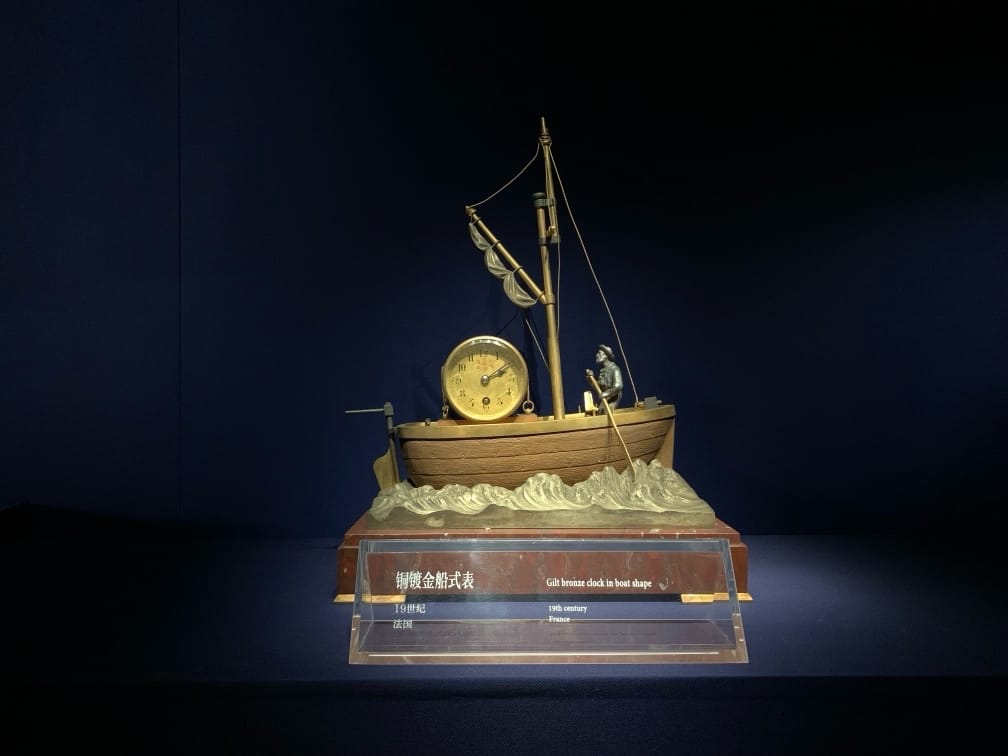
The Clock Gallery houses roughly 200 mechanical clocks from the Qing imperial collection, mostly 18th-century European pieces sent as diplomatic gifts or commissioned through Jesuit intermediaries. Some still run; the museum demonstrates a few at 11:00am and 2:00pm daily. If you have any interest at all in mechanical objects, decorative arts, or the long history of Sino-European trade, this is the most surprising room in the museum. The extra 10 yuan is the easiest yes in the whole complex.
A Short History: Why It’s Called “Forbidden” and Why It Stopped Being So
Knowing this in advance changes how you read the buildings. Skip if you don’t care; otherwise, the seven-minute version:
- 1406–1420: the Yongle Emperor of the Ming dynasty moved the capital from Nanjing to Beijing and built the complex in 14 years. Roughly one million laborers and 100,000 craftsmen worked on it, with timber hauled from Sichuan and stone quarried from Fangshan, west of the city.
- 1644: the Qing dynasty captured Beijing without significantly damaging the palace. Twenty-four emperors total — fourteen Ming, ten Qing — would live and rule from inside these walls.
- 1912: the Republic of China was declared, but the last emperor (Puyi, age 6 at the time) was allowed to keep living in the inner court under a negotiated abdication agreement.
- 1924: a warlord named Feng Yuxiang scrapped the agreement and forcibly evicted Puyi. The complex stopped being a private residence at that moment.
- 1925: reopened as the Palace Museum (故宫博物院, Gùgōng Bówùyuàn) on the thirteenth anniversary of the Republic’s founding. This is why “Palace Museum” and “Forbidden City” both refer to the same place — the building never moved, the function changed.
- 1933–1949: as the Japanese invasion advanced, more than 13,000 crates of the most valuable artifacts were evacuated south, eventually following the Nationalist retreat to Taiwan in 1949. This is why the National Palace Museum in Taipei holds many of the imperial collection’s headline objects, while Beijing’s Palace Museum holds the architecture and a still-massive 1.86 million-piece collection.
- 1987: declared a UNESCO World Heritage Site.
- 2017–2020: the museum opened sections that had been closed to the public for decades, including parts of the Eastern Palaces and the Hall of Mental Cultivation. As of 2026, roughly 80% of the complex is publicly accessible — up from about 30% in the early 2000s.
The “Forbidden” part of the name was literal. For nearly five centuries, no commoner was permitted to enter on pain of execution. The word in classical Chinese (紫禁城, Zǐjìn Chéng) translates closer to “Purple Forbidden City” — purple being the color of the polestar, around which the imperial cosmos was theoretically organized. In my experience, knowing this changes how the central axis reads when you walk it: you’re walking the spiritual centerline of an empire, not just a tourist path.
Treasure Gallery: Is the 10 Yuan Worth It?
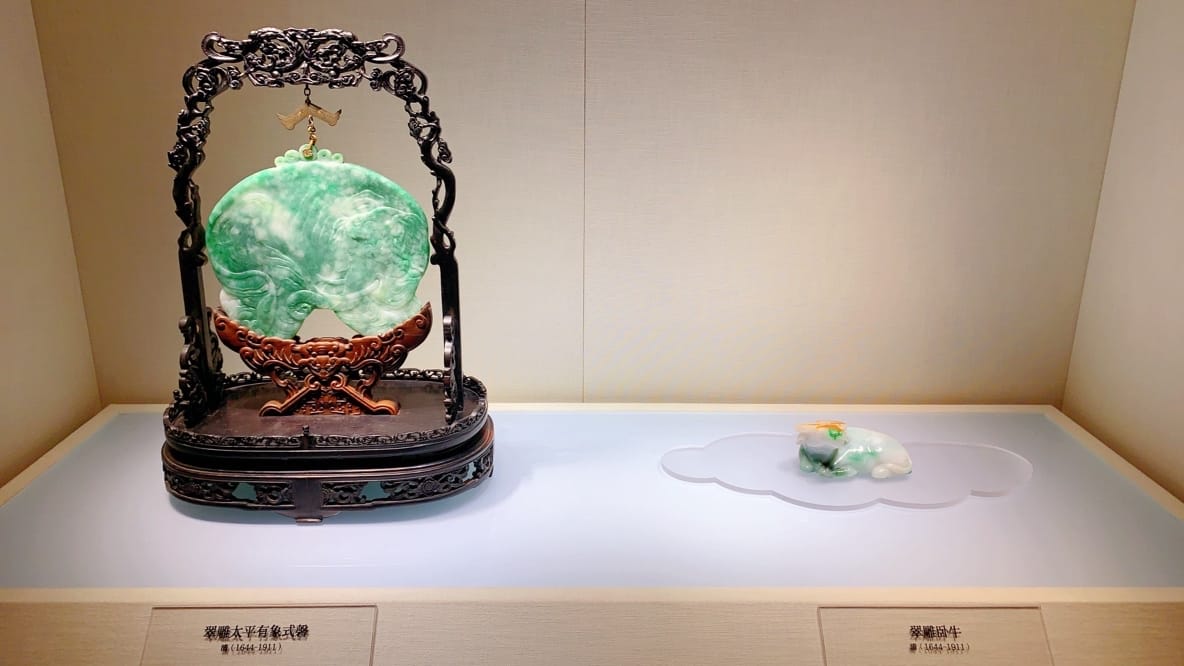
Yes, unconditionally. The Treasure Gallery (Zhenbao Guan) sits inside the Ningshou Palace complex in the northeast corner — built as a retirement quarter for the Qianlong Emperor and never actually used by him. It now houses the Qing imperial jewelry, ceremonial weapons, gold seals, jade carvings and the famous Nine Dragon Screen (one of only three in China). It’s also where most of the genuinely jaw-dropping objects in the museum live. Most tour groups skip it because the entry is separately gated and the guides don’t want to deal with the extra ticket; that’s why it’s quieter than the central halls even at peak times.
Allow at least 60 minutes inside. If you only do one paid extra, do this one.
How to Escape the Central Axis Crowd
The crowd flows in one direction: south to north up the central axis. You break the crowd by cutting sideways early.
Right after the Hall of Supreme Harmony, instead of continuing north to the Hall of Central Harmony, exit through the small east-side gate (Zhonghedian East Gate, signposted). You’ll find yourself in a quiet covered passage that leads to the Hall of Mental Cultivation and the eastern palace cluster. The density drops by about 70% within a hundred meters. You can rejoin the central axis at the Imperial Garden later if you want, or skip it entirely and exit via the Treasure Gallery’s separate north exit.
Avoid the middle of the day in summer. The courtyards have almost no shade and the gray stone reflects heat back at you. Either do the morning slot (8:30am entry) and be out by 12:30pm for lunch outside, or — counterintuitive but it works — book the afternoon slot, enter at 1:00pm and stay until close at 5:00pm; many tour groups have left by 3:00pm because they’re on a schedule to get back to hotels for dinner.
Photographing the Forbidden City: When, Where, and What’s Allowed
You’ll see the same three photos in every guidebook: golden roofs from above, the Hall of Supreme Harmony from the front, the Imperial Garden cypress. They’re worth taking, but the photos that actually stand out are the ones taken five minutes off the obvious axis. Here’s where to point the camera.
The five most underrated photographic spots
- The view south from the upper terrace of the Hall of Preserving Harmony — looking back over the three great halls toward the Meridian Gate. Best in the first hour after opening, before the courtyard fills.
- The corner of the Hall of Mental Cultivation’s outer corridor — frame the gilt copper rain pipes with the tile roof above. Side light works better here than direct sun; aim for late afternoon in summer.
- The Nine Dragon Screen inside the Treasure Gallery — the three Nine Dragon Screens in China are at Beihai Park, the Forbidden City, and Datong. The Forbidden City’s is the most colorful and the easiest to photograph because the gallery has decent indoor lighting.
- The eastern alley between the Hall of Mental Cultivation and the Six Western Palaces — narrow, paved with old brick, almost no foot traffic. The repeating yellow-tile rooflines on both sides converge toward the corner.
- From the central pavilion of Jingshan Park (technically outside the walls) — the only legal way to get the golden-roofs-from-above shot. Climb takes 15 minutes, costs 2 yuan to enter Jingshan, and the central pavilion has the south-facing angle you want.
What’s allowed and what isn’t
- Phones and handheld cameras: allowed everywhere outside, plus most galleries.
- Tripods and monopods longer than 1 meter: not allowed inside the walls. Selfie sticks under 1 meter are tolerated; over 1 meter, security at Wumen will ask you to leave them at the cloakroom.
- Flash photography: banned inside all galleries. Outside is fine.
- Drones: the entire central Beijing area is a no-fly zone. Don’t bring one to the gate; it gets confiscated.
- Wedding and commercial photography: requires advance permits applied for through the Palace Museum’s commercial office at least 14 days ahead. Hanfu rentals (Chinese traditional dress photo shoots) are common but technically gray — most are tolerated as long as the group stays small and doesn’t block traffic.
One practical thing nobody mentions: the central courtyards have white marble paving that throws back so much light at midday that your phone’s exposure will blow out. Either visit early or late, or shoot in shaded archways instead of the open courtyards.
Getting In: Which Gate, Which Subway
Entry is only through the Meridian Gate (Wumen) at the south end. You cannot enter from the north (Shenwumen) or the side gates — those are exit-only since the 2014 traffic reform. The closest subway is Tian’anmen East (Line 1, exit A), about a 10-minute walk through Tian’anmen Square and under the Tian’anmen rostrum to reach Wumen. You’ll pass through one security check at the square entrance and another at Wumen itself; budget 20 minutes for the walk-and-checks if it’s a busy day.
If you’re exiting at Shenwumen (north gate), the closest subway is Tian’anmen East again — but you’ll need to walk back around the moat (15 min) or take a taxi/DiDi from the small queue across the road at Jingshan Park’s south entrance. The nearest direct subway stop to the north exit is Beihai North (Line 6), about 1.2km west.
What to Combine with the Palace Museum
The Palace Museum sits at the geographic center of historic Beijing, so the natural pairings are obvious — but some work better than others.
- Jingshan Park (best pairing). Straight across the road from the north exit, 2 yuan entry, 15-minute climb to the central pavilion. The view south back across the Palace Museum’s golden roofs is the single best photograph in Beijing and the only place you can grasp the full scale of the layout.
- Tian’anmen Square (do it before, not after). You walk through it to reach Wumen anyway; allow 20 minutes for a slow loop before security. After the Palace Museum your feet will be done.
- Beihai Park (good half-day extension). Imperial garden just west, 10 yuan entry, lake and white pagoda. Lower-density than Jingshan, better for sitting and recovering.
- The hutongs around Nanluoguxiang (good evening continuation). 20-minute walk northeast from Shenwumen. Skip the main commercialized strip; cut into Mao’er Hutong or Beibingmasi Hutong for actual residential alleys.
Do not try to do the Great Wall and the Palace Museum in the same day. It’s a logistics nightmare and you’ll do both badly. A dedicated Great Wall day deserves its own early start.
Visiting with Kids, Older Parents, or Limited Mobility
The Palace Museum is genuinely large — central-axis-only is about 2.5 km of walking on uneven stone, and the full complex easily totals 5–6 km if you cover the side palaces. Different visitors need different routes.
With young kids (under 8)
Strollers are allowed but not practical — most ramps are short and most platforms have steps. Bring a soft carrier instead. The Treasure Gallery’s Nine Dragon Screen and the Clock Gallery’s mechanical demonstrations (11:00am and 2:00pm) are the two places kids consistently engage with. Plan around them as anchors. Total visit length: aim for 2–3 hours max, then exit at the north gate and use the Jingshan climb (which feels like a playground after the formality of the palace) as the energy outlet.
With older parents or anyone with knee issues
The central axis is the hardest part — multiple sets of stairs onto and off the marble platforms. The eastern palaces and Imperial Garden are mostly flat. Strategy: skip the central platforms and stay in the side palaces. You won’t see the throne hall up close, but you’ll cover roughly the same total area with about 30% of the climbing. Wheelchair rentals are available at Wumen (free, deposit required) but the chairs work better in the eastern half of the complex than on the central axis.
With teenagers
The Treasure Gallery and Clock Gallery are the two places teenagers actually look up from their phones. Brief them in advance about the Nine Dragon Screen and the mechanical clocks; the rest of the visit goes faster if there’s a payoff at the end. Avoid front-loading the central axis — the Hall of Supreme Harmony reads as “another building” by the third hall.
Logistics for any of the above groups
- Toilets: reasonably distributed but cluster near the central axis and major gates. The Western Palaces have one toilet block; plan accordingly.
- Food and water: bring a refillable bottle. Several refill stations are marked on the official map. The two small cafés inside have basic snacks but limited seating.
- Rest spots: benches are scarce on the central axis. The Imperial Garden and the courtyard outside the Treasure Gallery have the most seating.
Quick Practical Notes
- Bag size: backpacks larger than 20L go to cloakroom at Wumen (free). Tripods and selfie sticks longer than 1m are prohibited.
- Food: there’s one small café inside near the Treasure Gallery and a few snack stands. Real meals are outside the walls — try Wangfujing or the small restaurants on Nanchizi Street east of the entrance.
- Audio guide: 40 yuan, available in 12 languages at Wumen. The English version is decent for the central axis but thin on the side palaces. The official WeChat mini-program has a free audio tour that’s actually more detailed if you have a Chinese SIM or eSIM data.
- Wheelchair access: the central axis is accessible via ramps. The Treasure Gallery and Clock Gallery have steps; wheelchair entry is possible but slow and requires assistance from staff (request at Wumen).
- Photography: no flash, no tripods, no drones. Phones and handheld cameras fine everywhere except inside a few specific gallery interiors marked with signs.
Quick Reference: What People Get Wrong
| Common mistake | What actually works |
|---|---|
| Showing up without a booking, expecting to buy at the gate | Book 7 days ahead at 8pm Beijing time on gugong.ktmtech.cn — there is no on-site ticket counter |
| Trying to “see everything” in one visit | Pick one wing east or west of the central axis and go deep — Western Palaces or Treasure Gallery, not both rushed |
| Walking the central axis at noon with the tour groups | First or last hour of the day, cut east after the Hall of Supreme Harmony to escape the flag-led crowds |
| Skipping the Treasure Gallery to save 10 yuan | It’s the most rewarding 10 yuan in the entire museum — the imperial jewelry and Nine Dragon Screen aren’t on the free ticket |
| Pairing with the Great Wall the same day | Pair with Jingshan (15 min walk, free-ish, the view that makes the whole layout legible) |
One last thing: the Palace Museum closes Mondays except on Chinese public holidays. If you’re building a tight 3-day Beijing itinerary or a longer China route, anchor your Beijing days around a non-Monday and book the Palace Museum slot the moment you fix your dates. Everything else in Beijing can flex around it. The Palace Museum can’t.
Photos courtesy of Unsplash.
Part of our Beijing 7-day series. If you’re using the Forbidden City as Day 1 of a longer Beijing trip, the full week’s structure is laid out in our Beijing 7-day itinerary, which expands the timeline this article fits into.
Forbidden City Visit: Frequently Asked Questions
Q: How long should I spend at the Forbidden City?
Three to four hours is enough for the central axis (Meridian Gate → Hall of Supreme Harmony → Imperial Garden → Gate of Divine Prowess). Add 1-2 hours if you want the Treasure Gallery and Clock Gallery. Half-day is the sweet spot — full days work only if you genuinely care about Qing dynasty interiors.
Q: Do I need to book Forbidden City tickets in advance?
Yes. Tickets must be booked online via the official site (gugong.cn or via the WeChat mini-program “故宫博物院”), and the same-day window typically fills 7 days ahead in peak season. Walk-up tickets are not available. Bring your passport — it doubles as your entry ticket.
Q: What time should I arrive at the Forbidden City?
Arrive by 8:15am for the 8:30am opening. The first 90 minutes after opening are by far the least crowded. By 10am the central axis is shoulder-to-shoulder. Avoid 11am-2pm if possible.
Q: Which gate should I enter and exit?
Enter at Meridian Gate (south, Tiananmen side) — this is the only entry. Exit at the Gate of Divine Prowess (north). Do not loop back south, as you cannot re-enter, and the south gate area on the way out is congested. The Beihai Park subway exit is closest to the north gate.
Q: Is the Treasure Gallery worth the extra 10 yuan?
Yes for most travelers. The Treasure Gallery contains the imperial jewelry, jade, and Qing court artifacts that most people associate with “China”. The 10 yuan ticket is bought separately at the gallery entrance after you are inside the complex.
Q: Is the Forbidden City closed on Mondays?
Yes. The Palace Museum is closed every Monday year-round, except on national holidays where the closure shifts to the next day. This catches a surprising number of travelers off guard.