If you want to understand China, eat where the locals eat. Hotel buffets and tourist restaurants get you fed; the streets get you somewhere closer to the country. The best meal of your trip will almost certainly cost ¥15 and arrive on a paper plate.
What follows is twenty street foods I’d send any first-timer after, organised by region. Each one comes with where it actually originated, what to look for in a good vendor, the price range you should pay (anything more is a tourist markup), and the heat or allergen warnings you’ll want to know before you bite. The hygiene rules and tourist-trap avoidance notes are at the bottom — read them before you head out tonight.
Northern China: Bold, Meaty, Wheat-Based
1. Jianbing — Beijing & Tianjin
The ultimate breakfast crepe and the dish I miss most after leaving China. A thin batter of mung bean and millet flour goes onto a spinning griddle, gets cracked with an egg, smeared with sweet hoisin and chilli paste, sprinkled with scallions and coriander, then folded around a sheet of crispy fried wonton skin. What to look for: a stall with a queue of office workers between 7 and 9am — turnover is everything. Cost: ¥6–12. Allergens: egg, wheat, sesame. Mild by default; ask for “wei la” for moderate heat.
2. Yangrou Chuan — Xi’an & Across Northwest
Cumin-and-chilli lamb skewers grilled over real charcoal. The Uyghur-style version uses chunkier pieces of meat with a strip of fat at one end — that’s the bit you want. What to look for: a vendor fanning the coals by hand, not using a gas-powered rotisserie. Cost: ¥3–5 per skewer in the Muslim Quarter, ¥2 at neighbourhood stalls. Halal. Medium-hot from the chilli; the cumin is the dominant flavour. The Xi’an food and nightlife guide goes deeper on where exactly to find the best ones.
3. Roujiamo — Xi’an & Now Nationwide
Often introduced to foreigners as “the Chinese hamburger,” which undersells it. Slow-braised pork belly (or cumin lamb in the Muslim Quarter) is chopped fine and stuffed into a freshly baked, crisp-shelled flatbread that’s been sitting on the clay oven for thirty seconds before assembly. The juice soaks the bread. What to look for: visible stewing pot of pork — if you don’t see one, walk away. Cost: ¥8–15. The Xi’an version remains the gold standard.
4. Shengjianbao — Shanghai
Pan-fried pork buns with a golden crackling bottom, a soft pleated top, and a spoonful of scalding soup inside. Bite a small hole at the side, sip the broth, then eat the rest — biting in cold gets you a third-degree palate burn. What to look for: a stall that lifts the lid off a giant flat pan every few minutes (they’re made in batches of 30). Cost: ¥10–20 for four. The original is Yang’s (Yang’s Fried Dumplings) — chain across Shanghai, queue always worth it.
5. Lamb Pao Mo — Xi’an
Hand-torn flatbread, crumbled by you at the table into a bowl of mutton broth with vermicelli and sliced lamb. The smaller you tear, the better the texture. This is the dish that’s kept Silk Road travelers warm for a thousand years. Cost: ¥30–45 at a sit-down place like Laosunjia. Heavy, savoury, perfect winter food. The top ten Chinese dishes guide covers more of the classic stews.
Central & Western China: Fiery, Numbing, Unforgettable
6. Chongqing Xiaomian — Chongqing
A deceptively plain bowl: wheat noodles, chilli oil, Sichuan peppercorn, pickled vegetables, scallions, crushed peanuts, sometimes ground pork. The skill is in the chilli oil — it should bloom, not burn. What to look for: a shop where the chilli oil bottle is dark red and slightly cloudy from spice sediment. Cost: ¥8–15. Mala (numbing-hot) — say “wei la” if you can’t take heat, but understand you’re losing the point. Chengdu and Chongqing are the heartland for this style.
7. Chuanchuan Xiang — Chengdu
DIY hot pot on sticks. You grab pre-skewered meat, tofu, lotus root, mushrooms, leafy greens from a refrigerator wall, drop them into a communal pot of red-oil Sichuan broth, fish them out when cooked, and pay by counting the empty sticks at the end. Cost: ¥0.5–2 per stick, ¥30–60 per person for a real meal. The hot pot’s broth is intensely numbing — pace yourself, and ask for a yuanyang (split) pot if you want a mild side.
8. Dandan Mian — Chengdu
Thin noodles topped with a sauce of ground pork, sesame paste, chilli oil, Sichuan peppercorn, and preserved mustard greens. Mixed at the table. The classic version is dry-ish — no broth. What to look for: the sesame paste should be obvious in the sauce, not just chilli. Cost: ¥10–18. Contains sesame, peanuts in some versions, pork. Medium-hot, properly numbing.
9. Mapo Doufu — Chengdu
Silken tofu in a glossy red sauce of doubanjiang (fermented bean paste), minced beef, fermented black beans, garlic, Sichuan peppercorn, and chilli oil. Eaten over rice. Where: Chen Mapo Doufu in Chengdu — the dish was invented there in the 1860s, and they still serve the textbook version. Cost: ¥15–25 at the original, ¥10–20 at any neighbourhood shop. Vegetarian on request (skip the beef).
10. Liangpi — Xi’an
Cold wheat-starch noodles, slippery and translucent, tossed with vinegar, chilli oil, sesame paste, julienned cucumber, and bean sprouts. Summer survival food in Xi’an — refreshing, sour, spicy all at once. What to look for: noodles that arrive distinctly cold (not room temperature), with the sauce served on the side for you to mix. Cost: ¥8–12. Vegan-friendly. Contains gluten, sesame, peanuts.
Southern China: Light, Fresh, Seafood-Forward
11. Cheung Fun (Changfen) — Guangzhou
Silky rice noodle rolls, steamed to order, filled with shrimp, char siu pork, or beef. Drizzled with sweetened soy sauce. The good versions are translucent — you can almost see the filling through the wrapper. What to look for: a vendor making them in a stacked bamboo steamer that opens and closes constantly. Cost: ¥8–15. Gluten-free if you avoid the soy sauce.
12. Dim Sum Trio — Guangzhou
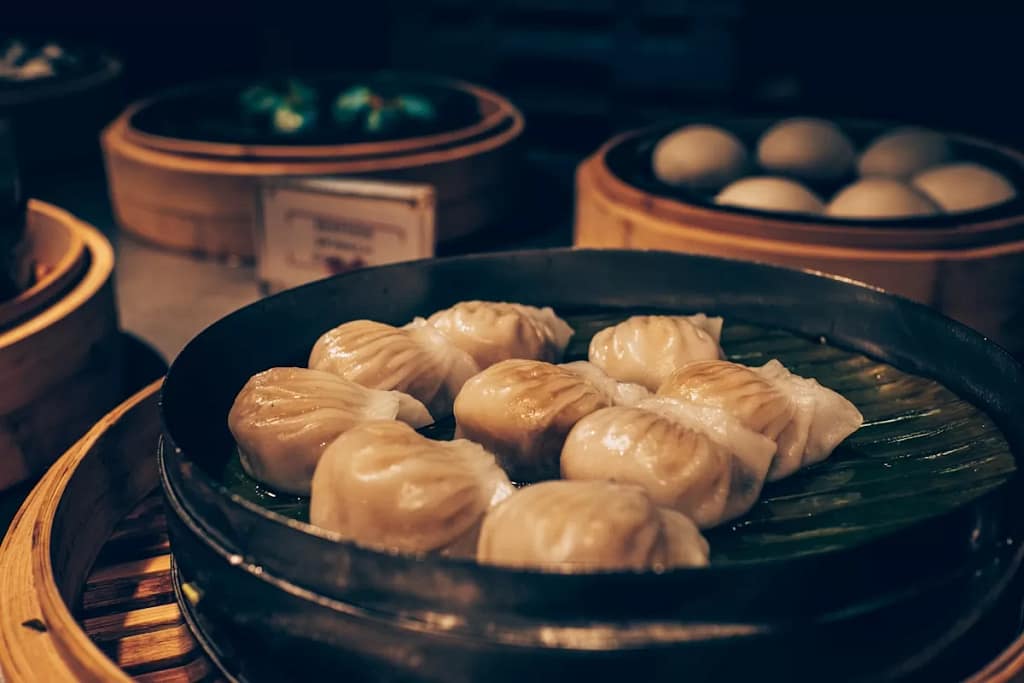
Siu mai (open-topped pork-and-shrimp dumplings), har gow (crystal-skinned shrimp dumplings with pleated tops), char siu bao (fluffy white BBQ pork buns). Order all three at any teahouse and you have the canonical morning. Cost: ¥3–8 per piece. Tea is free, the dim sum is the meal. The Shangxiajiu Pedestrian Street has the densest cluster of old-school teahouses.
13. Oyster Omelette — Chaoshan
Fresh small oysters folded into a beaten egg and sweet potato starch batter, fried until crispy at the edges, served with a tangy chilli-vinegar dipping sauce. What to look for: uncooked oysters visible in a tray beside the wok — they should be added to your portion to order. Cost: ¥15–25. Best in Shantou or Chaozhou night markets, where the oysters are local.
14. Guilin Rice Noodles (Mifen) — Guilin
Rice noodles in a clear pork-bone broth (added at the counter, never pre-poured), topped with thin-sliced beef or pork, pickled long beans, peanuts, scallions, and chilli oil. What to look for: a queue at breakfast time and a vat of broth that’s clearly been simmering for hours. Cost: ¥8–15. The best are in the side streets behind the train station. Gluten-free.
15. Cantonese Roast Goose (Siu Ngo) — Guangzhou
Whole goose lacquered with a soy-and-spice glaze, roasted in a brick oven until the skin shatters under your chopsticks. Sold by weight, hacked up at the counter, served with a plum dipping sauce. Cost: ¥40–80 per portion. Look for shops where the cleavers are constantly moving and the geese in the window have visibly crisp skin. The Yat Lok-style spots are the safest bets.
Eastern China: Refined, Seasonal, Subtle
16. Xiaolongbao — Shanghai & Wuxi
The famous soup dumplings. Eighteen pleats, paper-thin skin, a spoonful of broth and minced pork inside. Bite, slurp, eat. The Nanxiang style is the canonical one; Din Tai Fung is the export version (excellent, more expensive). Cost: ¥30–60 per steamer of 8. Allergen: pork, wheat. Best at Jia Jia Tang Bao in Shanghai — line at 10:30am for opening, you’ll wait twenty minutes for a seat.
17. Stinky Tofu (Choudoufu) — Shaoxing & Changsha
Fermented tofu, deep-fried, served with chilli sauce and pickled cabbage. The smell is famously aggressive — somewhere between blue cheese and a wet sock — but the flavour is mild, almost custardy inside the crisp shell. What to look for: dark grey-black cubes (Changsha style) for the stronger version, or the lighter Shaoxing style for beginners. Cost: ¥8–15. Yes, you should try it once.
18. West Lake Beggar’s Chicken & Longjing Shrimp — Hangzhou
Hangzhou’s street stalls don’t have these — they’re restaurant dishes — but the tea-shop snacks around West Lake do. Look for Longjing-tea-smoked tofu skins, candied lotus root, and osmanthus glutinous rice cakes sold from carts in the Hefang Street area. Cost: ¥5–15 per snack. The Hangzhou tea-pairings guide covers what to drink alongside the local sweets.
Snacks, Sweets & the Weird Stuff Worth Trying
19. Tanghulu — Beijing & Across North China
Skewered haw berries (or strawberries, kiwi, grapes — the modern range has exploded) dipped in hardened sugar syrup that cracks like glass when you bite. Originally a winter street food in Beijing; now sold year-round. What to look for: a vendor with a small gas burner and a pot of clear, golden syrup — the sugar should be glassy and brittle, not stretchy. Cost: ¥5–15 per skewer.
20. Spicy Rabbit Head — Chengdu
Brined and braised rabbit heads in a Sichuan chilli marinade, eaten cold, taken apart with your fingers. Not a dish for everyone — there’s a learning curve to the anatomy — but the meat is delicately spiced and the flavour is unforgettable. What to look for: vacuum-packed at convenience stores nationwide, or fresh from cold-counter shops in Chengdu’s old town. Cost: ¥15–25 each. The Chengdu specialty shops on Yu Lin Road are the right place to start.
Street Food Hotspots: Where to Actually Go
Xi’an Muslim Quarter
The most famous street food strip in China and — honestly — the most tourist-trapped part of it. Skip the main drag (Bei Yuan Men) where the prices have doubled in five years. Walk into the side alleys (Xiyang Shi, Dapi Yuan) where the local Hui community actually eats. Budget ¥60–100 to graze your way through an evening. Best between 6 and 9pm.
Chengdu’s Yulin and Jianshe Road
Skip Jinli — it’s been remodelled into a theme park. The real Chengdu street food lives on Yulin Road (south of the second ring) and Jianshe Road (near Sichuan University), where the local 20-somethings actually eat. Chuanchuan, mala xiang guo, sweet water noodles, grilled fish. The Chengdu travel guide maps which streets work for which type of food.
Shanghai’s Yunnan Road & Wujiang Road
Yunnan Road (south of People’s Square) is the historic snack street — xiaolongbao, shengjianbao, drunk chicken, sticky rice. Wujiang Road (just off Nanjing West Road) is the modern version with newer chains, longer queues, equivalent food. The century-old Xiaoshaoxing on Yunnan Road still serves the best version of cold drunk chicken in the city.
Beijing’s Guijie (Ghost Street)
A 1.5-kilometre strip in the Dongzhimen area where restaurants stay open until 4am. Famous for mala xiao long xia (numbing spicy crayfish) in summer — locals queue at midnight for buckets of them. Avoid the gaudy red-lantern restaurants on the main strip; the second-best signs hide the actual best food.
Guangzhou’s Shangxiajiu & Liwan District
Historic pedestrian street with proper old-school dim sum houses, BBQ pork stalls, and cheung fun carts. Go in the morning for dim sum, return at night for the seafood markets in the surrounding alleys. The locals’ breakfast spots open at 6am.
How to Eat Street Food Safely
Follow the queue, not the signs. A long line of locals on smartphones means high turnover, fresh ingredients, and food that’s been pressure-tested by repeat customers. An empty stall with a pretty signboard is a red flag — either the food is bad or it has been sitting out for hours. In my experience, this single rule eliminates 95% of food-safety risk.
Watch the cooking happen. Anything cooked to order over high heat (skewers, jianbing, stir-fries, freshly-steamed buns) is almost always fine. Pre-cooked food sitting under a heat lamp is where trouble lives — especially cold meats, sliced fruit, and salads.
Bottled or boiled drinks only. Never drink tap water. Hot tea is free and safe at almost every food stall. Bottled water and canned drinks are everywhere for ¥2–5.
Bring tissues and hand sanitizer. Many stalls don’t supply napkins, and hand-washing sinks are rare. Travel tissues are sold at every convenience store for ¥3.
Carry small bills as backup. Most vendors take Alipay and WeChat Pay (the payment apps guide is essential reading before you arrive), but the very oldest grandmothers running corner stalls sometimes still want ¥10 notes. Keep ¥50 in small bills in your back pocket.
How to Spot a Tourist-Trap Street
This is the part most guides skip. Some street food strips have been remodelled so heavily that the food is now a prop in a photo set. The signals to watch for:
- Identical wooden signs in matching fonts — government-funded “old streets” all use the same calligraphic style for every shop. Real old streets have a chaotic mix of plastic signs, hand-painted boards, and LED displays.
- Prices listed in pinyin or English — if the menu was originally translated for tourists, the food was too. Real local spots have Chinese-only menus, often handwritten.
- Three vendors selling the same dish in a row at the same price — that means a wholesale supplier behind the scenes, not individual cooks competing on quality.
- “Famous” or “World-renowned” on the signage — actual famous spots have no need to advertise the fact. The line says it for them.
- Surrounded by people taking photos of the food before eating — fine, you might do this too, but if everyone is, the menu was designed to photograph rather than taste.
The fix: walk one block away from any famous street. The real local versions of the same dishes are almost always within 200 metres, cost 40% less, and taste better. This works in Chengdu, Xi’an, Shanghai, Beijing, and Guangzhou.
What to Say (Even With Zero Mandarin)
- Zhège — “This one.” Point at what you want and say it. Solves 90% of ordering.
- Yī gè — “One.” Hold up your index finger.
- Bù là — “Not spicy.” Survival phrase in Sichuan, Hunan, Guizhou.
- Wēi là — “Mild.” A more realistic ask in spicy regions where “bu la” still arrives medium.
- Hǎo chī! — “Delicious.” Say it after the first bite — vendors light up.
- Duōshǎo qián? — “How much?” They’ll show you the number on a phone screen.
- Dǎbāo — “To go.” Useful when the stall has no seats.
One Last Practical Note
The single most useful thing you can do before walking into a street food market: skip lunch. The portions are small and the temptation to keep trying things is overwhelming. The travelers I see leaving the Muslim Quarter unhappy are the ones who ordered a full bowl of paomo first and ran out of stomach by the third stall. Pace yourself — three to six small things per session, then come back tomorrow.
For the wider context on Chinese cuisine and which sit-down classics are worth ordering, the top ten Chinese dishes guide covers the canon. For the Xi’an deep dive, the Xi’an travel guide handles the full city. And if you want the morning-to-night Hangzhou food version, the Hangzhou tea-pairings guide is the closest thing to a local’s plan.
Photos courtesy of Unsplash