China is the closest thing to a cashless society on earth – and that is exactly why payment is the single biggest practical hurdle for foreign visitors. The system was built for Chinese citizens with Chinese bank accounts and Chinese ID numbers. Everything has changed since 2023: both WeChat Pay and Alipay now accept foreign credit cards, the setup process takes minutes instead of hours, and 95% of the transactions you’ll want to make are now possible. But the 5% that isn’t possible will find you at the worst moment if you don’t know what they are. This guide covers what actually works, what still doesn’t, and the specific situations where you’ll need a backup.

The Quick Answer: Set Up Both Apps Before You Land
Install WeChat and Alipay, link your foreign Visa or Mastercard to both, and test each with a small payment before your trip. This takes fifteen minutes at home and prevents the single most common first-day problem in China: standing at a shop counter with a phone that has no working payment method and a shopkeeper who takes no cash.
Here’s why you need both, not just one: some vendors only accept WeChat Pay. Some only accept Alipay. The overlap is maybe 90%, but the 10% edge cases are spread across both platforms. Having both apps is the difference between never thinking about payment and occasionally being stuck.
The full app-by-app setup walkthrough is in the Alipay and WeChat Pay setup guide, which covers the card-linking process screen by screen. The rest of this guide covers the questions that come after setup: what works, what doesn’t, and what to do when things fail.
What Actually Works With Foreign Cards in 2026
The 2023 policy change that opened everything up has held and expanded. Here is the current state of what a foreign-issued card can do inside WeChat Pay and Alipay:
Fully working (95% of daily transactions)
- QR code payments to vendors: Scan the vendor’s QR code or let them scan yours. Works at street food stalls, markets, taxis via the DiDi app, convenience stores, restaurants, museums, and every attraction with an online ticket
- DiDi ride-hailing: The app charges your linked card directly through the same system
- High-speed train tickets: Via Trip.com (which takes foreign cards natively) or through the 12306 app with your linked card
- Attraction tickets: The Forbidden City, Panda Base, Zhangjiajie – all bookable through WeChat mini-programs with a linked foreign card
- Online purchases: Taobao, JD, Meituan food delivery – all work with a foreign card linked through Alipay or WeChat
Partially working or with limits
- Daily spending caps: Foreign cards have a annual spending cap inside the apps (roughly $5,000 USD equivalent per year per platform). Most travelers never approach it, but if you’re on an extended stay, be aware
- Transfers between individuals: Technically possible on both apps with a foreign card, but flagged more often for verification. Don’t rely on paying a friend back through the app
Still not working (the 5%)
- Offline small-town vendors: In rural areas and small towns, some vendors’ QR codes are set up only for domestic bank transfers – a foreign card payment will be rejected. Carry cash for these
- Some hotel deposits: A few domestic hotel chains still require a Chinese bank card for the incidentals deposit. International chains accept foreign cards
- Certain government services: Some museum reservation systems and official websites only accept Chinese ID-linked payment. These are rare but exist
- China’s domestic bike-share docks: The deposit systems on some older bike-share services don’t accept foreign cards
Cash: Still Necessary, But Less Than You Think
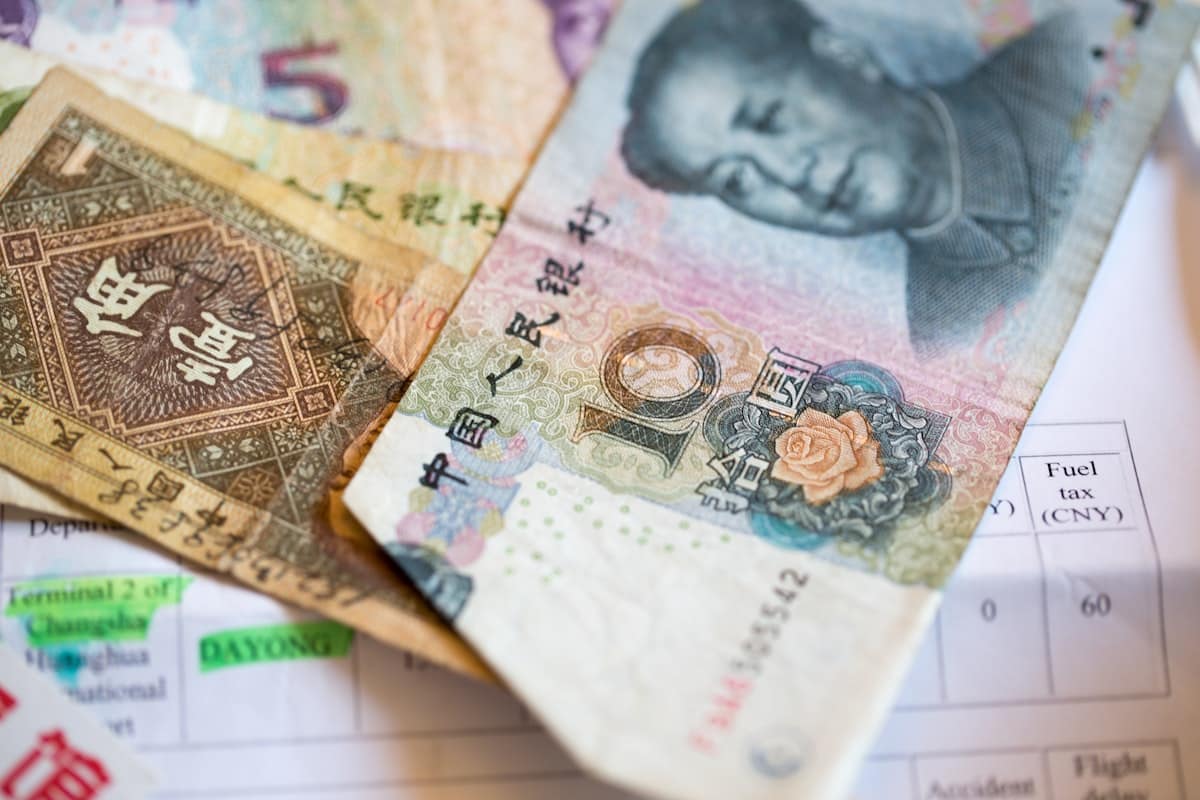
Carry 1,000-2,000 yuan in cash as backup. Not because you’ll use it often, but because the situations where you need it are impossible to predict.
Where you’ll actually need cash
- Rural areas and small towns. The further from a tier-1 city, the more likely the vendor’s QR code won’t take your foreign card
- Temple incense and donation boxes. Cash only, always
- Very small street vendors. Occasionally a vendor’s QR code is “broken” (their merchant account has an issue) and they’ll take cash
- The backup-of-last-resort. If your phone dies, your card gets frozen for fraud detection, or an app update breaks something at 9pm
Getting cash in China
- ATMs at major bank branches: Bank of China, ICBC, and China Construction Bank ATMs accept foreign cards for withdrawal. The withdrawal limit is typically 2,000-3,000 yuan per transaction. The exchange rate is set by your home bank plus a fixed ATM fee
- ATMs at convenience stores: Often do not accept foreign cards. Use bank ATMs
- Exchanging foreign currency at banks: Possible with your passport, but slow – expect 30 minutes of paperwork. ATMs are faster
- Bring cash from home as a backup: US dollars or euros can be exchanged at Bank of China branches in major cities if everything else fails
The Situations That Catch Travelers Out
1. The fraud freeze
Your first few payments in China may trigger your home bank’s fraud detection – a charge from a Chinese payment processor is exactly what fraud algorithms look for. Call your bank before your trip and tell them you’ll be in China. If a payment does get frozen, the app will show a generic “payment failed” message that doesn’t explain why. This is the single most common payment failure for new arrivals, and it looks like an app problem when it’s actually a bank problem.
2. The verification ceiling
Both apps will occasionally ask you to re-verify your identity for larger payments or after a period of inactivity. The verification flow with a foreign passport works, but it can take a few hours to process. If you’re making a large purchase (a multi-day tour, an expensive hotel), do the payment a day ahead, not at the counter.
3. The dead phone
Everything in China runs through your phone. If it dies at 8pm in a city where you know no one, your options are: find a convenience store with a power bank rental (very common, needs the app – catch-22), ask a stranger to charge it, or find your hotel on foot. A lightweight power bank is not optional equipment in China – it’s payment infrastructure.
4. The group payment
Splitting a bill at a restaurant with Chinese friends works through the app’s “split bill” feature, but only if everyone has a Chinese bank account or a foreign card that plays nicely. In practice, one person pays and everyone else pays them back however they can. If you’re the visitor, expect to be treated – and to reciprocate another way.

Payment by Situation: The Cheat Sheet
| Situation | What works | Backup |
|---|---|---|
| Street food stall | WeChat Pay or Alipay QR scan | Cash (some rural vendors) |
| Restaurant | QR code at table or counter | Cash |
| Taxi (street hail) | Ask for QR code, scan and pay | Cash + exact change |
| DiDi ride-hail | Auto-charged to linked card | Cash paid to driver (rare, awkward) |
| High-speed train | Trip.com or 12306 with linked card | Ticket window, cash or foreign card |
| Major attraction | WeChat mini-program booking | Trip.com booking (takes foreign cards) |
| Hotel deposit | Foreign credit card (international chains) | Cash deposit (domestic chains) |
| Temple donation | Cash only | Nothing – bring cash |
| Convenience store | QR scan (universal) | Cash |
| Small-town vendor | QR sometimes rejects foreign cards | Cash (bring it) |
Setting Up Before You Fly: The 15-Minute Checklist
Do this at home, on your home wifi, with your physical cards in front of you:
- Install WeChat and Alipay from your app store. Create accounts with your phone number and email
- Link your Visa or Mastercard to both apps. The card-linking flow is in Wallet -> Add Card (WeChat) or Me -> Bank Cards (Alipay)
- Test each app with a small payment. The easiest test is sending a small amount to a friend or making a small online purchase through the app. If the payment goes through, your setup works
- Call your bank. Tell them you’ll be in China and ask them to whitelist Chinese payment processors for your card dates. This prevents the fraud freeze
- Download offline maps and a translation app. Not payment-related, but the same “do it before you land” logic applies
- Take photos of your passport and cards and store them somewhere accessible. If your phone is lost, you’ll need these at your embassy or for card replacement
The full app setup walkthrough, including screenshots-level detail for the card-linking process, is in the Alipay and WeChat Pay setup guide. For the broader app ecosystem – DiDi, VPN, maps, translation – see the essential China travel apps guide.
FAQ: The Questions Everyone Asks
Q: Can foreigners use WeChat Pay and Alipay in China?
Yes. Since 2023, both accept foreign Visa/Mastercard. Link your card and test before your trip. Covers ~95% of daily transactions. The remaining 5% needs cash backup.
Q: Do I need cash in China as a tourist?
Yes, 1,000-2,000 yuan as backup. Used rarely but unpredictably: rural vendors, temple donations, broken merchant accounts, dead phone. Withdraw from Bank of China/ICBC/CCB ATMs, not convenience store ATMs.
Q: Why did my WeChat Pay payment fail?
Most common: home bank’s fraud detection flagging Chinese payment processors. Call your bank before your trip. Other causes: identity re-verification (slow with foreign passport) or vendor merchant account not accepting foreign cards.
Q: WeChat Pay or Alipay – which is better?
Use both. Some vendors only take one. WeChat is more common for social/small vendors; Alipay better for Taobao and travel booking. Both take 5 minutes to set up.
Q: What is the spending limit for foreign cards?
Roughly $5,000 USD equivalent per year per platform. Most travelers never approach it. Extended stays may hit the ceiling – switch to cash or another method.
Q: Can I use my foreign credit card directly at shops?
Rarely. Most shops only take QR payment via WeChat Pay/Alipay. Physical card terminals exist at international hotels and high-end restaurants only. Your card’s role is to be linked inside the apps, not handed to cashiers.
For the story version of learning China’s payment system – the first time your card fails at a noodle counter, the verification ceiling, and the vendor who wouldn’t take no for an answer – the packing guide covers what to bring, and the apps ecosystem is in the essential China travel apps guide. For everything else about practical China travel, start with the top 15 China travel tips.
Photos courtesy of Unsplash.