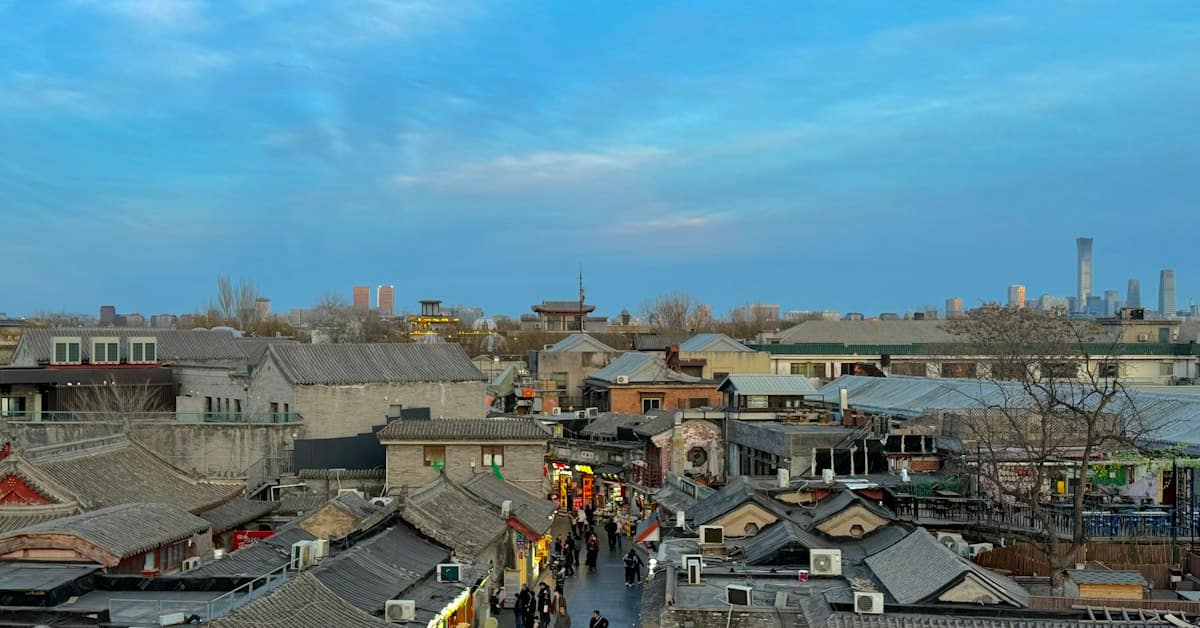
The single most-recommended hutong in Beijing is also the one I’d tell you to walk through quickly and leave. Nanluoguxiang appears in nearly every guidebook, it has its own subway station, and on a Saturday afternoon it is a 787-meter corridor of the same four souvenir shops repeated forty times. The hutongs that actually feel like hutongs are a five-minute walk away, and almost nobody goes. This guide covers which to walk, which to skip, and how to string them into a half-day that doesn’t feel like a shopping mall.
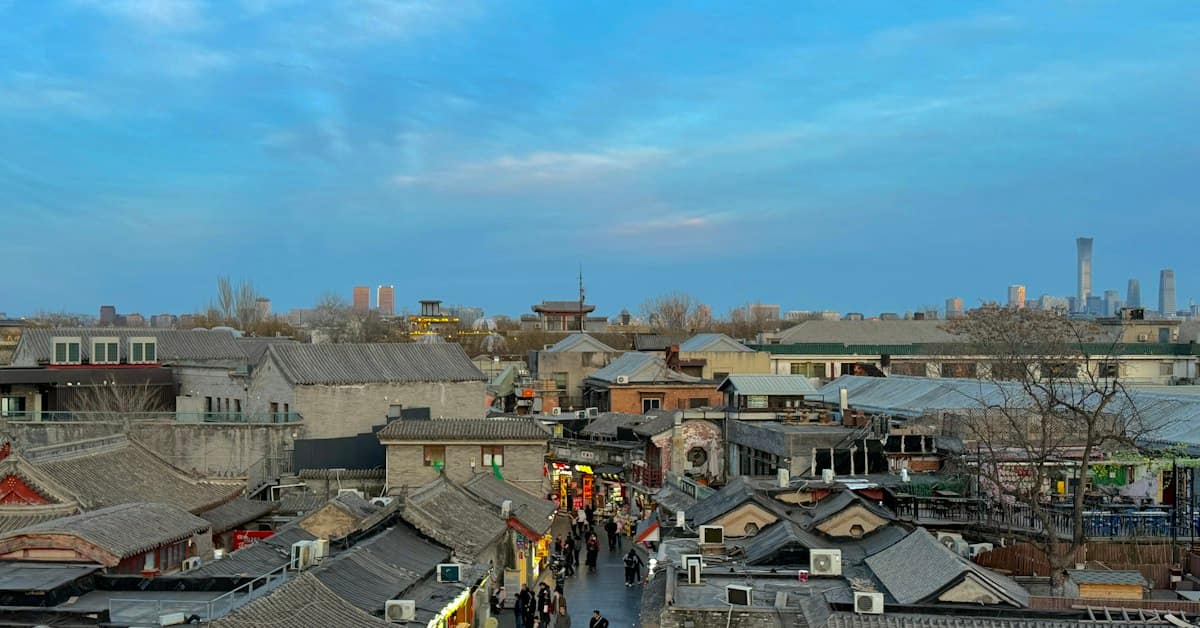
The Quick Verdict: Walk These Four, Skip the Famous One
Beijing’s hutongs are not one attraction — they’re a neighborhood type, and the quality varies enormously. Some have been fully converted into souvenir corridors. Some are still residential lanes where grandmothers sit outside on stools and the smell of cooking oil comes through open windows. The four worth your time are all within a 20-minute walk of each other, northwest of the Drum Tower.
| Hutong | Verdict |
|---|---|
| Nanluoguxiang | Skip. Iconic name, commercial corridor. Walk the first 100m if you’re curious, then turn west. |
| Guozijian Street | Walk it. The best-preserved hutong street in Beijing — 700-year-old trees, the Imperial College, almost no tourist infrastructure. |
| Wudaoying Hutong | Walk it. Quieter than Guozijian, better coffee, a handful of genuine local spots mixed with small boutiques. |
| Shichahai + Yandai Xiejie | Walk it in the evening. Lake, boats, the city’s best sunset spot, and the one hutong street that’s genuinely atmospheric at night. |
| Ju’er / Mao’er Hutongs | Walk it if you want the residential version. Zero tourist infrastructure. Respect that people live here. |
That’s the short version. The rest of this guide is why each verdict, plus the practical detail that makes the difference between a good walk and a wasted afternoon.
What You’re Actually Looking For
A hutong is a narrow lane formed by the walls of siheyuan — traditional courtyard houses built around a central square. Beijing once had thousands of them; the number has fallen sharply since the 1990s as redevelopment replaced low courtyard housing with towers. What survives falls into three categories, and knowing which you’re walking through changes what you see.
- Preserved/restored hutongs. Brick repointed, wiring buried, tiled roofs fixed. Usually in a tourist zone. Guozijian Street is the best example
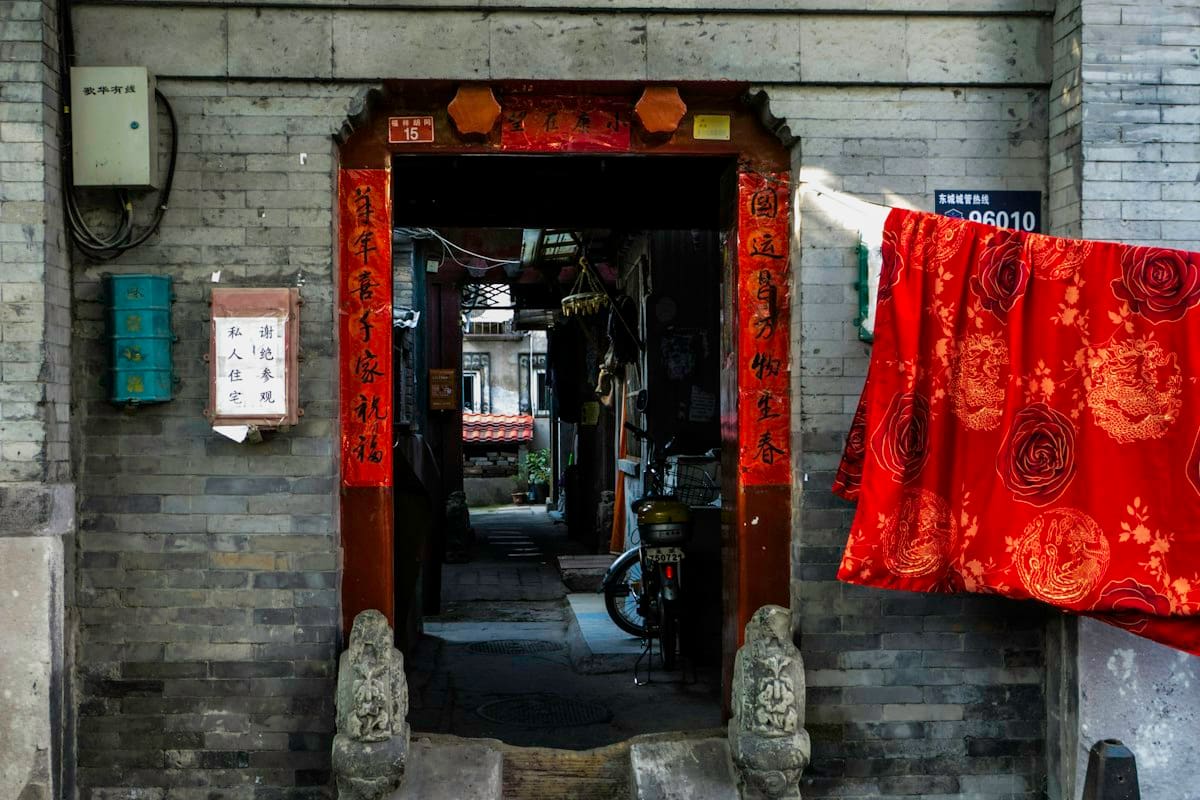
- Living hutongs. Restored enough to be habitable but not prettified. People live here, laundry hangs, bicycles lean against walls. Ju’er and Mao’er
- Commercial hutongs. Restored and then filled with shops. Nanluoguxiang and much of Yandai Xiejie
In my experience, the first category is the most photogenic, the second is the most interesting, and the third is only worth it after dark when the neon cuts through. Plan accordingly.
The Walkable Cluster: Guozijian and Wudaoying
This is the single best hutong walk in Beijing, and it takes about two hours at an unhurried pace.
Guozijian Street (国子监街)
Guozijian Street runs east-west between Andingmen Inner Street and Yonghegong Street. It is the only hutong street in Beijing with a row of original paifang (wooden ceremonial arches) still standing across it — four of them, spaced along the street. The trees are ancient, the walls are gray brick, and the traffic is mostly bicycles.
Midway along is the Confucius Temple and the Imperial College (Guozijian), entered together on one 30-yuan ticket. The Imperial College was the highest educational institution in imperial China for roughly 700 years — the buildings sit on a raised platform down a long central axis of cypresses. There’s an exhibition hall inside with the imperial examination system explained in English. It is the single most underrated museum in Beijing, and it is rarely crowded.
Walk it in the morning, before 10am if you can. The light comes in low through the trees, and the street is genuinely quiet.
Wudaoying Hutong (五道营胡同)
Wudaoying runs parallel to Guozijian, one block south. It’s narrower, calmer, and has developed a small ecosystem of independent coffee shops, tea houses, and tiny galleries — the kind of place where a barista will ask where you’re from and mean it. Prices are Beijing-normal, not tourist-inflated.
The two streets are connected by short cross-hutongs, so you can zig-zag between them. Do that. The cross-hatching is where the interesting details are — a doorway here, a bicycle repair setup there, a cat on a windowsill. Nobody walks the cross-lanes, which means you’ll have them to yourself.
The Evening Half: Shichahai and Yandai Xiejie
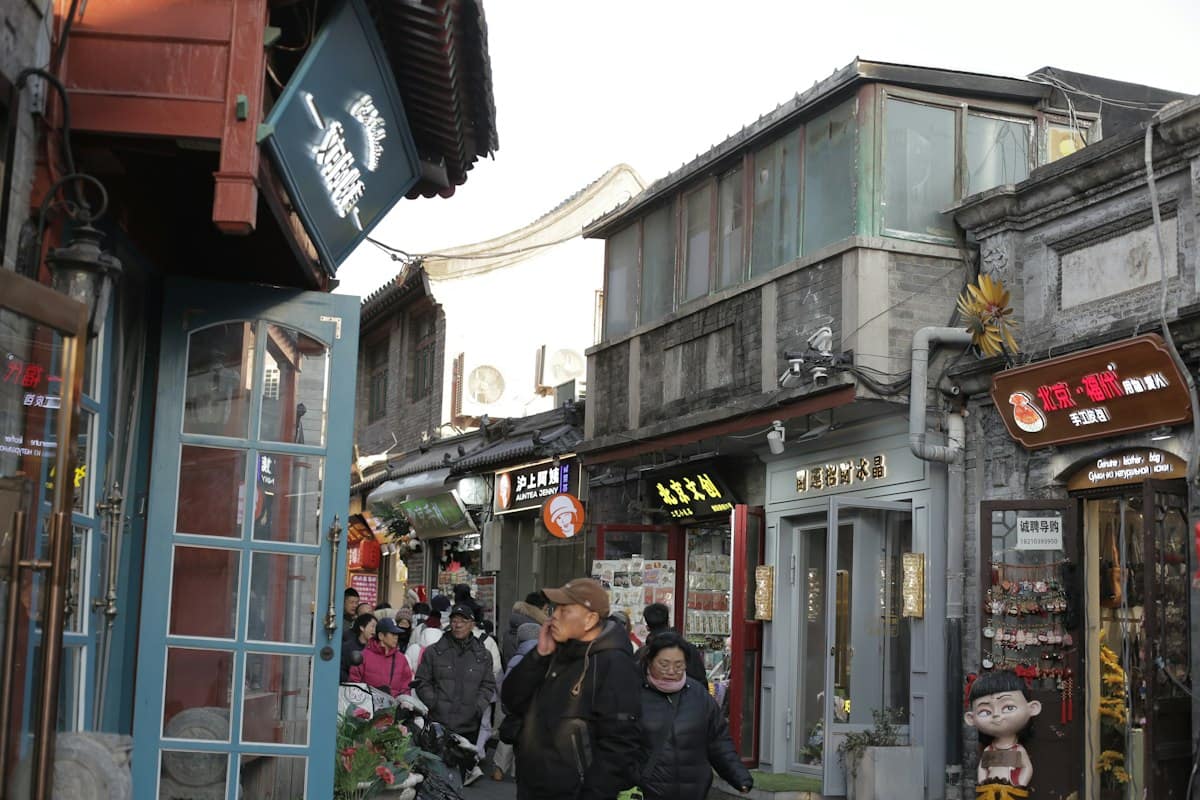
Shichahai is three connected lakes — Qianhai, Houhai and Xihai — with hutongs running down to the water on both sides. It is the one part of Beijing’s old city that genuinely works at night.
Yandai Xiejie (烟袋斜街)
Yandai Xiejie is a short diagonal street — roughly 230 meters — running from the Drum Tower area down toward the Qianhai lake. It’s the oldest commercial street in the old city, and it’s fully tourist-facing now, but the diagonal geometry and the compression as it approaches the water make it worth walking once, and it opens directly onto the lake.
Houhai and the walk around the water
The circuit around Qianhai and Houhai is about 3 kilometers and takes 45–60 minutes at a stroll. The south shore is where the bars and the boats are; the north shore is quieter, with older residential hutongs running off it. The Bell and Drum Towers sit just north of Houhai — the Drum Tower has a drum performance several times daily, and the Bell Tower is directly behind it (combined ticket around 30 yuan).
Time it for sunset. The light comes across the water from the west, the towers silhouette against it, and the tour groups that dominate the daytime have mostly left by 6pm. In summer the sun sets around 7:30pm; in winter, closer to 5pm.
Prince Gong’s Mansion (Gongwangfu)
Just south of Shichahai is Prince Gong’s Mansion, the best-preserved princely residence in Beijing and the setting of the classic novel Dream of the Red Chamber. Around 40 yuan, and it’s a 30–45 minute visit. Worth it if you want one example of what a courtyard mansion looked like when it was a mansion rather than four crowded households.
The Residential Version: Ju’er and Mao’er Hutongs
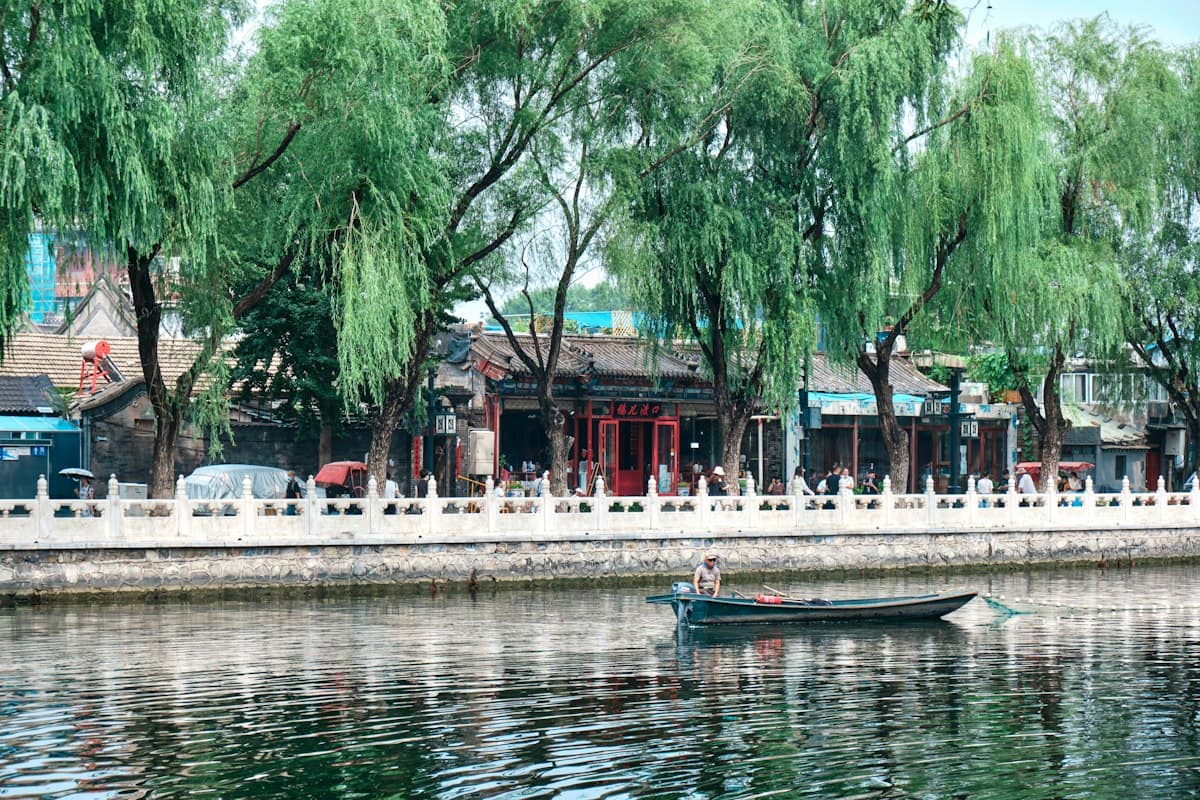
If you want to see a hutong that hasn’t been restored for you, walk Ju’er Hutong (菊儿胡同) and Mao’er Hutong (帽儿胡同) east of Nanluoguxiang.
These are working residential lanes. You’ll see laundry lines, coal storage for winter, bicycles, small grocery windows, and elderly residents sitting outside on stools. There is essentially no tourist infrastructure — no shops aimed at you, no cafés. That’s the point.
Two things to know before you go. First, this is people’s housing, not an attraction — keep your voice down, don’t photograph doorways with people in them without asking, and don’t walk into courtyards. The lanes are public; the courtyards aren’t. Second, Ju’er Hutong contains a famous 1990s redevelopment project by the architect Wu Liangyong — a mid-rise courtyard building that was the first serious attempt to solve hutong housing density without demolishing the neighborhood. It’s a strange and interesting hybrid, and it’s clearly visible as you walk.
Practical Logistics
Getting there and around
- Nanluoguxiang station (Lines 6 and 8) puts you at the south end of the commercial street. Walk north and turn west at the Drum Tower area to reach the good stuff
- Shichahai station (Line 8) is right at the lake
- Yonghegong Lama Temple station (Lines 2 and 5) is at the east end of Guozijian Street — this is the better entry if you want to start on the quiet streets and end at the lake
- The full walk — Yonghegong → Guozijian Street → Wudaoying → Drum Tower → Yandai Xiejie → Houhai — is about 4–5 km and takes three to four hours with stops
Timing
- Best window: weekday mornings, 8–10am. The streets are quiet, the light is good, and the residential hutongs are at their most alive
- Avoid weekend afternoons. Nanluoguxiang and Yandai Xiejie become a slow-moving queue
- Evening for the lake. Sunset onward is the reason Shichahai exists on most itineraries
- Avoid public holidays entirely — Golden Week turns the whole area into one continuous crowd
What to eat and where
- Wudaoying Hutong has the best small-food options — independent cafés, a few noodle shops, tea houses. Prices are normal
- Yandai Xiejie has the tourist-facing snacks (candied fruit skewers, fried snacks, yogurt in jars). Fine for a snack, not for a meal
- Around Shichahai’s north shore there are small local restaurants one or two lanes back from the water where the price drops roughly in half
- Baochao Hutong, running north from the Drum Tower, has the highest concentration of genuine modern Beijing food in the area
Etiquette that actually matters
- Don’t walk into courtyards. The lanes are public space; the gates are not
- Ask before photographing people. A gesture toward the camera is enough; a nod or a wave means no
- Keep your voice at indoor levels in residential lanes. Sound carries in narrow streets
- Don’t block doorways for photos. People live behind them
What to Skip, and Why
Nanluoguxiang is the main thing to skip, and it’s worth explaining why. The street is genuinely old and the preservation work is real, but the ground floors are now almost entirely occupied by shops selling the same merchandise at the same prices. You will walk 787 meters and see the same four storefronts about forty times. The crowd makes it slow. There is no view, no lake, no quiet corner — just commerce.
If you want the photo, walk the first 100 meters from the south entrance, take it, and then turn west at the first cross-hutong and head toward Guozijian. That single turn changes the entire experience, and it takes about five minutes.
Also skip: the ticketed “old Beijing” performance shows and the rickshaw tours that solicit near Houhai. They’re expensive, the routes avoid everything interesting, and the rickshaw drivers work on commission from shops you’ll be taken to.
Beijing Hutongs: Frequently Asked Questions
Q: Which Beijing hutong should I visit?
Guozijian Street (best-preserved, with the Confucius Temple and Imperial College), Wudaoying Hutong (quieter, one block south), Shichahai + Yandai Xiejie (best in the evening), and Ju’er/Mao’er Hutongs (residential version). All within a 20-minute walk, northwest of the Drum Tower. Skip the famous Nanluoguxiang.
Q: Is Nanluoguxiang worth visiting?
Not really. The preservation is genuine but street level is now almost entirely repeated souvenir shops, slow to walk, with no view or quiet corner. Walk the first 100 meters for the photo, then turn west toward Guozijian Street.
Q: Best time of day?
Weekday mornings 8-10am for the streets (quiet, good light, residential hutongs alive). Sunset onward for Shichahai and Houhai. Avoid weekend afternoons and public holidays.
Q: How long does it take?
The full route (Yonghegong → Guozijian → Wudaoying → Drum Tower → Yandai Xiejie → Houhai) is 4-5 km, three to four hours at an unhurried pace. One section: Guozijian + Wudaoying ~2 hours, or the lake circuit ~1 hour.
Q: Which subway station?
Yonghegong Lama Temple (Lines 2/5) is best — start on the quiet streets, end at the lake. Shichahai (Line 8) puts you at the lake. Nanluoguxiang (Lines 6/8) drops you at the commercial street.
Q: Can you walk into courtyards?
No — the lanes are public, the courtyards are private homes. For a legitimate interior, visit Prince Gong’s Mansion (~40 yuan) south of Shichahai.
For the rest of your Beijing days, the Beijing 7-day itinerary slots a hutong afternoon into Day 2, and the Forbidden City guide covers the other half of the old city’s architecture. If you’re building the whole trip around Beijing, the Beijing travel guide covers what else is worth your time, and the Beijing old vs new piece explains how the city’s two eras sit next to each other — which is what you’re actually looking at when you walk these lanes.
Photos courtesy of Unsplash.

One thought on “Beijing Hutongs 2026: Which to Walk and Which to Skip”