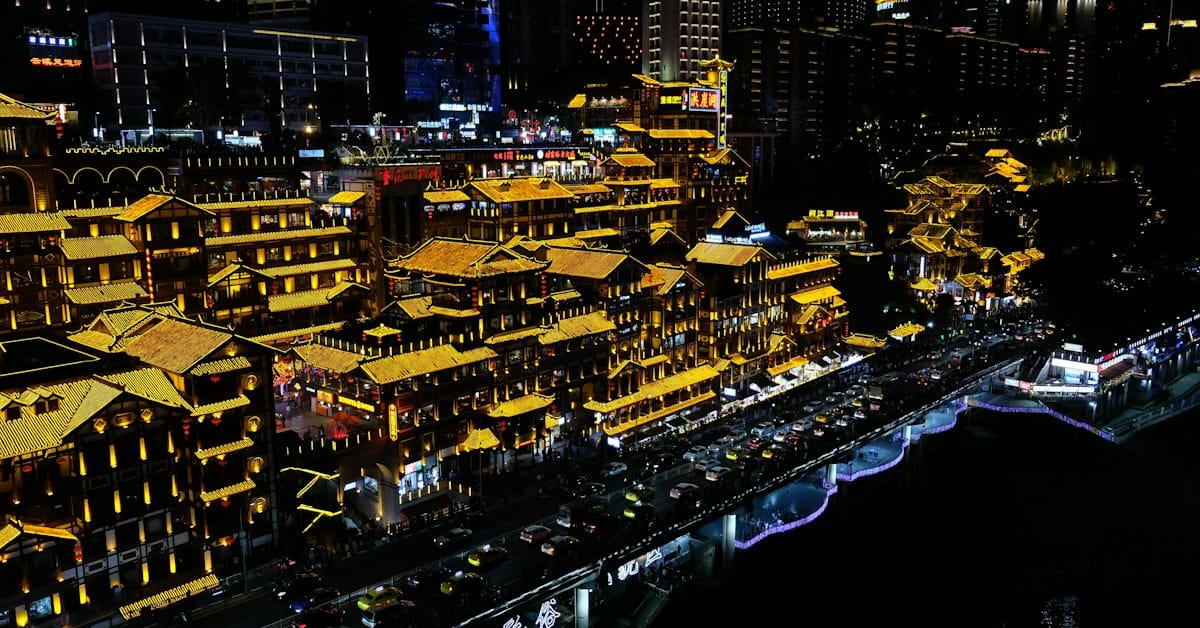
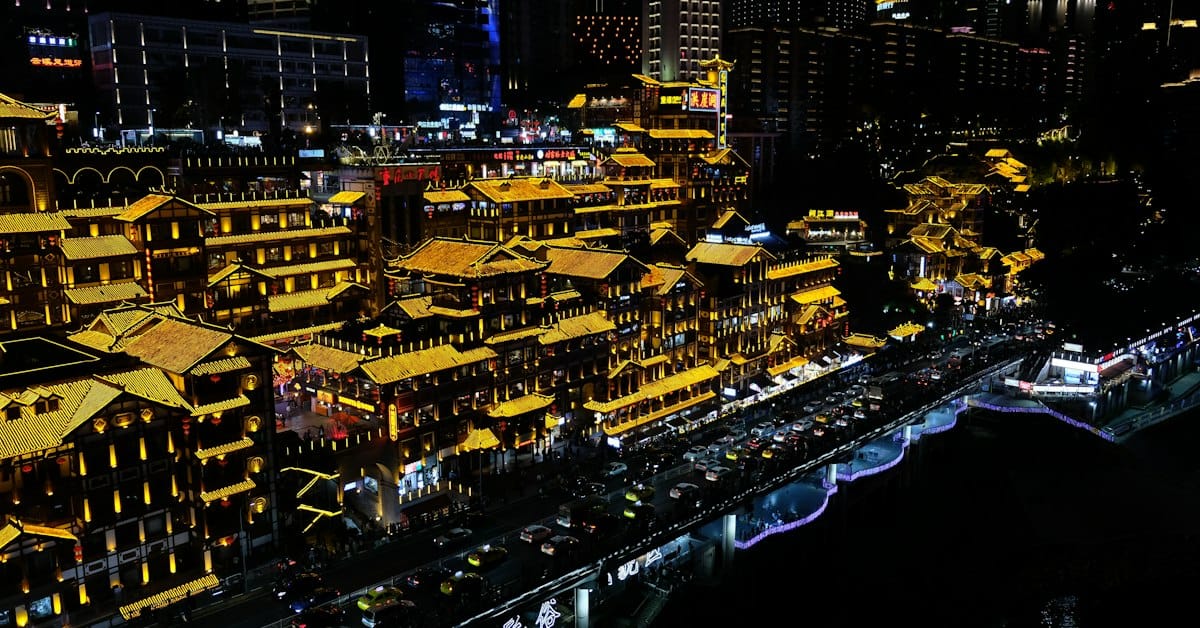
The photograph you’ve seen of Hongyadong — eleven storeys of golden-lit stilted buildings stacked down a cliff above the Jialing River — is not a photograph you can take from Hongyadong. It’s taken from a bridge 400 meters away. This matters more than it sounds, because most visitors arrive at the building itself, spend an hour inside a vertical shopping mall wondering where the view is, and leave without ever seeing the thing they came for. The building and the view of the building are two completely different experiences, and only one of them is worth your evening.
The Quick Verdict: View It From the Bridge, Skip the Interior
Hongyadong is worth an evening. Hongyadong’s interior is worth about fifteen minutes. The complex is free to enter and it does have some interesting things inside — small shops, a few restaurants on the upper terraces, a viewing platform — but the geometry that makes it photogenic is invisible from inside it. You need distance.
| What | Verdict |
|---|---|
| View from Qiansimen Bridge (千厮门大桥) | Do this. The classic shot, 400m from the building, free, best 30 minutes after the lights come on |
| View from the north bank of the Jialing | Do this if the bridge is jammed. Slightly further, wider angle, fewer people |
| River cruise past Hongyadong | Do this if you want the water-level angle. 30-40 minutes, roughly 100-150 yuan |
| The interior (11 floors of shops) | Optional. Go for the upper terrace view back across the river, not for the retail |
| Inside on a weekend evening | Skip. The stairwells and escalators become a one-way crush |
What Hongyadong Actually Is
Hongyadong (洪崖洞, “Flooded Cliff Cave”) is a reconstruction, not a historic building. The site was a working riverside neighborhood of diaojiaolou — stilted wooden houses built on the cliff above the Jialing — until it was cleared in the 1990s and rebuilt in 2006 as the eleven-storey commercial complex you see today.
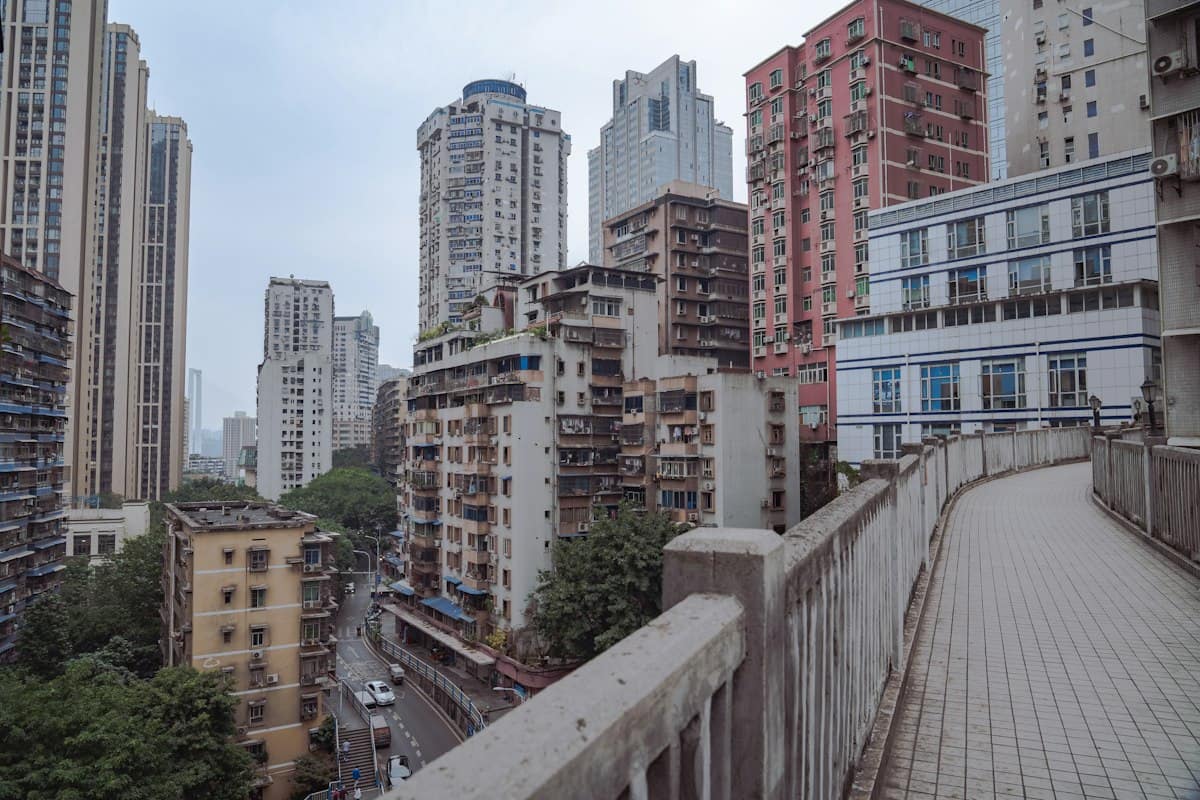
So what you’re photographing is a 2006 building in a 19th-century vernacular style. That doesn’t make it less impressive at night — the way it cascades down eleven levels of cliff, with the river in front and the Qiansimen Bridge to one side, is genuinely striking — but it does mean you shouldn’t expect to find “old Chongqing” inside. You won’t. Old Chongqing is the stair streets on the hillside behind it.
The lights
The illumination comes on at dusk — roughly 7pm in summer, closer to 6pm in winter — and stays on until around 10pm. The best light for photographs is the 20-30 minutes right after the lights come on, when the sky still has some blue in it and the buildings read against it rather than against pure black.
In my experience, arriving at 6:30pm, walking to the bridge, and staying until 7:30pm is the ideal window. You get the transition, and you leave before the post-dinner crowd.
Where to Actually Stand
Option 1: Qiansimen Bridge (best)
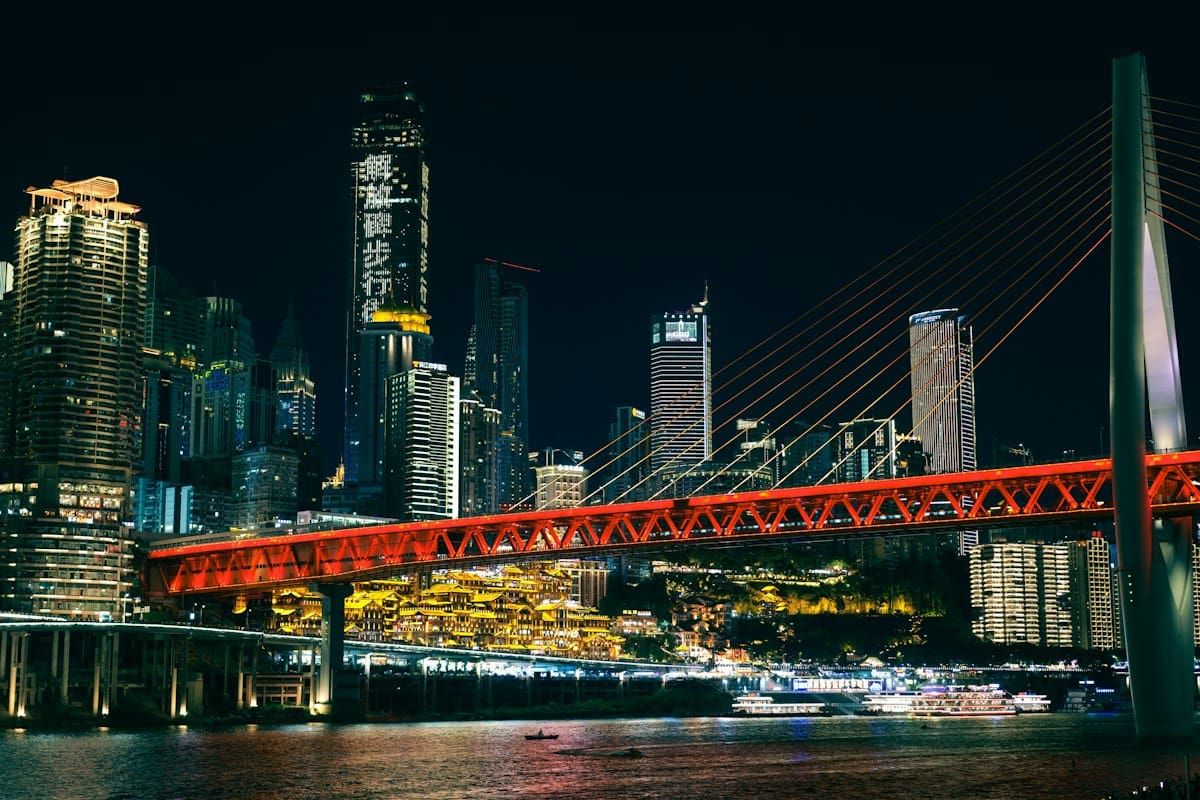
Qiansimen Bridge spans the Jialing River just west of Hongyadong, carrying both the road and Line 6 of the metro. The pedestrian deck on the Hongyadong side gives you the classic elevated three-quarter angle — the whole eleven-storey stack, the river below, the bridge structure framing it.
Walk onto the bridge from the Hongyadong side and stop at roughly the second or third lamp post. That’s the angle. It takes about eight minutes to walk there from the complex, and the deck is free and open.
The catch: everyone knows this. On weekend evenings the bridge deck becomes a queue of people with tripods. Go on a weekday, or arrive early.
Option 2: The north bank of the Jialing
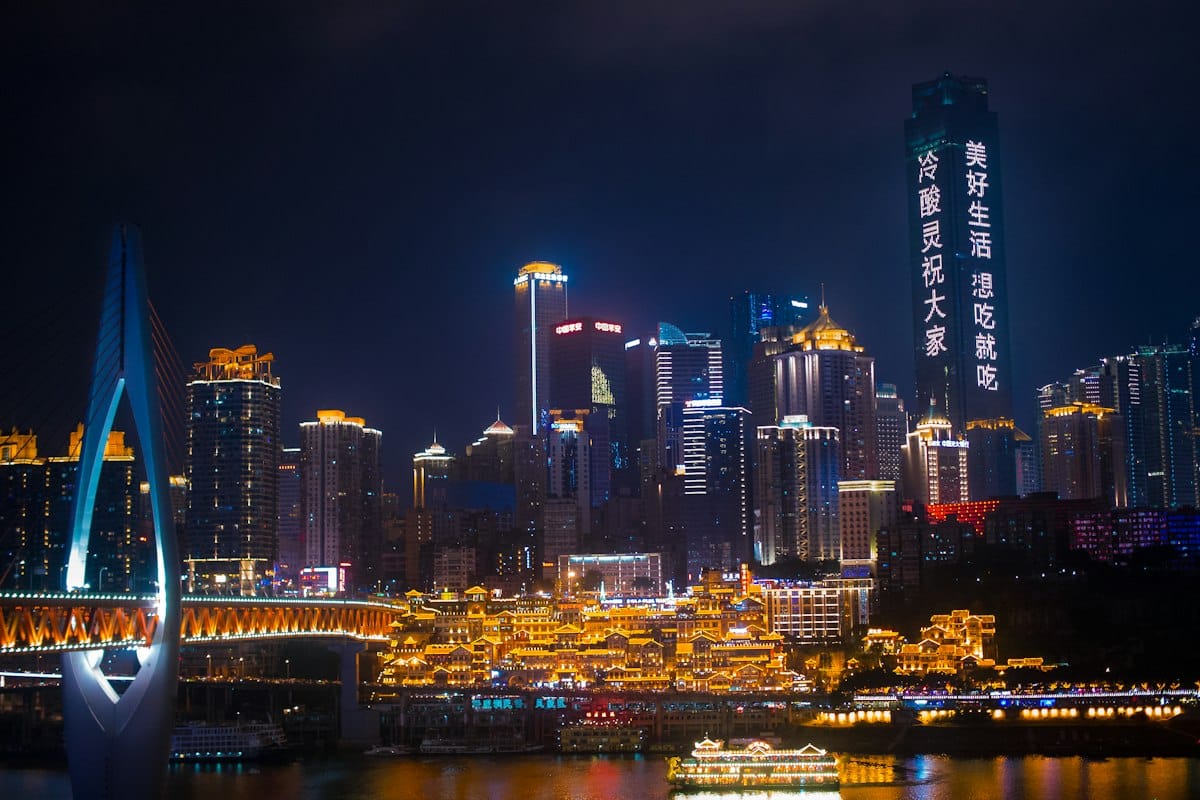
Cross to the north side of the river and walk the riverside promenade. You get a wider, lower angle that captures Hongyadong, the bridge, and the Jiefangbei skyline behind it in one frame. Fewer people, better for wide shots, worse for the tight crop of the building alone.
Option 3: A river cruise
The two-river night cruises run from the Chaotianmen docks and pass Hongyadong at water level. Roughly 100-150 yuan for 30-40 minutes. It’s the most touristy option and the boat moves, so it’s not great for photography — but it’s the only way to see the cliff face straight on from below, and on a clear night the combination of Hongyadong and the bridge from the water is the best thing on the route.
If You Go Inside
Entry to Hongyadong is free, and it’s open from morning until late evening. The interior is eleven levels connected by stairs, escalators and lifts, filled mostly with snack stalls, souvenir shops, and restaurants aimed at domestic tourists.
Two things are actually worth it:
- The upper terrace levels — around floors 9-11 — have open-air walkways that look back across the Jialing toward the bridge and the Jiangbeizui skyline. It’s a different composition from the bridge shot and you’ll have it mostly to yourself, because most people don’t climb that far
- The stilt-house architecture on the lower levels — the structural system that holds the whole thing to the cliff is visible from the lower terraces, and it’s the only place you can see how a diaojiaolou actually works
Everything else inside — the food stalls, the shops — is standard tourist-strip material. The snacks are fine, the prices are marked up, and there’s nothing there you can’t eat better a block away in Jiefangbei.
What to Do Nearby (The Rest of the Evening)
Hongyadong is a 45-minute stop, not an evening. Build the rest of the night around it.
- Jiefangbei (解放碑) — Chongqing’s central shopping district, a 10-minute walk inland. The monument itself is unremarkable; the surrounding food streets and the density of the crowd are the point. Hotpot restaurants everywhere, most of them better and cheaper than anything inside Hongyadong
- Liziba (李子坝) — the monorail station where Line 2 passes through the middle of a residential building. A 15-minute metro ride from Xiaoshizi. There’s a viewing platform outside the station. It takes ten minutes and it’s genuinely one of the strangest pieces of urban infrastructure you’ll see in China
- Eling Park (鹅岭公园) — a hilltop park above the peninsula with a viewing tower over both rivers. Best at sunset, before the Hongyadong lights. Twenty minutes by taxi or a long walk uphill
- Chaotianmen (朝天门) — the confluence where the Jialing meets the Yangtze, and where the river cruises depart. Worth seeing for the two-tone water where the rivers meet, especially after rain
If you’re building a full Chongqing itinerary, the Chongqing 3-day guide covers Liziba, Hongyadong and the hotpot route in the order that actually works.
Practical Logistics
Getting there
- Xiaoshizi station (小什字), Lines 1 and 6 — about 10 minutes’ walk to Hongyadong, and the closest station to the bridge
- Linjiangmen station (临江门), Line 2 — the other side, five minutes’ walk from the complex’s upper entrance
- Chongqing’s metro exits are often several storeys above or below street level; follow the signs for the specific street, not just the station name
When to go
- Weekday evening, arrive 6:30pm — lights come on around 7pm, the crowd hasn’t peaked, and you can get the bridge shot without waiting
- Avoid weekends and Chinese public holidays entirely. Hongyadong on a Saturday night in Golden Week is a single-file shuffle across the bridge
- Summer vs winter: summer light is better (later sunset, the building reads against a blue sky) but the crowds are heavier. Winter is quieter and the lights come on earlier
What to bring
- A phone with a night mode or a camera you can steady — the shot is a long exposure and the bridge vibrates with foot traffic
- Comfortable shoes. Chongqing is stairs everywhere, and the walk from the metro to the bridge involves several flights
- A power bank. You’ll take more photos than you expect, and payment is phone-only
Chongqing Hongyadong: Frequently Asked Questions
Q: Best place to photograph Hongyadong?
Qiansimen Bridge pedestrian deck, ~400m away — walk on from the Hongyadong side, stop at the second or third lamp post. Free, 8 minutes’ walk. North bank of the Jialing is a wider alternative. You cannot get the shot from inside the building.
Q: Is Hongyadong free?
Yes, free entry, open morning to late evening. Eleven-storey commercial complex. Worth doing inside: upper terraces (floors 9-11) for the view back across the river, and the lower terraces to see the stilt-house structure.
Q: When do the lights come on?
Dusk — roughly 7pm summer, 6pm winter, until about 10pm. Best 20-30 minutes right after they come on while the sky still has colour. Arrive 6:30pm, stay to 7:30pm.
Q: Is it worth visiting?
Yes, as a 45-minute viewing stop, not a destination. Pair with Jiefangbei for dinner or Liziba’s monorail station. It’s a 2006 reconstruction, not a historic building.
Q: Closest metro?
Xiaoshizi (Lines 1/6) — 10 min walk, closest to the bridge. Linjiangmen (Line 2) — 5 min to the upper entrance. Follow signs for the street, not just the station.
Q: When to avoid?
Weekend evenings and public holidays. Golden Week is the worst. Weekday afternoons into evening are manageable.
For the rest of the city, the Chongqing 3-day guide covers Liziba, Hongyadong and the hotpot route, and the Beijing hutong guide and Shanghai French Concession guide apply the same approach to the other two cities’ walkable districts.
Photos courtesy of Unsplash.