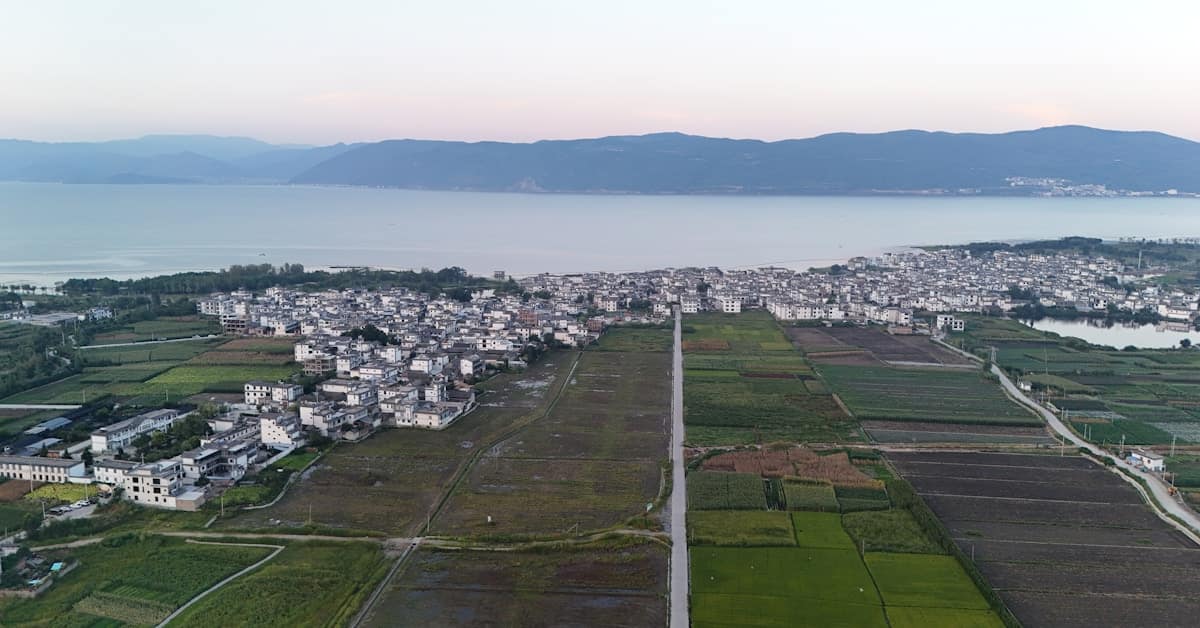

Kunming gets sold as the “Spring City” with eternally mild weather and clear blue lakes. Both halves of that pitch are about 80% true and 20% misleading, and the gap is where most first-time visitors get caught out. The weather really is mild — but Kunming sits at 1,900m altitude, so the UV is brutal and the temperature swing from morning to afternoon can be 15°C in winter. Dianchi Lake is enormous and ringed by mountains — but it’s also been fighting a chronic green algae bloom problem for thirty years, and the bit most tourists see from Haigeng Park is not the bit you want to swim in.
So treat this guide as the version a friend who lives in Yunnan would give you, not the version the tourism board prints. The good stuff is real. You just need to know what to skip.
Why Kunming, and Why Use It as a Gateway
Kunming is the obvious base for any Yunnan trip — but it’s worth its own two days, not just a stopover. Roughly 70% of international visitors arrive in Kunming and leave the next morning on a train to Dali or Lijiang. That’s a mistake. The Stone Forest, Western Hills, and the city’s own temple cluster are genuinely worth a slow 48-hour pass. After that, yes, you head west — but the western Yunnan circuit makes more sense if you’ve already been recalibrated by a couple of days at altitude.
For the wider regional context — when to visit each piece of the province, how the routes fit together — see the dedicated Yunnan travel guide. This page focuses on Kunming itself.
The “Perpetual Spring” Reality Check
Kunming’s nickname is real, but it’s a Mediterranean-spring real, not a tropical real. Average daytime temperatures sit between 15°C and 25°C nearly year-round, but the altitude means nights drop sharply: 5–10°C in winter, 12–15°C in summer. The dry season (Nov–Apr) is genuinely dazzling — clear skies, low humidity, intense sun. The wet season (May–Oct) brings short violent afternoon thunderstorms, usually 4–6pm, that clear within an hour but turn the streets into temporary rivers.
The honest best time to visit is March–April or September–October. You get the spring temperatures, you avoid the worst of the rains, and the wider Yunnan circuit (Lijiang, Shangri-La, Tiger Leaping Gorge) is also at its best. For the broader seasonal breakdown across China see best time to visit China.
Bring SPF 50, a hat, and a light layer for evenings. In my experience the single most common mistake at Kunming altitude is underestimating UV — a clear February afternoon at 2,000m can burn you in 20 minutes even when the air temperature is 16°C.
Stone Forest Day Trip: Book or DIY?
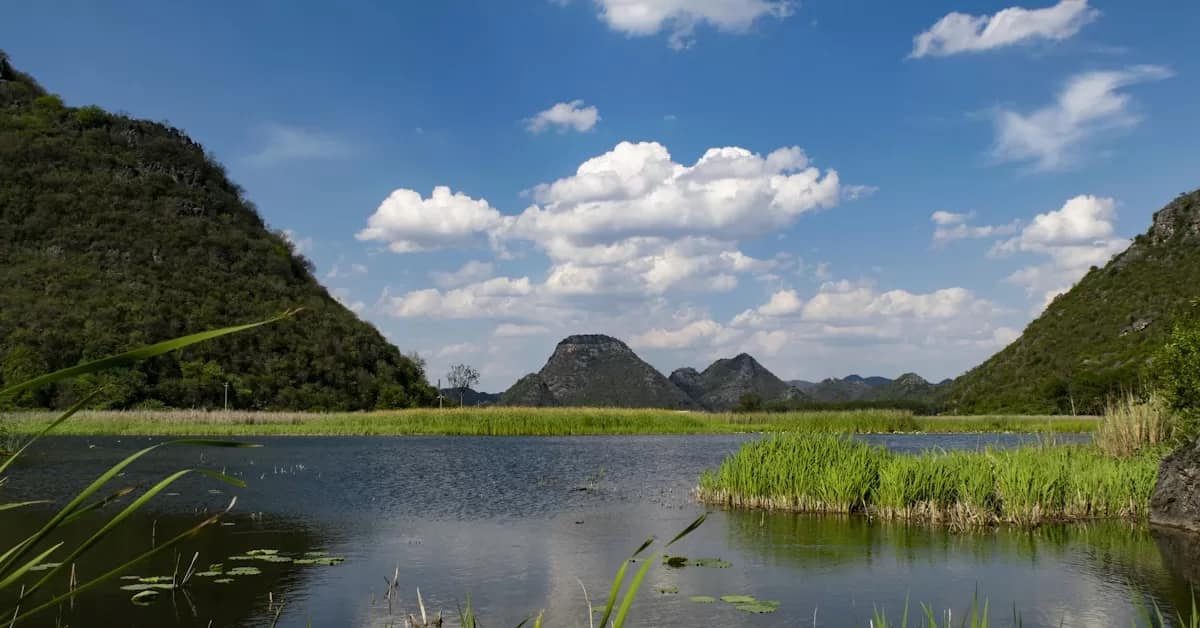
The Stone Forest (Shilin) is the unmissable Kunming day trip — a UNESCO-listed karst landscape 90km southeast of the city where 270 million years of weathering have left vertical limestone pillars up to 30m tall arranged in dense forests. It’s genuinely strange, genuinely worth the half-day, and almost universally over-photographed in a way that makes the actual scale impossible to grasp until you’re standing in it.
DIY by high-speed rail (recommended)
This is the easiest cheap option, and you don’t need any Chinese to do it:
- Train: Kunming South station → Shilin West, 18 minutes on the C-class regional, 31–40 yuan one way. Trains run roughly every 30 minutes from 7am to 8pm.
- From Shilin West: taxi or bus shuttle to the scenic area entrance, 15 minutes, 10–15 yuan by taxi.
- Park entry: 130 yuan (as of 2026). Internal shuttle bus inside the park: 25 yuan, worth it because the walking distance to the famous “Greater Stone Forest” section is 2km from the gate.
- Total time: 5–6 hours door-to-door from central Kunming. Leave around 8am, back by 2–3pm.
For more on how the high-speed train system works for foreigners — buying tickets, station entry, passport scanning — see the China high-speed train guide.
The booked-tour option
Available everywhere on Klook, Trip.com or via your hotel, usually 280–450 yuan including a guide and lunch. Honestly, only worth it if you specifically want commentary on the Sani ethnic minority culture and the geological formation history. Otherwise the DIY route is faster, cheaper, and gets you there before the buses arrive.
Inside the park
Go straight to the Greater Stone Forest section first, then the Lesser Stone Forest, skip the Sword Peak Pond area unless you have extra time. The lookout point above the Greater Stone Forest is reached by a tight stone staircase — narrow enough that traffic backs up by 11am. Climb it before 10am or after 2pm.
Dianchi Lake and the Western Hills
Dianchi is the eighth-largest freshwater lake in China and the visual backdrop to half of Kunming. It is also, honestly, the lake’s main weakness — decades of agricultural runoff and rapid urban expansion produced chronic eutrophication, and the green algae blooms that show up in summer are real. The water quality along the city-facing northern shore (where Haigeng Park sits) is the worst; the southern shore is considerably cleaner.
You’re not coming here to swim. You’re coming for the view from above.
The Western Hills (Xishan) + Dragon Gate (Longmen)
This is one of the best half-days you can have in Kunming, and the route stitches together a Buddhist temple complex, a Daoist grotto sequence, and the single best Dianchi viewpoint.
- Getting there: Metro Line 3 to Xishan Park station, then the cable car (high cable car: 40 yuan one way, 70 yuan return). Or for the cheap option, take a taxi or DiDi up to the Huating Temple gate (about 35 yuan from city center).
- The climb: from the high cable car drop-off, it’s a moderate 40-minute uphill walk along carved stone paths and through tunnels cut into the cliff face by Daoist monks across 70 years in the Qing dynasty. The final 200m is steep stone stairs.
- Dragon Gate viewpoint: the moment you step through, the entire Dianchi Lake basin opens out in front of you. This is the photograph that’s actually worth taking.
- Park entry: 30 yuan; Dragon Gate scenic zone: 30 yuan extra.
Budget half a day. Pair it with lunch at one of the small noodle places near the Xishan metro stop on your way back.

The Ethnic Minority Context (and Why It Matters Beyond a Photo Op)
Yunnan is China’s most ethnically diverse province — 25 of the country’s 56 officially recognized ethnic groups have significant populations here, including the Yi, Bai, Naxi, Hani, Dai and Tibetan. Around Kunming itself the dominant minority is the Yi (the Sani branch of the Yi run most of the village-level tourism around the Stone Forest, where you’ll see women in indigo embroidered headdresses selling crafts).
The Bai are concentrated around Dali (4 hours by high-speed rail north). The Naxi are around Lijiang and the Tiger Leaping Gorge area. The Dai are in the tropical south near Xishuangbanna, on the Laos border. The minority you encounter changes every couple of hours as you move through the province, which is exactly why Yunnan rewards a longer trip.
Honestly, don’t bother with the Yunnan Ethnic Village on the north shore of Dianchi. It’s a curated cultural park with costumed performances and replica village houses, the kind of thing that looks reasonable on a brochure and feels hollow in person. If you want actual cultural exposure, take the train to Dali for a day instead.
Using Kunming as Your Yunnan Gateway
Kunming is where every Yunnan trip starts because the high-speed rail network radiates from here. You don’t need to fly anywhere within Yunnan anymore — the rail upgrades since 2018 have made the classic Kunming → Dali → Lijiang → Shangri-La circuit much easier.
The travel times that actually matter
- Kunming → Dali: 2 hours by high-speed rail (Kunming South → Dali). Departures roughly every 30 minutes from 7am to 8pm. 145–220 yuan second class.
- Kunming → Lijiang: 3 hours 30 minutes direct on the bullet train (since the 2023 line opened), 220–250 yuan second class. Used to be an overnight bus.
- Lijiang → Shangri-La: 1 hour 20 minutes by high-speed rail (the new line opened end of 2023). Used to be a 4-hour mountain bus ride. This is the single biggest infrastructure improvement Yunnan tourism has seen.
- Kunming → Xishuangbanna (Jinghong): 3 hours by the China-Laos railway bullet train. Tropical south, completely different climate and food.
The practical implication: a 7-day Yunnan trip from Kunming is now realistic and doesn’t require any flights. Plan two nights Kunming, two Dali, two Lijiang/Shangri-La, with one travel day padded in.
What to Eat: Across-the-Bridge Noodles and Beyond
Across-the-bridge noodles ( guoqiao mixian) are the dish every Kunming guide leads with, and they actually deserve it. The format: you get a large bowl of boiling-hot chicken-bone broth with a film of oil sealing in the heat, a plate of raw paper-thin meat slices, raw quail egg, herbs, vegetables, and a separate plate of rice noodles. You add everything to the broth at the table; the residual heat cooks the meat in seconds. It’s geographically specific — invented in Mengzi in southern Yunnan — and rarely done well outside the province.
Where to try it: Jianxin Garden is the local chain that’s been doing it since 1906; the original branch on Baoshan Street is the one to find. Around 30–50 yuan per bowl depending on the topping tier.
Beyond the noodles:
- Wild mushrooms ( yesheng jun). Yunnan supplies most of China’s wild mushroom crop. June–September is mushroom season; restaurants advertise mushroom hotpot menus. Stick to established places — wild mushrooms are a real medical risk in Yunnan and dozens of people are hospitalized each year for misidentified species. Restaurants source through vetted suppliers; markets can’t always be trusted.
- Steam-pot chicken ( qiguoji). Native to Kunming, chicken slowly steamed in a clay vessel with herbs. Found everywhere; almost always good.
- Roasted goat cheese (rubing). A Bai minority specialty that travels to Kunming menus. Slabs of fresh cheese pan-fried until golden. Genuinely delicious and not what you expect Chinese food to be.
- Erkuai. Local Yunnanese rice cake, eaten grilled or stir-fried. Street stalls do it for 8–15 yuan.
Where to Stay and Get Around
Kunming has three reasonable hotel zones for visitors:
- Around Cuihu (Green Lake) park — old-town atmosphere, walking distance to the university quarter, best mid-range and boutique options. Where I’d stay first time.
- Around the railway station/Kunming South — convenient for early trains to Dali or the Stone Forest, but the immediate area is bland.
- CBD / Beijing Road — the international chains (Marriott, Pullman). Easy taxi/metro access, less character.
The metro is now four lines and covers the airport, both rail stations, and most points of tourist interest. DiDi works fine, costs roughly 8–25 yuan for in-city trips, and accepts foreign cards if you’ve set up WeChat Pay or Alipay in advance.
Other Things Worth Your Time in Kunming
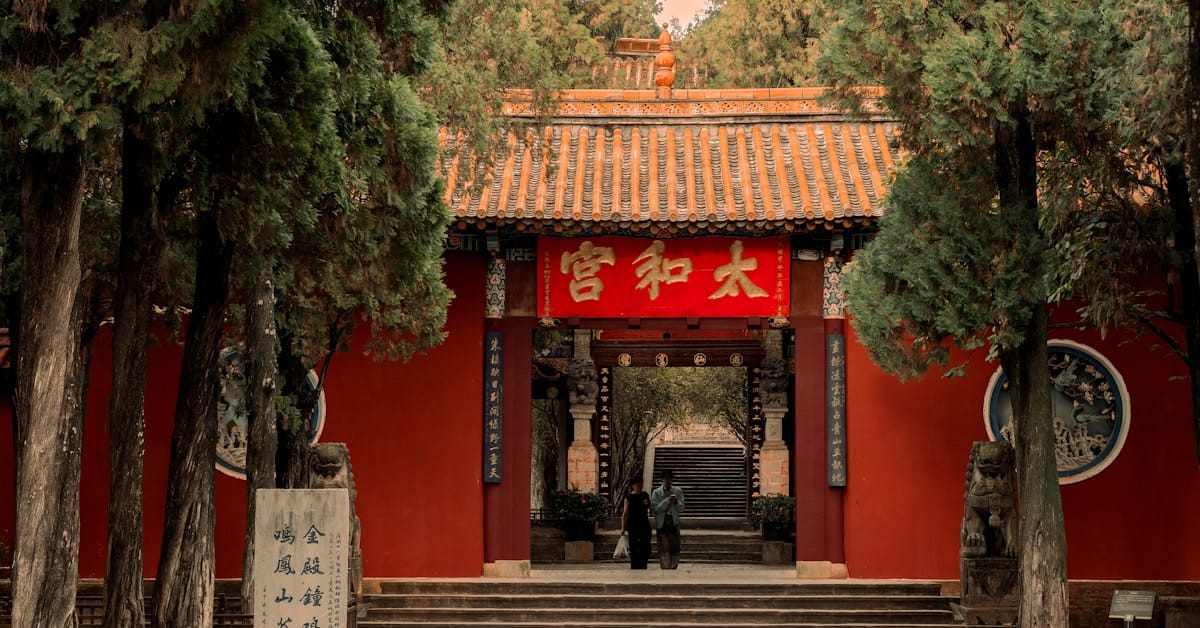
- Yuantong Temple — the largest Buddhist temple in Kunming, 1,200 years old, free entry, near Cuihu. Surprisingly little visited by foreign tourists. Spend an hour.
- Golden Temple (Jindian) — a 17th-century bronze Daoist temple in a wooded park 11km northeast of the city. Quiet, the bronze structure is genuinely unusual. 30 yuan entry, half a day with the park surrounding it.
- Cuihu Park — the city’s central lake park, atmospheric early morning when residents do tai chi and bird-keepers gather. Free. Stop for tea at one of the lakeside pavilions.
- Yunnan Provincial Museum — the bronze artifacts from the Dian Kingdom (a Bronze Age culture in this region, predating Han Chinese contact) are world-class and the museum is free with passport. Underrated. Two hours minimum.
For a wider China context — how Kunming fits into a multi-city route, what to combine it with — see the Sichuan travel guide if you’re considering pairing Yunnan with Chengdu and Jiuzhaigou (the two provinces share a border and the food/landscape transition is dramatic).
Practical Notes
- Altitude: 1,890m. Most people feel nothing; some get mild headaches on day one. Hydrate, go easy on alcohol the first night.
- Air quality: generally excellent (much cleaner than Beijing or Xi’an). Spring sandstorms occasionally drift down from the north but it’s rare.
- ATMs: Bank of China and ICBC ATMs in the city center accept foreign cards. The airport ATMs work reliably.
- SIM/eSIM: set up before you arrive. Local sales require a Chinese ID for activation; international eSIMs (Airalo, Holafly) work fine.
- Cash: keep 500–1,000 yuan on hand for the Stone Forest and any village stops; older vendors don’t always have working QR-code readers for foreign WeChat Pay.
Quick Reference: What People Get Wrong in Kunming
| Common mistake | What actually works |
|---|---|
| Treating Kunming as a 1-night stopover before flying to Lijiang | Give it 2 full days — Stone Forest plus Western Hills is a real itinerary, not a filler |
| Trying to swim or boat on Dianchi from the north shore | Use Dianchi for the Western Hills viewpoint, not the water itself; the algae bloom is real on the city side |
| Booking a 400-yuan Stone Forest tour | Take the C-class train from Kunming South to Shilin West — 31 yuan, 18 minutes, no Chinese needed |
| Skipping wild mushrooms because they sound risky | Eat them at an established restaurant in season (Jun–Sep) — Yunnan is the only place in China where this is genuinely the local specialty |
| Going to the Yunnan Ethnic Village for cultural exposure | Take the 2-hour train to Dali instead — the Bai old town is the real version of what the theme park imitates |
| Underestimating UV because the temperature is mild | SPF 50 from day one — 1,900m altitude plus clear skies burns you faster than the weather forecast suggests |
One last thing: don’t fly out of Kunming at the end. Take the bullet train back. The arrival into Kunming South from Dali or Lijiang at sunset, with the mountains behind you and the city basin opening up, is the kind of moment that puts the whole Yunnan trip into perspective — and it’s a moment you don’t get from an airport jet bridge.
Photos courtesy of Unsplash.