China in July and August is not a gentle destination. The heat is real, the crowds are real, and the travel infrastructure was not designed around family pacing. But — and this is the part most travel guides bury — it is also the time when the country is most alive for families. School holidays align with the best months for high-altitude western China, the cities are wired for kids in ways that surprise first-time visitors, and the price math works better than a European summer trip by a factor of two. You just need to pick the right routes.
The Quick Verdict: Go West, Go High, Go Early
China in summer splits into two travel experiences. The eastern half — Beijing, Shanghai, Xi’an, and the entire coast — is hot, humid, and crowded with domestic school-holiday traffic. The western half and the elevated plateau — Yunnan, Qinghai, parts of Sichuan, Tibet — are mild, cool, and the only places where outdoor family sightseeing is genuinely comfortable. The temperature difference between Beijing and Lijiang on the same August day is about 12–15°C.
If your family trip is already locked into east-coast cities, the strategy is: outdoor attractions before 10am, indoor museums and air-conditioned malls midday, food markets and night views after sunset. If your itinerary is still flexible, point it west. The kids will be happier, and so will you.
In my experience, the families who struggle most in China’s summer are not the ones with complex itineraries — they are the ones who tried to do a standard “Beijing-Xi’an-Shanghai” loop in August without flipping the schedule. The families who have the best time are almost always the ones who committed to the high-altitude west and treated Beijing as a 2-day transit stop at the start or end.
Three Routes That Actually Work for Families in Summer
Route 1: Sichuan — Chengdu, Pandas, and the Mountains (5–7 days)
The most family-friendly summer route in China, full stop. Chengdu sits at 500m elevation, which means the summer heat is real but the city infrastructure is built around it — air-conditioned metro, shopping malls as places to rest, and the Panda Research Base (which kids under 10 rank higher than any temple or palace). The pandas are most active in the morning (7:30–9:30am), and the nursery section with the baby pandas is the single most reliable “wow” moment for kids in China.
From Chengdu as a base: one day trip to the Leshan Giant Buddha (the world’s largest seated Buddha, 71m tall, carved into a cliff — kids understand scale, and this one delivers), and if you have a fifth day, Mount Qingcheng’s Anterior Mountain with the cable car (90 yuan round trip) and monks who are used to children looking at their robes. For the full Chengdu context, see the Chengdu travel guide and the Mount Qingcheng guide.
Route 2: Yunnan — Kunming, Dali, Lijiang (7–10 days)
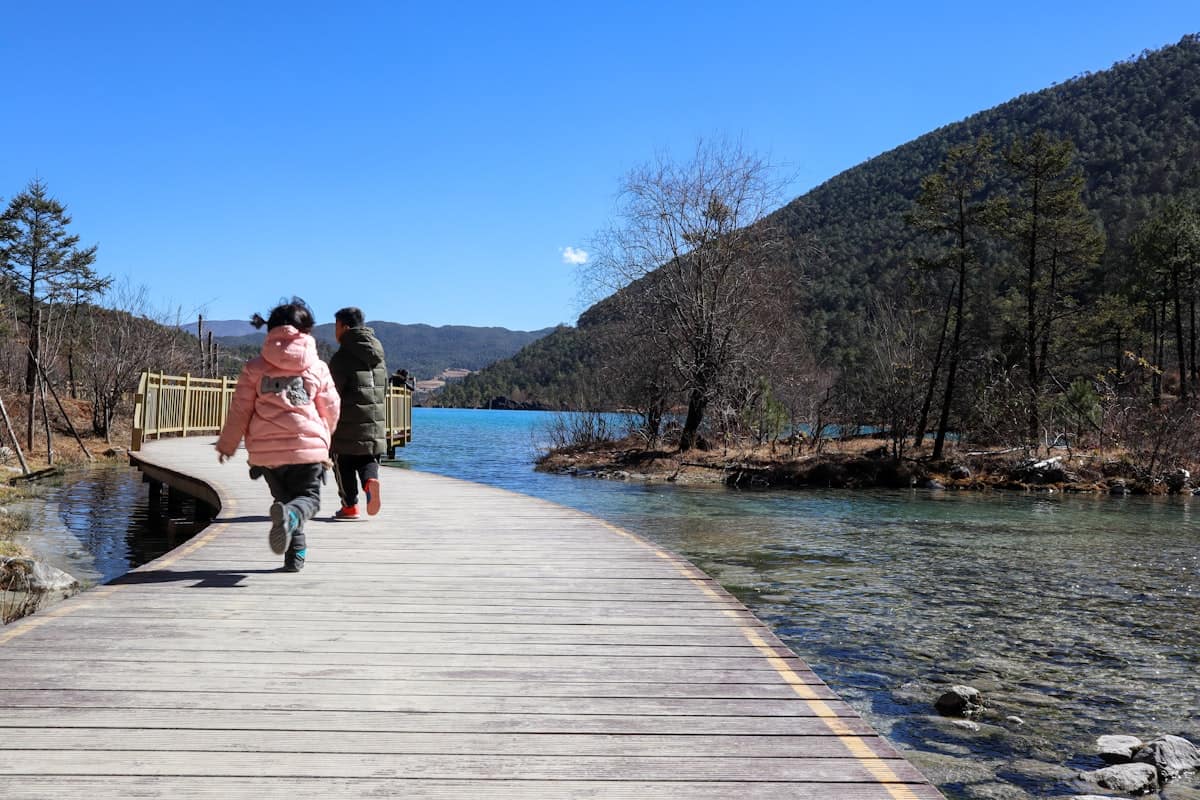
The Yunnan plateau sits at 1,800–2,400m, and daytime temperatures in July–August rarely touch 30°C. This is the route for families who want summer weather that actually feels like summer should, not like a steam bath. The elevation keeps the heat manageable, and the cities are connected by high-speed train and short flights that don’t exhaust anyone.
Kunming is the entry point — the Stone Forest is a 90-minute drive and the closest thing in China to a natural playground (kids run between the limestone formations and parents take photos of them running). Dali is the midpoint — the Erhai Lake bike path along the northern shore is flat and paved, a 2-hour family ride with lake views and the Cangshan mountains in the background. Lijiang at the end gives you the old town and the Tiger Leaping Gorge (the upper trail is family-friendly if the kids are 8+; the lower trail is not).
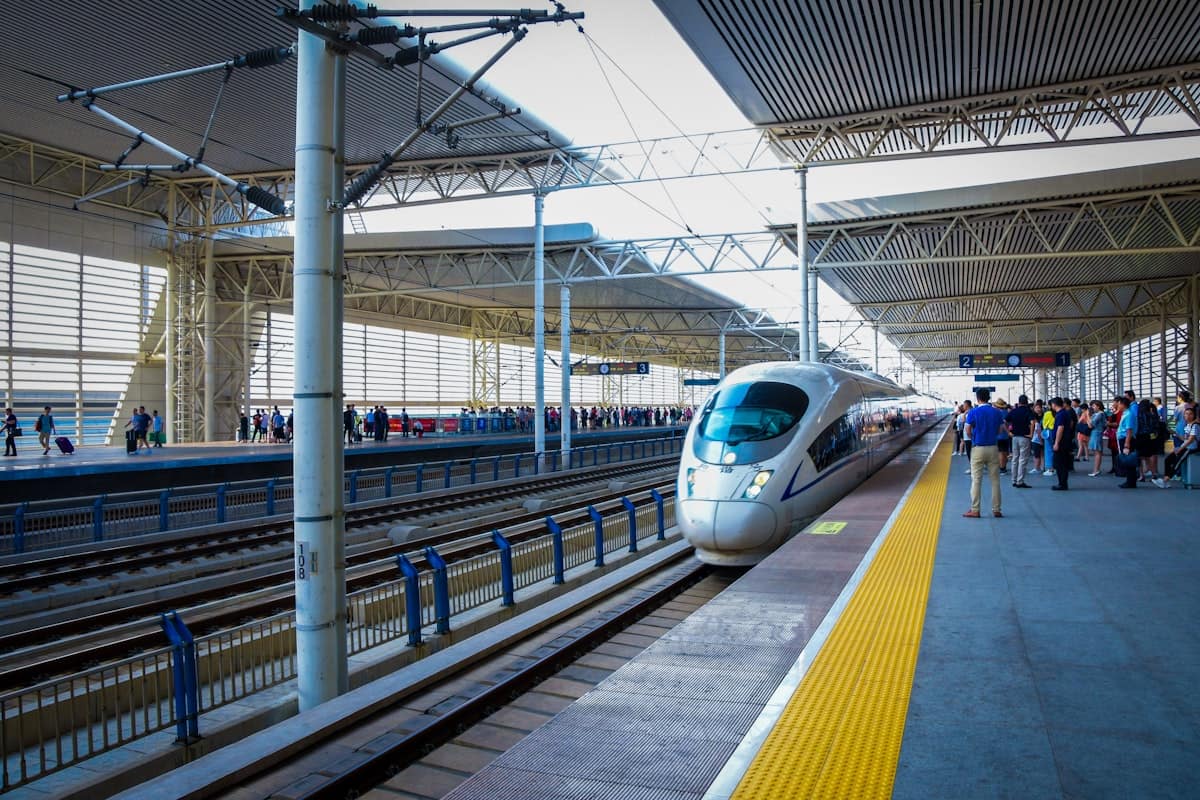
For daily logistics, the China in July 2026 guide covers the southwest’s monsoon season timing, and the high-speed train guide covers the booking math for the Kunming-Dali-Lijiang rail corridor.
Route 3: Beijing (3 days, no more) — the East-Coast Compromise
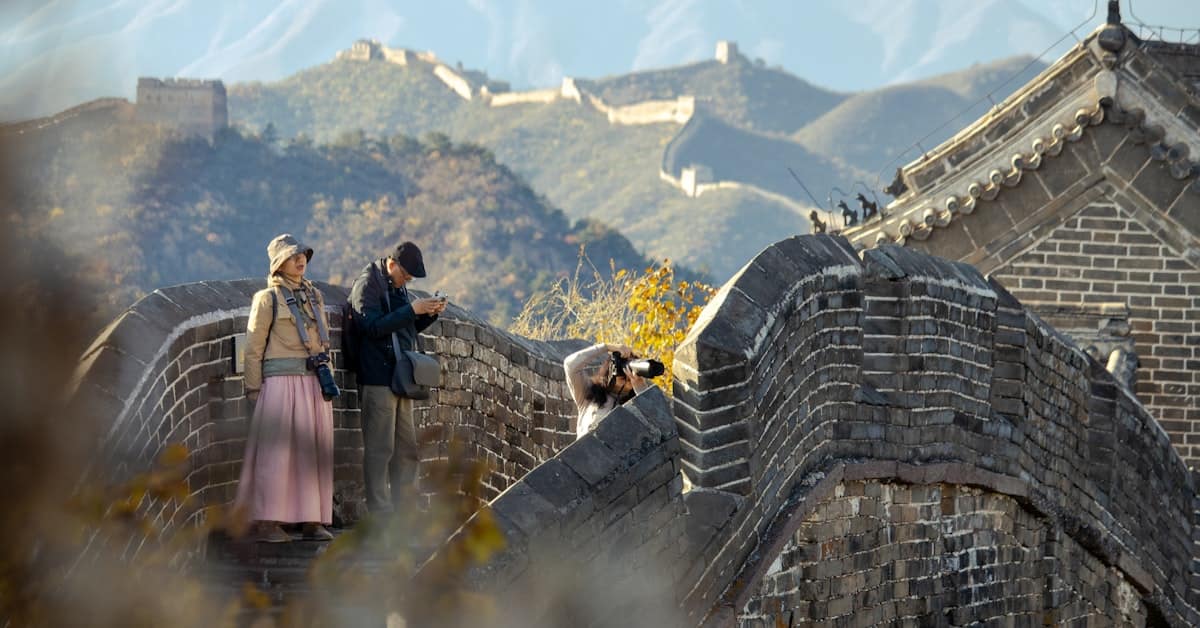
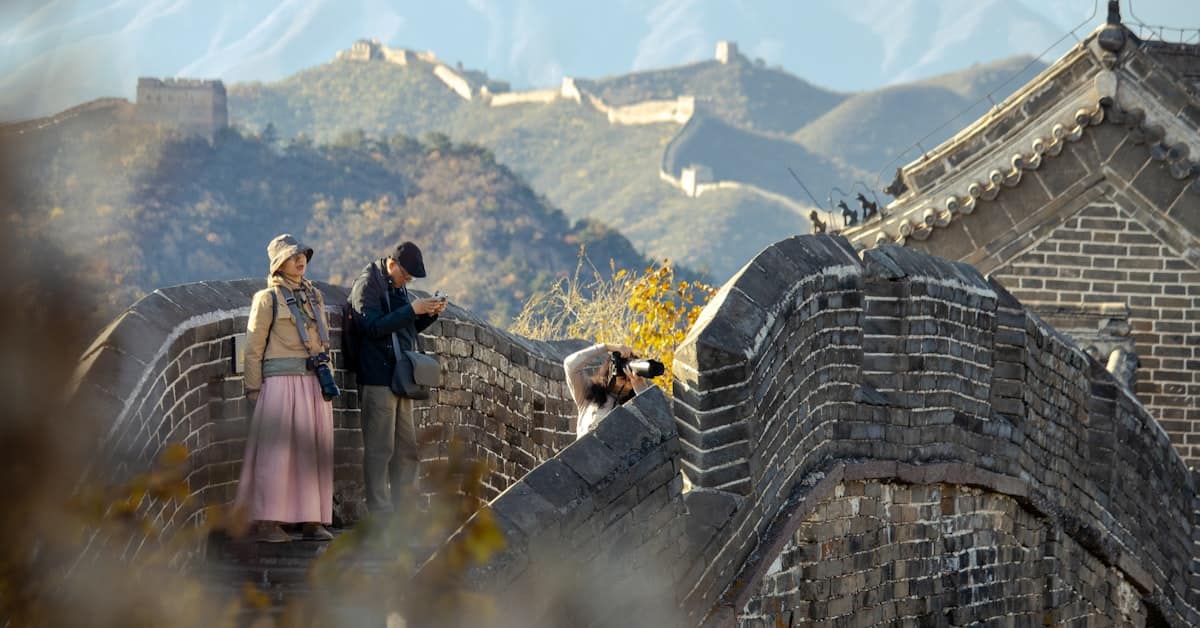
If you must do Beijing in summer with kids, do it fast and do it early. Three days is the cap. The Forbidden City for 2 hours (enter at 8:30am, exit at 10:30am before the heat hits), the Great Wall at Mutianyu cable car and toboggan (the toboggan back down is the part your kids will actually tell their friends about), and the hutong walk in the evening. That is it. Do not add the Summer Palace (it is a 3-hour walk in the sun) or the Temple of Heaven (you will have already seen the Forbidden City).
The full day-by-day structure is in the Beijing 7-day itinerary — skip days 4–7 and use the first three days’ structure of early starts and indoor afternoons. For the bigger picture on when summer Beijing actually works, the China in August 2026 guide includes the month-by-month breakdown of what to avoid.
What to Pack for China Summer With Kids
Some of this is in the generic China packing list, but the family-specific items make the difference between a trip that works and one that doesn’t. Here is what actually matters for traveling with children in July–August:
- Electrolyte tablets or powder. Chinese convenience-store sports drinks are sweet but light on the actual electrolytes. Bring tablets from home. Kids will sweat through more than adults expect.
- A second shirt for every child, every day. Do not rely on hotel laundry. Quick-dry synthetics that you can rinse in the sink at night are the difference between a comfortable 3pm and a miserable one.
- Sun protection at altitude. Yunnan, Qinghai, and Tibet above 2,000m have UV indexes of 10–11 in summer. SPF 50, hat, and sunglasses for everyone in the family. This is not optional.
- A lightweight stroller that folds small. The most useful object in your family’s possession in Chinese cities. Most subway stations have elevators, but the distance between platforms and exits can be long. A folding stroller that fits in a taxi trunk is the right call.
- Offline maps on a tablet. Kids can follow the route on a tablet while you navigate. Maps.me or OsmAnd work without a VPN and download offline. Google Maps works inside China with a VPN, but VPNs drop.
- Snacks from home. Chinese convenience stores have a wide snack selection, but the flavors are unfamiliar to most Western palates. A bag of familiar granola bars or crackers from home is the single most soothing object in a child’s backpack on a 2-hour train ride.
Health and Safety for Families in Summer
Heat illness is the actual risk, not crime
China is, on most metrics, a safe country to travel in — see the broader Is China safe for tourists writeup. The summer-specific risk is heat illness. Children are more vulnerable than adults because they generate more heat relative to body mass and sweat less efficiently. The warning signs are the same as for adults: dizziness, nausea, excessive sweating followed by a sudden stop in sweating. If a child stops sweating in the heat, stop and find air conditioning immediately — that is the warning sign you cannot ignore.
Hydration strategy for a family day out: give each child a refillable water bottle with a target of finishing it by lunch and refilling it. Add the electrolyte tablet at the midday refill. This is more reliable than buying bottled water as you go, which is easily forgotten when the sightseeing is absorbing.
Mosquitoes are worse in summer
Standing water from rain plus heat means mosquitoes are at peak numbers in July–August. DEET-based repellent is the most effective option. The local stuff (huā lù shuǐ, flower-scented water) smells better but is less effective. No malaria risk in tourist areas, but dengue sometimes shows up in southern provinces — long sleeves at sunset in Yunnan and Guangxi is a reasonable habit.
Air quality in summer
Counterintuitively, Beijing’s air quality is usually better in summer than in spring, because the prevailing winds shift and the rain washes out particulate matter. The smog-heavy months are November–March. Summer is actually the safest window for children with asthma or respiratory sensitivities.
Practical Logistics for Family Travel in China Summer
Booking and timing
- Train tickets: Book 15 days ahead for popular summer routes. The Kunming-Lijiang and Beijing-Shanghai high-speed lines sell out within hours of the booking window opening. Set a reminder for 9am Beijing time 15 days before your travel date.
- Hotels: Most Chinese hotels count a child under 12 as not needing a separate bed if they share with parents. Confirm this with the hotel before booking — some mid-range chains enforce a “two adults only” room policy strictly.
- Attraction tickets: The Forbidden City, Panda Research Base, and Zhangjiajie all require advance online booking through the official WeChat mini-programs. The Panda Base frequently sells out 3–4 days ahead in summer. Book as soon as you have your dates.
Apps and payment
- WeChat Pay and Alipay: Both accept foreign Visa/Mastercard since 2023. Set up both before you land, link a card, and test with a small payment. Having both apps means you are never stuck if one QR code system fails.
- DiDi (ride-hailing): Works in English, accepts foreign cards, and is the most reliable way to get a taxi with a tired child at 6pm in a city you do not know. The app is in the essential China travel apps guide.
- Translation apps: Pleco (dictionary, works offline) and Google Translate (camera mode for signs and menus) are the two apps that solve most family-travel communication problems. Download Pleco’s offline dictionary before you leave.
Bathrooms and the reality of hygiene
Chinese public toilets are improving but the gap between expectation and reality is still wide. The cleanest toilets are in high-speed train stations, large shopping malls, and international hotels. The ones in parks, temples, and small-town attractions are functional but often without soap, toilet paper, or Western-style seats. Bring your own toilet paper and hand sanitizer. This is the single most-logistics-intensive part of traveling with children in China, and the one that most travel guides either skip or sanitize. Accept it, pack for it, and you will be fine.
Family Travel in China Summer: Frequently Asked Questions
Q: Is China safe for family travel in summer 2026?
Yes. China is generally very safe, with low crime in tourist areas. The primary summer risks are heat illness (keep children hydrated and shaded between 11am-3pm), mosquitoes (DEET repellent), and uneven stone paths at historical sites (sturdy shoes). Air quality is better in summer than winter — the safest window for children with asthma.
Q: What is the best China itinerary for a family with young children in summer?
Route 1 (Sichuan): Chengdu pandas (3 days), Leshan Giant Buddha, Mount Qingcheng with cable car. Route 2 (Yunnan): Kunming, Dali bike ride, Lijiang Old Town. Route 3 (Beijing): 3 days max — Forbidden City early, Great Wall Mutianyu toboggan, evening hutong walk. Avoid Beijing-Xi’an-Shanghai loops in August.
Q: How should I handle food for picky eaters in China?
Bring familiar snacks from home. Most restaurants serve plain rice, steamed buns (mantou), and simple stir-fried vegetables — universally available. Street food is cooked to order and generally safe — pick the busiest stall. International hotel breakfast buffets are the most reliable option.
Q: Do children need visas for China?
Yes, children need their own visa. The process is identical to adults. Children under 14 with both parents can submit a single application. The 144-hour transit visa-free option applies to children if the entire family is transiting to a third country.
Q: What is the best age for children to travel to China?
Ages 6-12 is the sweet spot. Under 5: expect to carry the child for part of most days, limit to 2 cities. Over 12: works like an adult trip with more bathroom breaks.
Q: How much does a family trip to China cost in summer 2026?
Family of 4, 10-day mid-range: roughly $4,000-$7,000 USD on the ground (ex-flights). Budget: $3,000-$4,000. Higher-end: $8,000-$12,000. Significantly cheaper than a comparable European or Japanese family trip.
Photos courtesy of Unsplash.

One thought on “China Family Summer Trip 2026: Kid-Friendly Routes That Beat the Heat”