
Booking a hotel in China is not like booking one anywhere else. The price range is enormous, the brand names are unfamiliar, the booking platforms are different, and there is one rule nobody warns you about: many hotels cannot legally accept foreign guests at all. Walk in at 9pm with a passport and you may be turned away even though the website showed availability. None of this is a reason to worry. It is a reason to read this before you book.
Below is the practical version of what works in 2026 — which apps to install, the foreigner-registration rule and what to do if your hotel refuses you, the real price tiers in yuan and dollars, neighbourhood logic for Beijing, Shanghai and Chengdu, and where Airbnb actually stands now.
Which Booking Apps Actually Work for Foreigners
Trip.com: The Default You Should Install First
Use Trip.com for 90% of your bookings. It is the international face of Ctrip (China’s dominant travel platform), runs in English, takes Visa, Mastercard and Amex without drama, and — most importantly — its inventory is pre-filtered for properties that can legally accept foreign passports. If a hotel shows up in the search results, you can stay there. That single feature saves more bad nights than any other tool on this list.
Customer service answers in English on WhatsApp and email within roughly 30 minutes during the day. Prices are usually 5–10% higher than Chinese-language Ctrip, but for one-stop reliability that is the cheapest insurance you will ever buy.
Booking.com and Agoda: Useful as a Price Check
Both work inside China and both accept foreign cards. Their inventory in China is genuinely smaller than Trip.com — expect to see roughly half the options in any given city. Use them to sanity-check Trip.com’s quoted rate before you commit; on international chains the difference is often $5–15 a night.
Booking.com sometimes lists guesthouses and homestays that Trip.com does not — fine if they explicitly mention accepting foreigners in the listing. If the listing does not mention it, assume they do not, and book somewhere else.
Ctrip and Meituan: The Cheap Local Apps (With a Catch)
The Chinese-language Ctrip app and the all-purpose Meituan app are where locals actually book. Prices run 10–25% below Trip.com on the same room. The catch: the interface is entirely Chinese, payment requires Alipay or WeChat Pay tied to a verified ID, and refunds go to your Chinese mobile balance.
Honestly, unless you read Chinese fluently or have a local friend booking on your behalf, do not bother. The savings rarely justify the friction. The exception: if you are staying somewhere obscure where Trip.com has zero inventory, Ctrip almost always has options — get help and book through there.
The Apps to Avoid
Hotels.com, Expedia and Orbitz technically work in China but their inventory is small and prices are routinely higher than Trip.com for identical rooms. Hostelworld is fine for hostels in Tier-1 cities but check the comments section: foreigner-rejection complaints are common at the cheapest properties.
The Foreigner Registration Rule: What’s Actually Happening
Why Some Hotels Reject Your Passport
Chinese law requires every hotel to register foreign guests with the local Public Security Bureau within 24 hours of check-in. The registration is digital and instant if the hotel has the licensed software and trained staff. Many small budget properties, family-run guesthouses and rural hostels do not have either. So they simply refuse foreign guests rather than risk fines.
This is bureaucracy, not racism. The clerk on duty is following the same rule that has been on the books since 1985. It just got enforced more strictly after 2018, and again in late 2024. You will see it most often in third- and fourth-tier cities, in towns near minority autonomous regions, and at any property under about ¥150 a night outside the major hubs.
What to Do When It Happens at Check-In
If a hotel you booked refuses your passport, do this in order:
- Stay polite and ask for “wai guo ren deng ji” (foreign guest registration). Sometimes the night-shift clerk does not know they are allowed to use the new system, and a manager will fix it.
- Open Trip.com on the spot and call their support line — they will either find you a comparable room nearby or trigger a refund in real time.
- Ask the rejecting hotel to recommend somewhere — they often know which neighbour does accept foreigners and will draw you a small map.
- If it is past midnight, the closest international chain (Ibis, Hampton, Crowne Plaza) is your safe bet. They will have a room and they will check you in without questions.
I have seen this go wrong exactly once in dozens of trips, and it was resolved in 40 minutes via the Trip.com app. Treat it as an inconvenience, not a crisis.
The Real Price Tiers (in Yuan and Dollars)
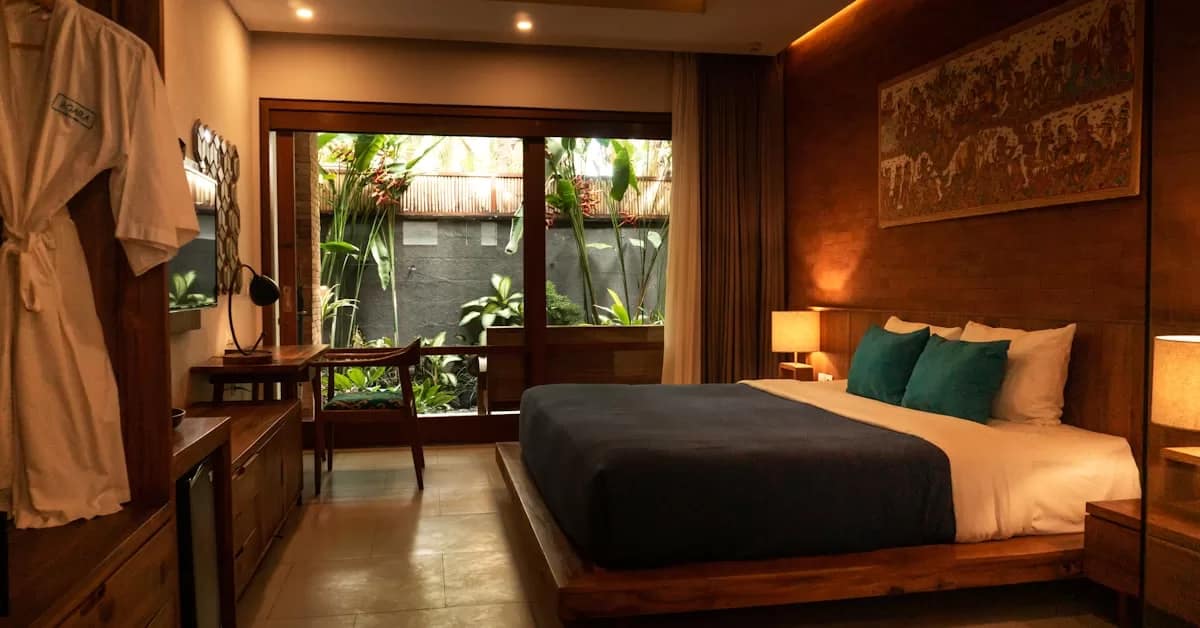
Budget: ¥100–250 / $14–35
This is the sweet spot for any traveler who is not on a strict hostel budget. The three big domestic chains — Jinjiang Inn, Hanting Hotel, and 7 Days Inn — exist in every city and almost always accept foreigners in Tier-1 and Tier-2 hubs. You get a private bathroom, air conditioning, a kettle, free WiFi, and a thin but clean breakfast (congee, steamed buns, pickles). Rooms run small — 12–15 square metres is standard. The bed is firm in a way that takes one night to get used to.
The newer mid-tier brands like Atour Light and Ji Hotel push the same price ceiling but feel noticeably nicer: better mattresses, blackout curtains, decent coffee in the lobby. If two of them appear in the same neighbourhood at the same price, pick the newer build.
Mid-Range: ¥300–700 / $42–98
This is where China hotels start to feel like a deliberate experience. Atour (full version, not Light) is the standout — a Muji-inflected chain with reading nooks, decent espresso, and bedside power outlets in the right places. International chains in this band include Ibis Styles, Novotel, Holiday Inn Express, and Hampton by Hilton. They are interchangeable and reliable.
The honest answer is that the gap between a ¥250 Hanting room and a ¥500 Atour room is bigger than the gap between a ¥500 Atour and a ¥1,500 Marriott. If you are going to splurge once on the trip, this is the tier where the marginal dollar buys the most.
Luxury: ¥1,500–4,000+ / $210–560+
Every international brand operates in China: Marriott, Hilton, Hyatt, Shangri-La, Ritz-Carlton, Four Seasons, Mandarin Oriental, Aman. Chinese-built luxury brands like Banyan Tree, NUO, and Wanda Reign compete on equal terms. Service is uniformly excellent — the staff-to-guest ratio in a Beijing five-star is roughly twice what you get in New York at the same price.
Where to book luxury: directly on the hotel’s own website almost always wins, because chains run member-only rates that booking aggregators do not see. Sign up for the loyalty programme (free, takes two minutes) and prices drop 8–15% on the same room.
Neighbourhood Logic: Beijing, Shanghai, Chengdu
Beijing: Stay Inside the Second Ring
Beijing is huge and the traffic is worse than the maps suggest. The default mistake is to book somewhere near the airport because it looks “close” — it is 40 kilometres from anything you want to see. Stay inside the Second Ring Road, ideally between Wangfujing, Dongsi, and Qianmen. You will walk to the Forbidden City, you will be on the metro for the Great Wall day trip, and the hutong food is a five-minute amble from your door.
The Sanlitun area is the fallback if you want bars and nightlife within walking distance of the hotel. Skip Wudaokou unless you have a reason to be near the university zone. For the full neighbourhood breakdown and what each district is actually good for, the Beijing travel guide covers the trade-offs in detail.
Shanghai: The Bund vs. the French Concession
Two reasonable choices, very different vibes. The Bund (Waitan) and Nanjing East Road put you in the postcard view — colonial-era riverfront, Pudong skyline across the water, every metro line within ten minutes. Hotels here are larger and more expensive. The former French Concession (Xuhui and Jing’an districts) is leafier, full of independent cafes and wine bars, and feels more like a neighbourhood you would want to live in. Hotels are smaller, often boutique, sometimes converted villas.
If this is your first Shanghai trip, pick the Bund. If you have been before, pick the Concession. Avoid Pudong unless you have a specific business reason — it is great for skyscraper views but dead at street level. The Shanghai guide goes deeper on which streets work for which kind of traveler.
Chengdu: Jinjiang District, No Further
Chengdu is flatter and friendlier than the other two. Stay in Jinjiang District, ideally near Chunxi Road or Tianfu Square. You will be within metro distance of the pandas, Kuanzhai Alley, and the Sichuan opera houses, and the surrounding streets are dense with hot pot, dandan noodles, and craft beer bars. For the full picture of where to base yourself, see the Chengdu travel guide.
Hostel vs. Hotel in 2026: What Changed
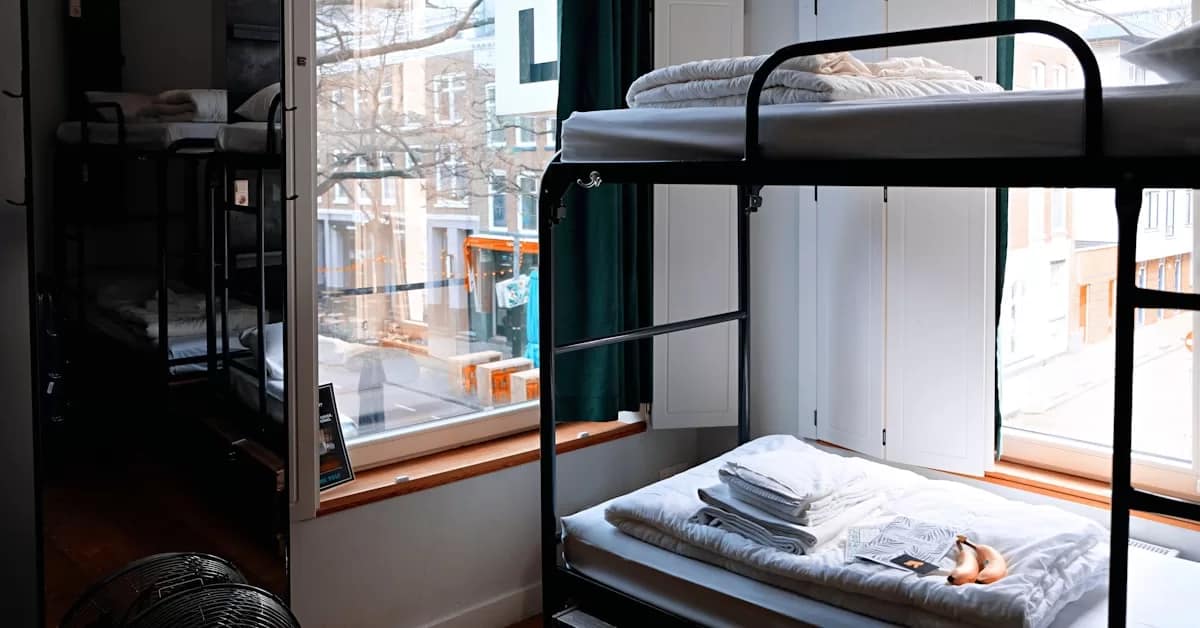
Hostels in China have quietly become very good. Properties under the YHA China and Mama Naxi labels run cleaner, brighter dorms than most backpacker spots in Southeast Asia, with strong WiFi, working hot showers, and common rooms that actually fill up in the evening. The catch is the same one from the previous section: many hostels still cannot register foreign passports, especially in smaller cities.
The 2026 rule of thumb: in Beijing, Shanghai, Xi’an, Chengdu, Guilin and Yangshuo, hostels are reliable and book through Hostelworld or Trip.com without issue. Anywhere else, call ahead or ask Trip.com support to confirm before you board the train. A ¥60 dorm bed is meaningless if you arrive at 11pm to a “no foreigners” sign. For the broader budget-travel logic, the China budget travel guide walks through the daily-spend math.
If you are over 35, traveling as a couple, or value sleep over conversation, the budget chain hotels (Hanting, Atour Light) deliver better value than dorm beds once you account for the privacy and the included breakfast.
Airbnb’s Legal Status: The Honest Answer
Airbnb left China in mid-2022. The platform shut down its domestic listings and only shows properties for outbound Chinese travelers. The replacement most foreigners use is Tujia — a Chinese platform with English support that lists apartments, serviced flats, and the occasional courtyard house.
The legal grey area: short-term apartment rentals in residential buildings exist in a permanent state of regulatory ambiguity. Some municipalities tolerate them, some shut them down in waves, some require the host to register foreign guests with the local police station the same way a hotel does (most hosts cannot). What this means in practice:
- Tujia listings inside serviced-apartment buildings (the ones explicitly built for short stays) work without drama. Look for properties tagged “service apartment” or “” (concierge service).
- Listings inside ordinary residential compounds can be cancelled by the property manager on arrival, especially in Beijing and Shanghai. Read the recent reviews — if multiple guests mention smooth check-in, you are probably fine.
- For stays under a week, a hotel is genuinely easier. For a week or more — especially with a small group or a family — an apartment with a kitchen and a washing machine is worth the small risk.
What Comes in the Room (and What Doesn’t)
The Standard Issue
- Kettle and tea — every room from hostel to five-star. The Chinese hot-water habit is universal and the kettle is non-negotiable.
- Slippers and disposable pyjamas — standard from mid-range up. Plastic-wrapped and replaced daily.
- Two free bottles of water per day — do not drink the tap water in any Chinese city, full stop. The bottles are your daily allowance; ask the front desk for more if you need it.
- Fast WiFi — Chinese hotel internet is reliably quick. The catch is that Google, Instagram and most Western apps are blocked without a VPN. Install and test your VPN before you land.
The Surprises
- Glass bathroom walls — many mid-range business hotels build the bathroom with a semi-transparent glass partition for the “spacious” look. If you are traveling with anyone other than a romantic partner, ask explicitly for a “private bathroom” room at check-in.
- No shower curtain, wet-room design — the whole bathroom floor gets wet because the entire room is the shower. The drains are sized for it; the slippers are why they hand them to you.
- Squat toilets — disappearing from city hotels but still common in budget properties in smaller cities. Higher-end hotels are always Western seats.
- Brick-firm pillows — Chinese hotel pillows are notoriously hard. Many regular travelers bring an inflatable travel pillow as backup.
- Mandatory deposit — most hotels block ¥300–500 on your card at check-in for incidentals. Released automatically at checkout, but takes 5–14 days to clear back to a foreign card. Budget for the cash-flow lag.
Saving Money Without Sacrificing Sleep
- Book the hotel’s own WeChat mini-program — once you have WeChat Pay set up (the Alipay and WeChat Pay guide walks you through it), booking inside the mini-program often shaves 5–15% off the rate any aggregator shows.
- Travel midweek — Friday and Saturday in tourist cities (Beijing, Shanghai, Hangzhou, Guilin) cost 30–50% more than Tuesday and Wednesday for the identical room.
- Avoid the two Golden Weeks at any cost — Labour Day (May 1–5) and National Day (October 1–7) triple hotel prices in every tourist city and fill rooms to 95% capacity. If you must travel then, book 8–10 weeks ahead and accept the premium.
- Stay one metro stop further out — moving from “Wangfujing exit A” to “Wangfujing exit C” can drop the same brand of hotel by ¥80–150 a night. The walk is six minutes.
- Apartment hotels for stays of three nights or more — Tujia and Atour S-series include kitchens, washing machines and longer-stay discounts. Past the four-night mark they routinely undercut equivalent hotel rooms.
- Pre-pay for the longer stretch, not the deposit-friendly day-by-day — most domestic chains discount 7-night blocks 10–20% versus the same nights booked individually.
Booking Timing: When to Lock It In
The Chinese hotel market clears late. International chains release the lowest rates 60–90 days out, then prices drift upward to a peak about 7 days before arrival, then sometimes drop again in the final 24 hours as software releases unsold inventory. Domestic chains behave differently: prices are flat from 30 days out until 48 hours before arrival, when last-minute discounting kicks in on Trip.com for properties below 70% occupancy.
The practical rule: book international chains early, book domestic chains either 30 days out at the steady rate or 24 hours out if you are willing to gamble. Either approach works; flipping a coin in between gives you the worst of both.
One more thing: cancellation policies in China are looser than in Europe or the US. Most rooms on Trip.com are refundable up to 24 or 48 hours before check-in at no charge. Book early without anxiety — if your itinerary shifts, the refund is genuinely fast.
What I Wish I Had Known on the First Trip
| What I did wrong | What I do now |
|---|---|
| Booked a “great deal” guesthouse for ¥90 in a small Yunnan town — got turned away at 10pm | Anywhere outside the major hubs, I filter Trip.com for “accepts foreigners” or call ahead through their chat |
| Chose a hotel near Beijing Capital Airport because the map looked close | Stay inside the Second Ring regardless of arrival time — the airport express plus metro is faster than a cab in traffic anyway |
| Compared Hilton rates on Trip.com only | Always cross-check the chain’s own website with the free loyalty number — 8–15% lower nine times out of ten |
| Showed up at Spring Festival with no reservation thinking I would “wing it” | For any Chinese public holiday, I book 6–10 weeks out or change the dates |
| Brought no cash, assuming the deposit would be no big deal | Carry ¥1,000 in 100s for the deposit at smaller properties — releases instantly in cash at checkout |

One Last Thing Before You Book
If you are arriving on a visa-waiver entry, the hotel must register your passport within 24 hours and the front desk will photocopy your visa stamp page along with the bio page. Have both ready at check-in — handing over a passport open to the right page shaves five minutes off the process and signals you have done this before. For the latest on which passports qualify for which entry window, the 2026 China visa guide tracks the rules that keep changing.
And before any first night in a Chinese hotel, do one thing: ask the front desk to write the hotel’s full Chinese name and address on a business card. Screenshot it. That single image, shown to any taxi driver, has saved more lost travelers than any translation app ever has — including when the app stops working because your VPN dropped.
Photos courtesy of Unsplash
China Hotel Booking for Foreigners: Frequently Asked Questions
Q: Do all hotels in China accept foreigners?
No. As of 2026, the situation has improved compared to 2019-2022, but smaller domestic chains and budget guesthouses (民宿) outside of major tourist cities sometimes still refuse foreign passports. Stick to international chains, mid-range Chinese chains (Hanting, Atour, JI Hotel), or properties listed on Trip.com / Booking.com that explicitly accept foreign passports.
Q: What does the foreigner registration rule actually require?
By law, every foreigner must register their address with the local police station within 24 hours of arriving in a new city. Hotels do this automatically when you check in. If you stay in an Airbnb or with a friend, you (or your host) must visit the police station. This is not optional — random checks happen, especially in non-tier-1 cities.
Q: Are hotels in China cheap compared to Europe or the US?
Significantly cheaper. A 3-star hotel near a subway in Beijing/Shanghai/Chengdu runs $50-90 per night in 2026. 4-star: $90-180. 5-star international: $180-350. Equivalent properties in Tokyo, Sydney, or major European cities cost roughly 2-3x more.
Q: Is Airbnb legal in China?
Airbnb itself withdrew from China in 2022, but private short-term rentals on platforms like Tujia or via WeChat groups continue to operate. Legality is technically gray — many properties are not registered for short-term rental. The practical issue is the foreigner registration requirement, which most Airbnb-style hosts do not handle.
Q: What time is hotel check-in and check-out in China?
Standard check-in is 14:00-15:00. Standard check-out is 12:00. Most hotels accept earlier check-in if rooms are ready. Late check-out costs 30-50% of the daily rate after 14:00 and a full day after 18:00. Storage of luggage before check-in or after check-out is free at almost all hotels.
Q: Should I book hotels in China through Trip.com or Booking.com?
Trip.com (Ctrip’s international brand) usually has better rates for Chinese domestic chains and direct access to local-only properties. Booking.com is better for international chains and has clearer English customer service. Both accept foreign credit cards. Compare both before booking.