Suzhou is the city most travelers underestimate. From Shanghai it is 25 minutes by high-speed train, and that proximity is also its problem — most international visitors do it as a day trip, see one famous garden, take a photo on a canal bridge, and leave thinking they have understood the place. They have not. Suzhou has nine UNESCO-listed classical gardens, three significant water-town day trips on its outskirts, the second-largest silk industry in China after Hangzhou, and a modern Singapore-style business district that is its own separate experience. One day is, frankly, an insult to the city.
This guide is about doing Suzhou in two days minimum. It covers which gardens are worth your time and which are not, the realistic water-town options, what to actually buy if you want silk, the modern side most visitors never see, and how to handle the logistics from Shanghai.

The Four Classical Gardens, Ranked Honestly
Suzhou has nine gardens on the UNESCO list and roughly 60 historic gardens in total. Four are on every itinerary, and they are not equally good. Here is the honest ranking based on what most visitors actually get out of them:
1. Master of the Nets Garden (Wangshi Yuan) — Best Overall
The smallest of the four (just over 5,000 square meters) and the most refined. Built in the 12th century, redesigned in the 18th. The genius is the proportions — the central pond, pavilions, and rockery sit in a relationship where every viewing angle from every walkway is composed. Spend 75 minutes here and you can sit in three different pavilions, each giving you a completely different read of the same space.
Entry: 40 yuan low season, 50 yuan peak. The secret weapon: the evening “Garden of Night Music” performances (March through November, 7:30–10pm, separate 100-yuan ticket) put traditional musicians and Kunqu opera performers in different pavilions. You walk through the garden encountering each performance. It is one of the more genuinely affecting cultural experiences available to foreign visitors in China, and almost nobody knows about it.
2. Humble Administrator’s Garden (Zhuozheng Yuan) — Famous, Crowded, Still Worth It
The largest classical garden in China (51,000 square meters) and the one every tour bus visits. Designed in the 16th century. The central water feature is genuinely the model for what a Chinese garden is supposed to be — pavilions over water, zigzag bridges, framed views through latticed windows.
Entry: 70 yuan low season, 90 yuan peak. The honest problem: on a weekend in spring, 30,000 visitors pass through here in a day. The famous corridors become single-file shuffles. Go on a weekday between 9am opening and 11am, or after 3pm. Skip it entirely if you can only visit on a Saturday in peak season — the Master of Nets does the same thing better with one-tenth the crowd.
3. Lingering Garden (Liu Yuan) — Worth a Half-Day
The second-largest after the Humble Administrator, and often described as the most architecturally interesting because of the variety of building styles inside. The 700-meter covered corridor connecting different garden sections is justly famous — windows along it frame distinct miniature views every few meters.
Entry: 45 yuan low season, 55 yuan peak. Less crowded than the Humble Administrator, more spacious than the Master of Nets. If you have time for two gardens, pair this with the Master of Nets for a contrast of large vs small. If you have time for one, the Master of Nets wins.
4. Lion Grove Garden (Shizilin) — Skip Unless You Are a Rockery Specialist
Built in 1342, famous for its elaborate Taihu-stone rockery suggesting lion shapes. The rockery is genuinely unusual and architecturally important — but in practice it is a packed labyrinth of children climbing through the stone passageways while parents take photos. The actual aesthetic experience is buried under the visitor density.
Entry: 30 yuan low season, 40 yuan peak. Worth it only if you are doing a thorough garden tour and want to compare rockery styles. Otherwise, you are better off spending your time at the smaller, less-famous Couple’s Retreat Garden (Ou Yuan) in the eastern old town — same UNESCO status, half the crowd.
Water Town Day Trip: Tongli, Zhouzhuang, or Pingjiang Road?
“Water town” is the marketing term for the canal-laced villages around Suzhou where Ming and Qing-era waterside houses survive. Three options compete for your half-day, and they are not interchangeable.
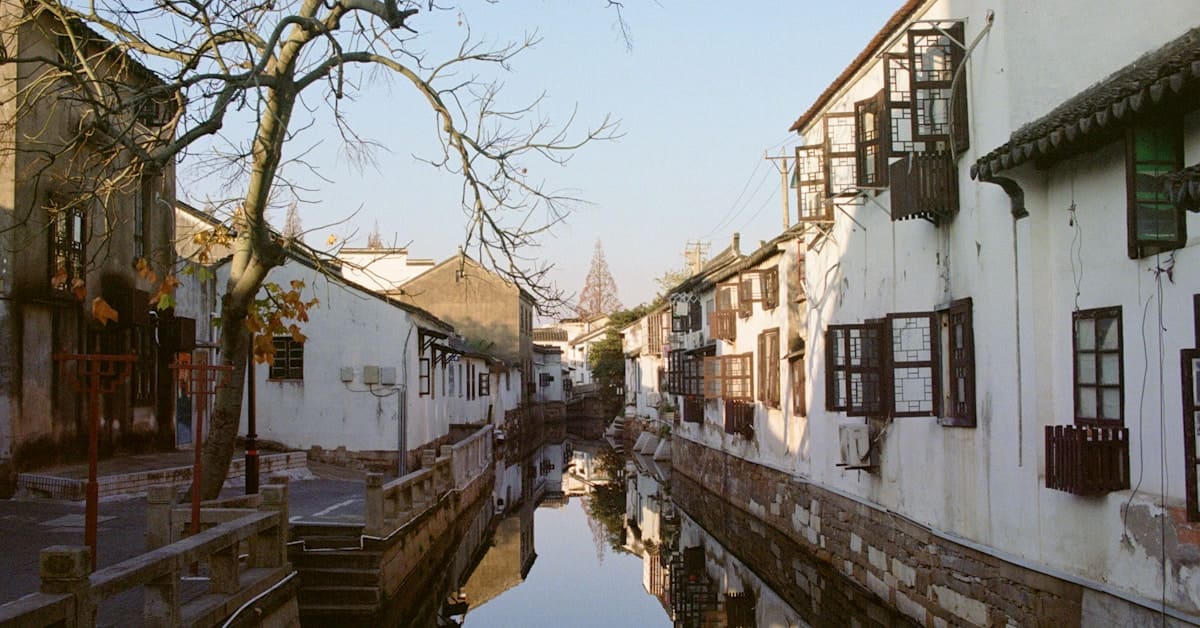
Pingjiang Road (inside Suzhou itself): not technically a separate water town — it is a preserved historic canal street in the eastern old city, walking distance from the Humble Administrator’s Garden. Cobblestones, traditional houses converted to small shops and cafes, gondolas operating along the canal (60 yuan for a 30-minute ride). The honest take: it is the most accessible “canal experience” and the most touristy. Good for 90 minutes if you are already in the area, not worth a dedicated trip.
Tongli (18km southeast of Suzhou): the best balance of authenticity and accessibility. 40-minute bus from Suzhou North bus station, or 25 minutes by metro line 4 to Tongli station. Entry 100 yuan covers the whole town plus the seven main scenic sites including the Tuisi Garden. Tongli has actual residents, working canals, and a slower atmosphere than the more famous Zhouzhuang. Allow a full day if you want to walk all the canals and visit the Chinese Sex Culture Museum (yes, that is its actual name — it is an unexpectedly serious anthropology collection).
Zhouzhuang (30km southeast): the most famous water town in China and the most heavily commercialized. 60–80 minutes by direct tourist bus from Suzhou. The famous double-arch Twin Bridges are genuinely beautiful, but every other building has been converted to a souvenir shop. Visit only if you have a specific photographic goal, or if the smaller Tongli does not have the gondola network you want.
The actual recommendation: if you are doing Suzhou over two days, allocate the afternoon of day two to Tongli. Skip Zhouzhuang unless it is the only water town you can fit. If you only have time for an in-city version, Pingjiang Road for 90 minutes is enough.

Suzhou Silk: What to Buy and Where
Suzhou has been a silk production center for 4,000 years and still produces roughly 25% of China’s high-end silk. The local industry covers everything from raw silk weaving to finished products — embroidery, qipao tailoring, quilts, scarves, and silk-thread paintings (an art form Suzhou genuinely owns globally).
The Suzhou No. 1 Silk Factory is the institutional place to start. It is part working factory, part museum, with guided tours showing the entire process from silkworm cocoons through to finished cloth. Free entry; products on the connected shop floor are sold at fixed prices and the quality is verified, but prices are 30–50% higher than what you would pay outside.
For actual buying: the Suzhou Silk Museum on Renmin Road has a smaller shop with similarly-verified products at fairer prices. For embroidery (the genuine high-art version, not the souvenir scarves), the workshops in Zhenhu Village (a Suzhou suburb specifically known for embroidery) sell directly from artisans. Mid-grade hand-embroidered pieces start around 300 yuan; museum-quality pieces run into thousands.
What to avoid: the silk vendors along Pingjiang Road and around the major garden entrances. Quality varies wildly, prices are marked up 200–400%, and “100% silk” labels are not always honest. If you want to verify silk by feel: real silk warms in your hand within seconds; polyester stays cool.
Quilts (silk floss duvet inserts) are the practical purchase that travelers tend to remember. A double-bed silk quilt from a verified source runs 600–1,400 yuan depending on weight and grade. They compress for luggage and last 15+ years.
Jinji Lake: The Modern Side Most Visitors Skip
East of the old city, the Suzhou Industrial Park (SIP) is the Singapore-China joint-venture district that opened in 1994 and has become one of the most successful modern urban developments in China. At its center, Jinji Lake is a constructed waterfront with a 10km lakeside promenade, the Suzhou Center mall, the Eye of Suzhou Ferris wheel, and a string of contemporary architecture (the Suzhou Cultural Center, the Gate to the East tower locally nicknamed “the pants”).
Why bother: the contrast with the classical gardens is the point. Suzhou is not stuck in the 14th century, and seeing the modern side gives you a much more honest picture of contemporary Chinese urban planning. The promenade is genuinely pleasant for an evening walk; the Cultural Center occasionally hosts world-class exhibitions and Western touring orchestras.
How to do it: metro line 1 from the old city to Dongfang Zhi Men or Cultural Expo Center stations. Walk the lakeside from north to south at sunset (about 90 minutes), then dinner at one of the lakeside restaurants — Crowne Plaza and Shangri-La both have good options if you want a fancier evening, and several casual places line the boardwalk.
This works particularly well as a final-evening activity on a 2-day Suzhou trip — the contrast against the classical garden you saw that morning is what makes both more memorable.
Day Trip from Shanghai: The Logistics
The Shanghai-Suzhou connection is one of the easiest high-speed train rides in China. G-trains depart Shanghai Hongqiao roughly every 10 minutes during the day and take 25–35 minutes to Suzhou Station. Second-class tickets cost 39.5 yuan. No advance booking necessary outside of holiday weekends — show up at the station, buy a ticket for the next train, walk to the platform. The high-speed train guide covers the booking app setup if you want to reserve in advance.
Within Suzhou, the metro covers most of what you want. Line 4 runs north-south through the old city (Humble Administrator’s Garden at Beisita station, Lingering Garden at Tongjing station, all reachable on this line). Line 1 connects to Jinji Lake. Taxis are cheap (15–25 yuan for most in-city rides) but DiDi works without a foreign card since 2023 and is easier than hailing.
The honest case for 2 days vs 1: a 1-day Suzhou trip from Shanghai means leaving at 8am, getting home at 8pm, and seeing one major garden plus maybe Pingjiang Road. You will not see a water town. You will not see the modern side. You will not have time to slow down at the Master of Nets long enough for it to actually work on you. The 2-day version costs you one hotel night (decent mid-range from 350 yuan) and gives you twice the experience. The China Itinerary Guide shows how to slot a 2-day Suzhou into a Shanghai-based plan.
When to Visit: Beyond the Obvious “Spring or Autumn”
The Suzhou cliche is to visit in late March or April for the cherry blossoms, or in October for autumn color. Both are correct but also crowded.
The under-rated window is early November, after the National Day Golden Week crowds have cleared but before winter sets in. The osmanthus blooms in mid-October fill the gardens with a distinctive scent that the spring tours miss entirely. Temperatures are 12–20°C, comfortable for the long garden walks.
Winter (December–February) in Suzhou is actually beautiful if it snows. Snow on the dark tile roofs of the gardens is the visual reference for all the classical paintings of the area. Snow in Suzhou is infrequent and short-lived; if a forecast comes up while you are in Shanghai, push the day trip forward.
The best time to visit China regional table covers the broader pattern. Avoid the first weeks of May and October — Golden Week pushes domestic crowds into Suzhou at a level that breaks the experience of the smaller gardens.

A Workable 2-Day Suzhou Itinerary
Day 1: arrive Suzhou Station by 10am on the first train from Shanghai. Drop bags at hotel in the old town (the Pan Pacific Suzhou or the boutique Garden Hotel are central; mid-range chains around Guanqian Street are 350–500 yuan). Lunch at Songhelou for traditional Suzhou-style sweet-savory dishes (squirrel-shape mandarin fish, the regional signature). Afternoon at the Humble Administrator’s Garden after 3pm to avoid the lunch crowd. Evening: the “Garden of Night Music” at Master of Nets (book at hotel that morning — slots fill).
Day 2: morning at Lingering Garden (less crowded earlier in the day). Lunch at one of the noodle shops on Guanqian Street. Afternoon: metro and bus to Tongli water town. Late return to Suzhou. Final evening: walk Jinji Lake at sunset, dinner lakeside. Late train back to Shanghai or overnight again.
If you have a third day, add an extended visit to the Suzhou Museum (designed by I.M. Pei in 2006, free entry, next door to the Humble Administrator’s Garden — significant contemporary architecture worth a full visit on its own) plus the silk factory tour in the morning.
Common Mistakes vs What Actually Works
| What goes wrong on a Suzhou trip | The fix |
|---|---|
| Day-trip from Shanghai, do only the Humble Administrator’s Garden, leave by 6pm | Stay one night, see at least two gardens at different scales |
| Visit the Humble Administrator’s on a weekend morning | Go weekday afternoon, or substitute the Master of Nets |
| Buy silk on Pingjiang Road from the first vendor that smiles at you | Suzhou No. 1 Silk Factory or Silk Museum for verified products |
| Go to Zhouzhuang because it is the famous water town | Tongli — same canals, half the souvenir-shop density |
| Skip the modern side entirely | Walk Jinji Lake at sunset — the contrast makes both halves better |
| Skip the night performance at Master of Nets | It is the single best evening cultural event for foreign visitors in Suzhou |
One Last Practical Note
The gardens close earlier than you think — most by 5pm in low season, 5:30pm in peak. The “evening” garden experiences (Master of Nets night music, occasional Humble Administrator’s evening openings in summer) are sold separately and run from 7:30pm onward. If you assume the gardens are open into the evening like a European museum and show up at 4:30pm, you will get rushed through and resent it. Plan the garden time for morning or early afternoon, then use the late afternoon for a canal walk or Jinji Lake, then come back for the night-music experience after dinner. The day flows better that way.
Photos courtesy of Unsplash.